Compliance
UL 969 Labels: What OEMs in Southern California Need to Know
Rating plates and warning labels on certified products are part of the certification. Here is what UL 969 evaluates, why the label is tested as a system, and how to specify labels that keep your listing intact.
Quick answer
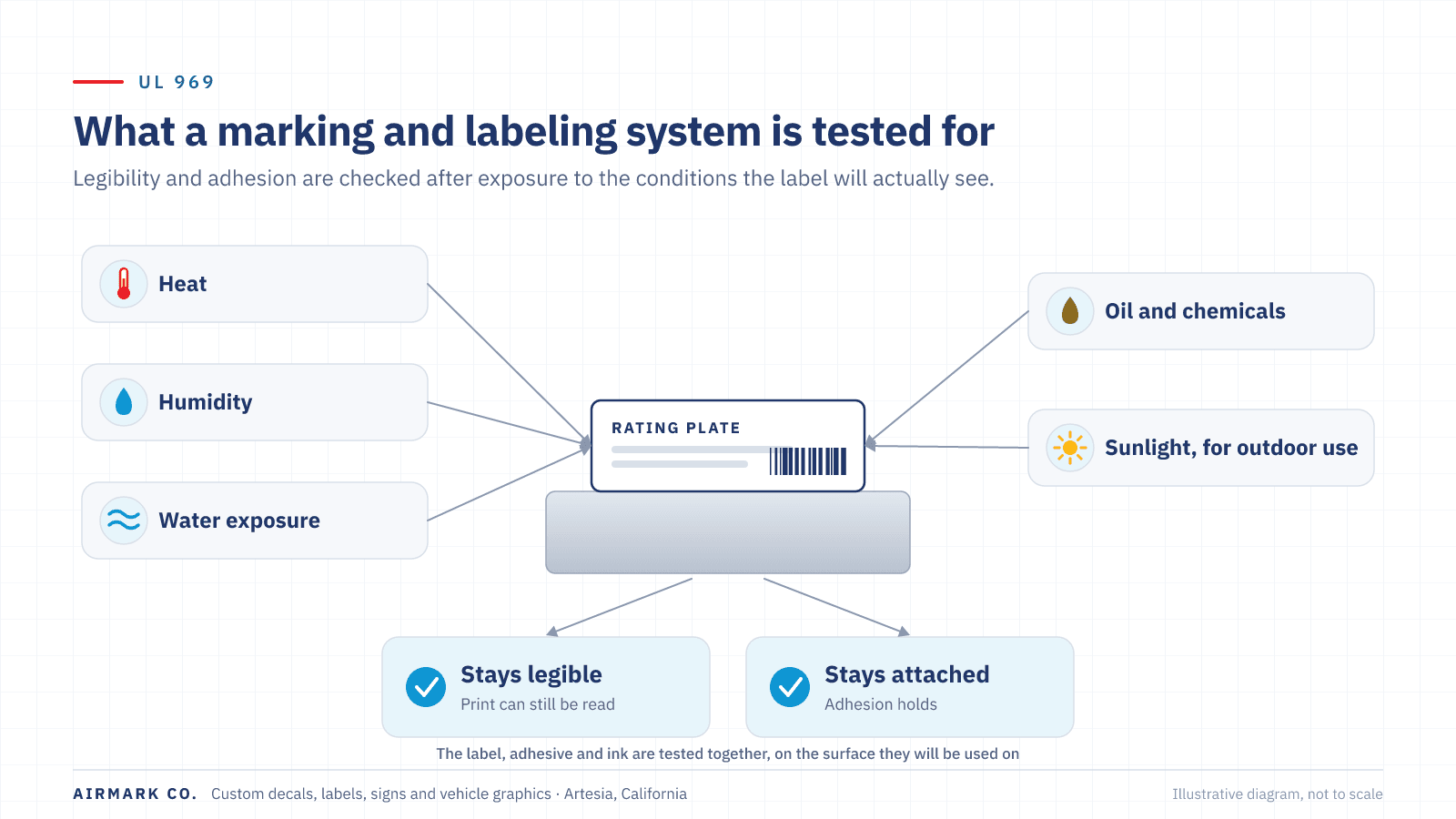
UL 969 is the UL standard for marking and labeling systems. It evaluates a specific combination of label material, adhesive and ink on a specific surface, testing whether the label stays legible and attached after exposure to conditions such as heat, humidity, water and oils. Labels carrying required markings on UL-certified products generally need a system that meets it.
Key takeaways
- UL 969 covers a complete label system: face stock, adhesive and ink, on a named surface.
- Testing checks legibility and adhesion after exposure to conditions such as heat, humidity, water and oil.
- Change any part of the system, or the surface, and it may no longer be covered.
- For Canadian markets, CSA C22.2 No. 0.15 plays the equivalent role for adhesive labels.
On this page +
What is UL 969?
UL 969 is the Standard for Marking and Labeling Systems. It sets out how labels used on certified products are evaluated, so the markings the certification relies on, such as ratings, warnings and the certification mark itself, stay legible and in place for the life of the product.
When a product is certified, the certification depends on certain information reaching the user: electrical ratings, model and serial numbers, warnings and the certification mark itself. If the label carrying that information peels off or becomes unreadable, the product no longer carries its required markings. UL 969 exists to prevent that.
The standard does not certify a label design. It evaluates a marking and labeling system: the materials and ink, applied to a particular surface, under particular conditions. That is why label suppliers talk about “recognized” systems, and why the details matter.
What does a UL-recognized label system include?
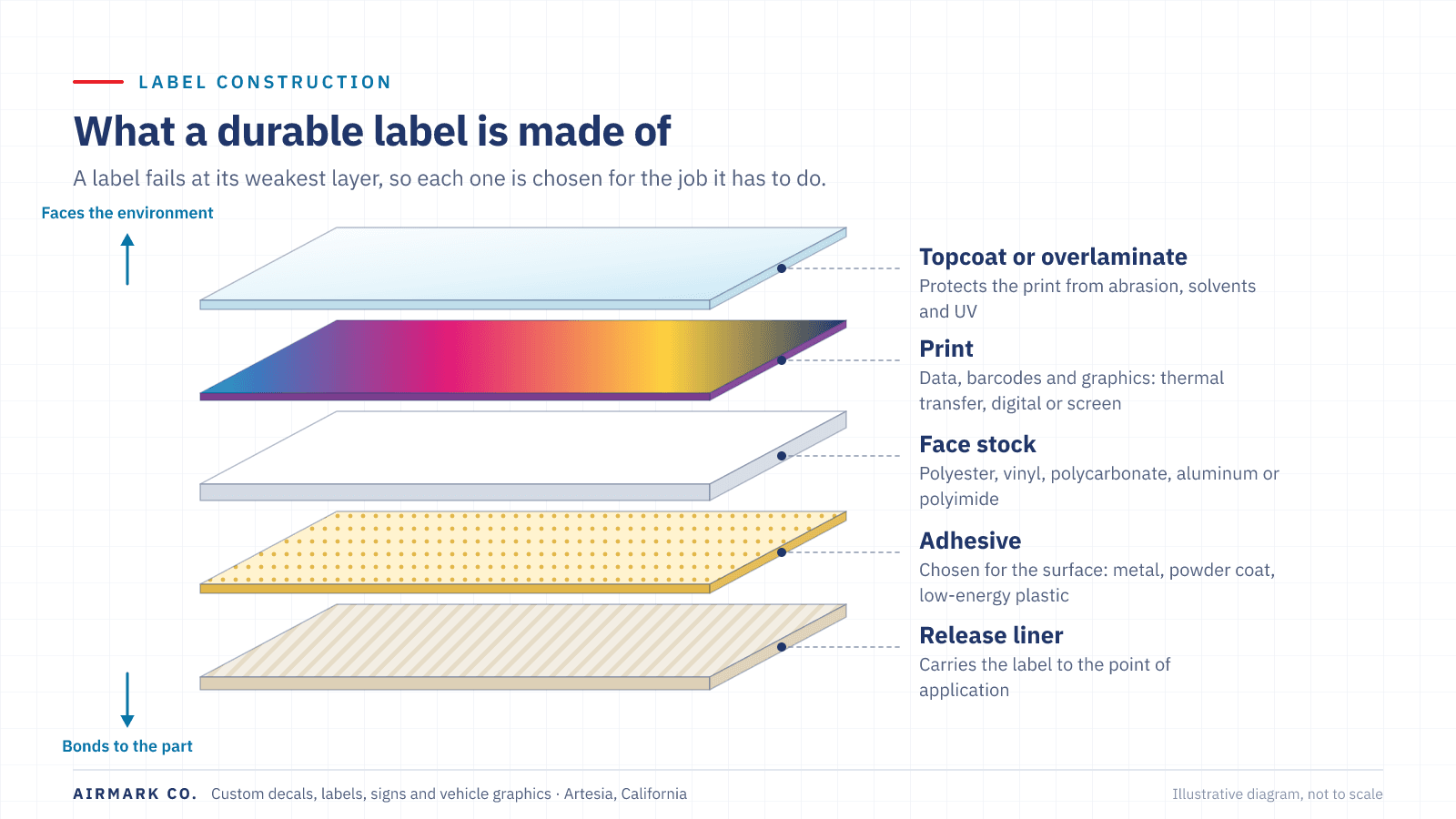
A recognized system is defined by its face stock, its adhesive and its ink or printing method, together with the surfaces it was evaluated on and the conditions it is rated for, such as indoor or outdoor use and a temperature range.
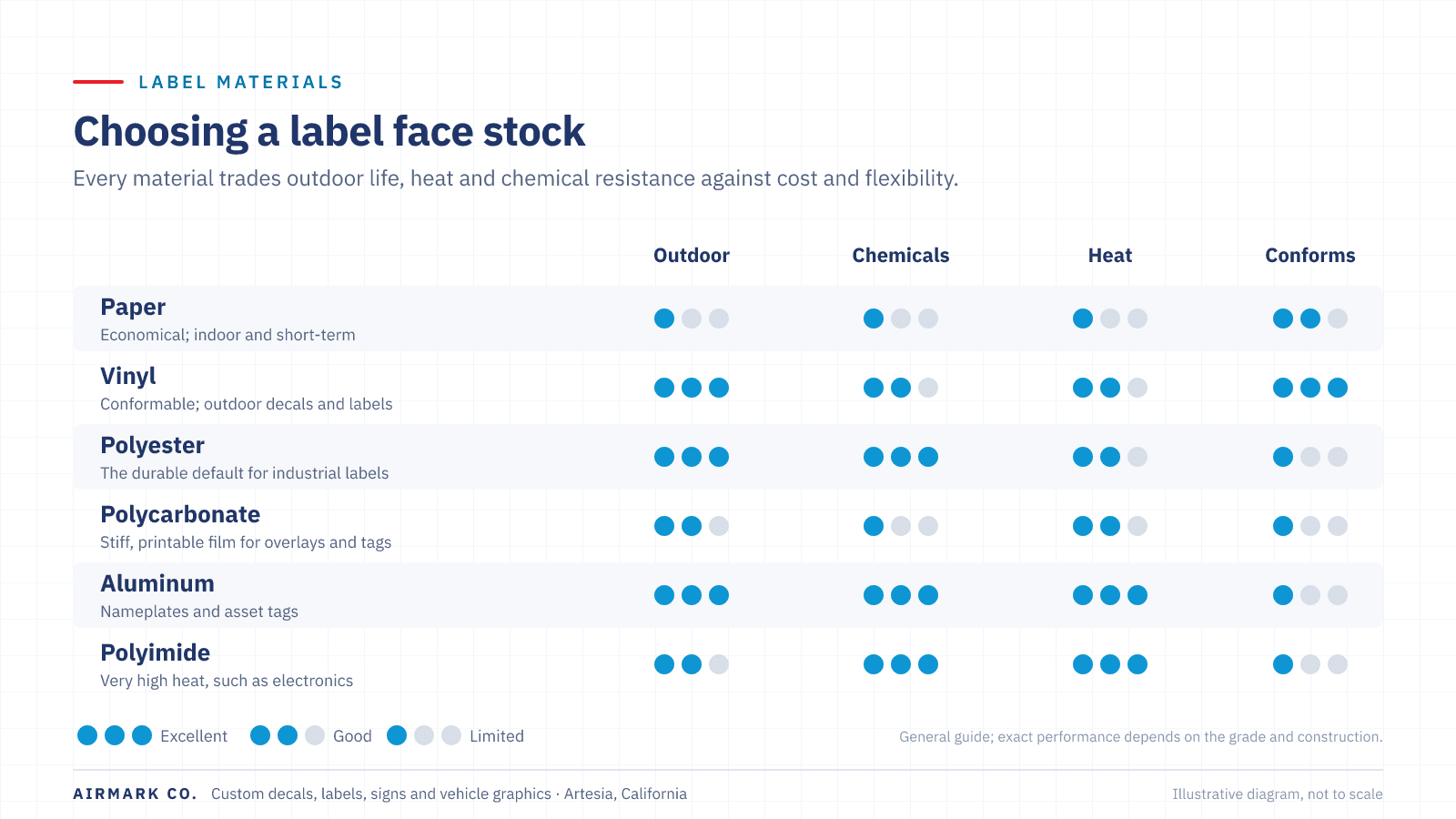
- Face stock: the specific material, often polyester, vinyl or aluminum.
- Adhesive: the specific adhesive, and the surfaces it was evaluated on.
- Ink or print method: including any topcoat or overlaminate.
- Conditions of use: indoor or outdoor, temperature range, and exposure to water, oils or other agents where relevant.
Because the system is evaluated as a whole, substitutions matter. A different adhesive, a different ink or a surface outside the evaluated list can take the label outside what was recognized, which is an issue to catch before production rather than at an inspection.
What surfaces and conditions does UL 969 evaluate?
Label systems are evaluated on the surfaces they are meant for, such as painted or bare steel, aluminum or specific plastics, and under the conditions the product will see. The label is then checked for legibility and adhesion after exposure.
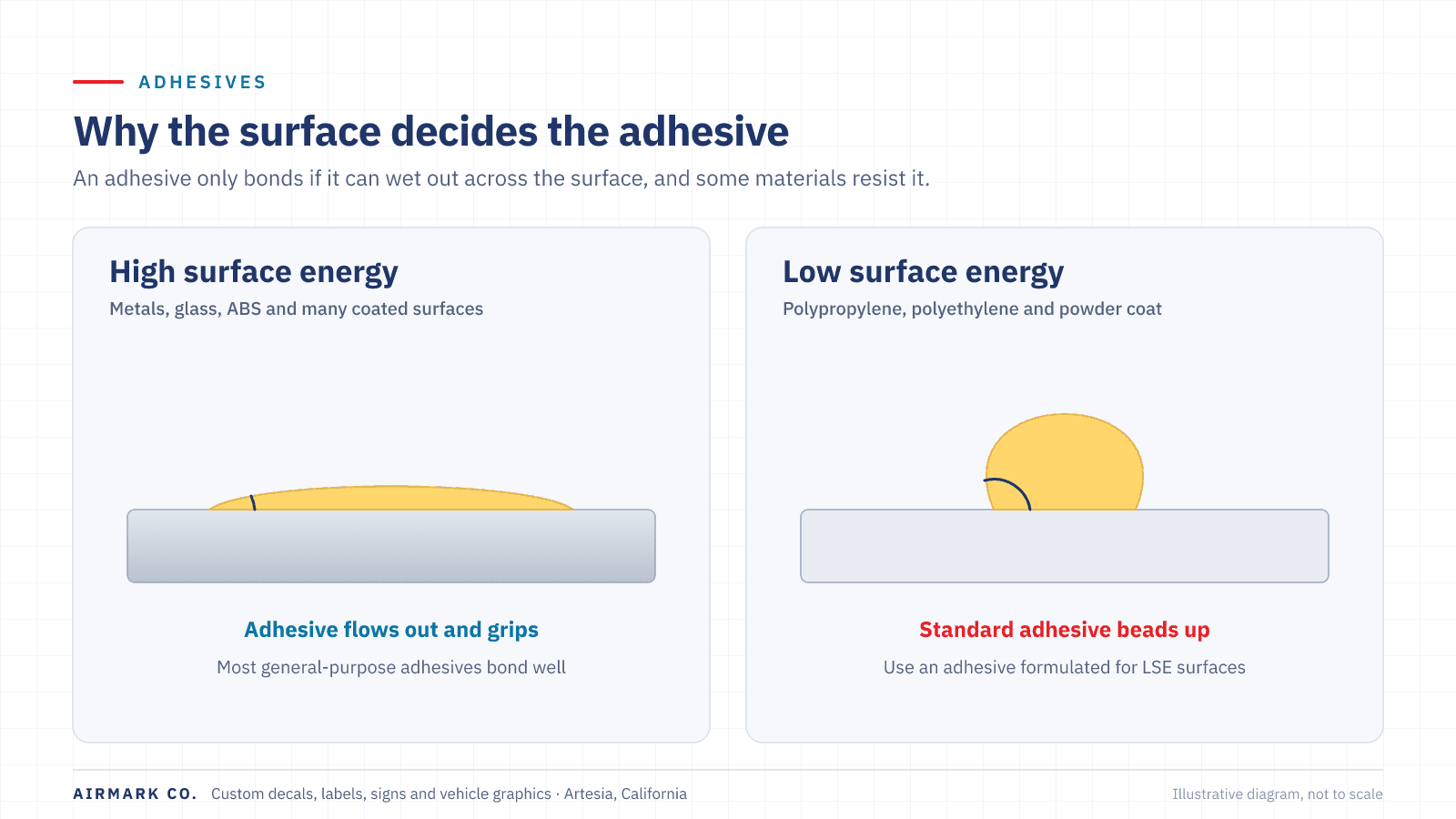
Typical exposure conditions include elevated temperature, humidity and water and, depending on the application, oils, cleaning agents or outdoor weathering. After conditioning, the label is examined to confirm it can still be read and is still firmly attached.
For you, as the manufacturer, the practical point is simple: tell your label supplier exactly what the label goes onto, including the coating or plastic grade, and the environment the product is certified for. That is what the system has to match.
What about CSA and products sold in Canada?
For products certified for Canada, CSA C22.2 No. 0.15, Adhesive Labels, plays a role equivalent to UL 969, and many label systems are recognized to both. Canadian markets may also call for bilingual English and French markings.
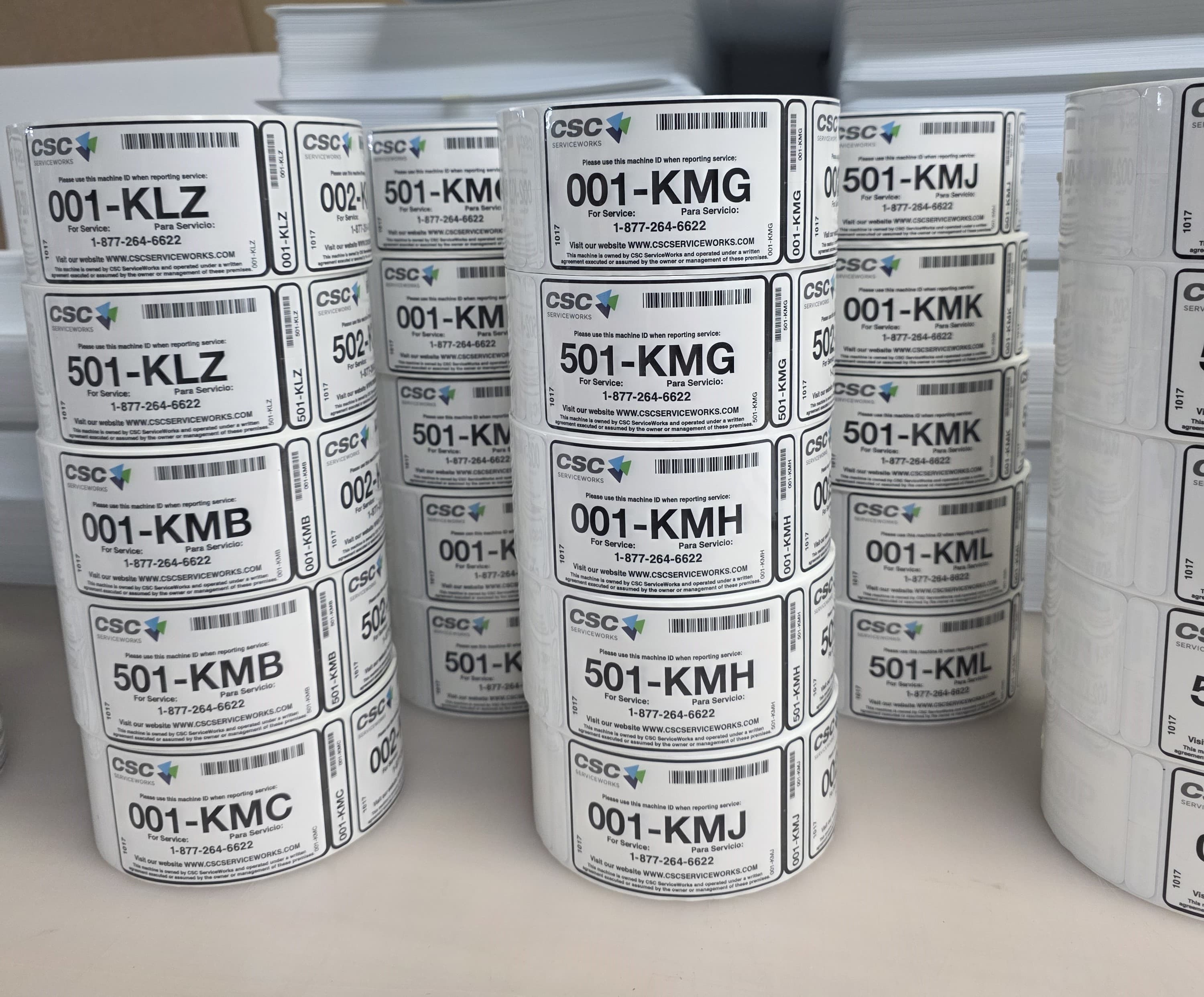
If your product ships to both the US and Canada, specify a label system recognized to both standards from the start. It is far easier than retrofitting labels later, and it keeps a single part number across both markets.
Bilingual markings change the layout: text has to fit in two languages without dropping below a legible size. Build that into the artwork early and allow for longer French text. Our OEM manufacturing page covers the labels and overlays we produce for equipment makers.
How do you specify UL-compliant labels for your product?
Start from your certification file. Tell your label supplier which marking requirements apply, the surface the label goes on, the conditions the product is rated for, and whether you need a system recognized for UL, CSA or both. Then confirm the recognized system before production.
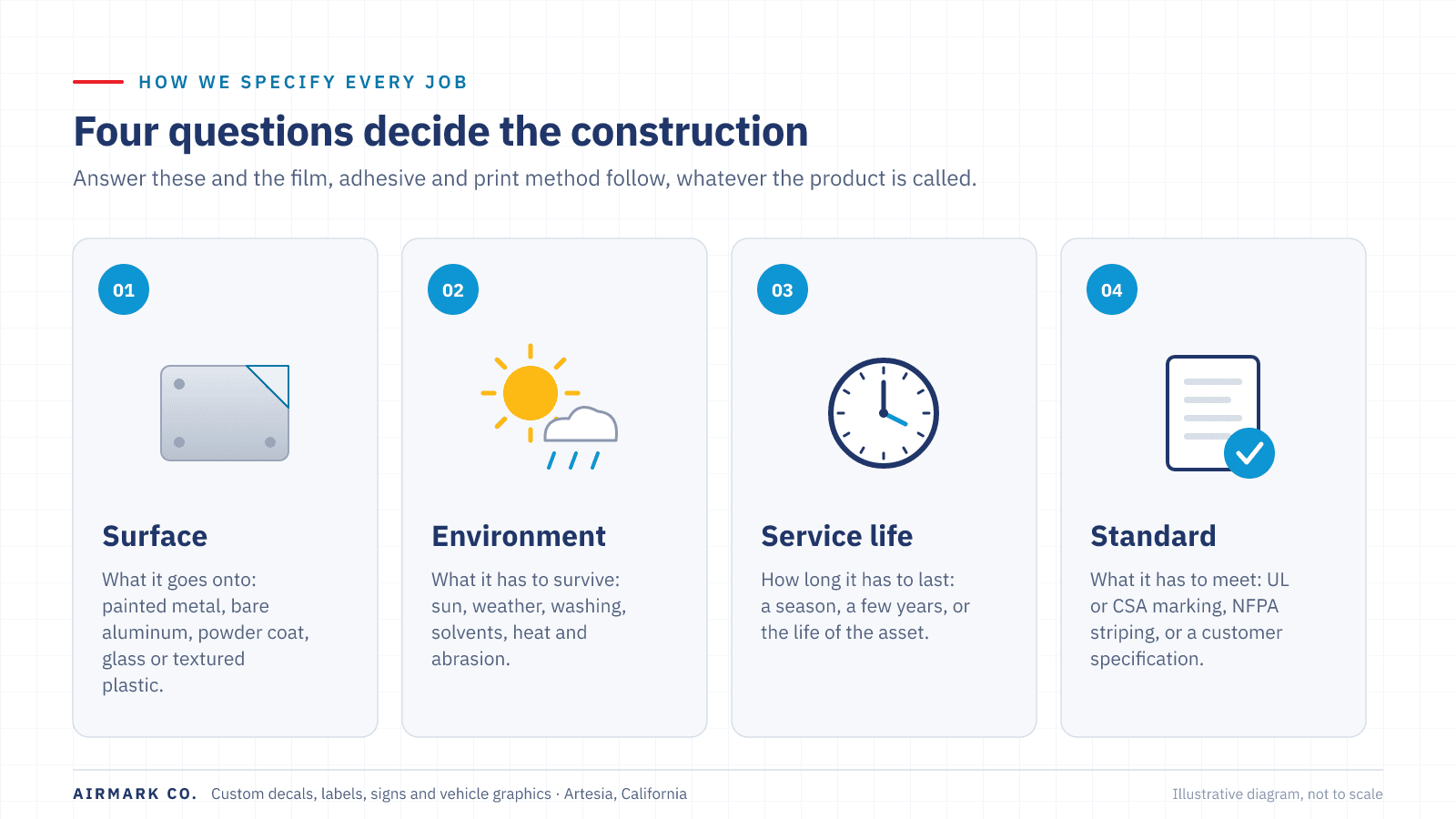
- Identify the requirement. Which markings does your certification require, and on which label?
- Name the surface. Material, coating and texture where the label will be applied.
- State the conditions. Indoors or out, temperature range, and exposure to water, oils or cleaners.
- Confirm the system. Ask for the recognized construction and keep it consistent through production.
Printing the UL certification mark itself is controlled: it can only be printed by suppliers authorized by UL, or supplied through UL’s own label programs. Tell us which marks your label must carry and we will confirm the right construction before quoting. See our labels page for rating plates, warning labels and serialized tags.
Frequently asked questions
Sources and standards
Written by the production team at Airmark Co.
Airmark has manufactured decals, labels, signs and vehicle graphics in Artesia, California since 1948 — from a single prototype to long production runs. About Airmark