
Decals & Labels
Decal vs. Label: What’s the Difference, and Which One Do You Need?
They look alike on a spec sheet, but a decal and a label are built for different jobs. Here is how to tell them apart, and how to choose, from a manufacturer that makes both in Artesia, California.
Quick answer
A decal is a graphic built to be applied to a surface and survive the environment it lives in, usually outdoor vinyl with a protective laminate and a strong adhesive. A label carries information, such as a barcode, a warning or a serial number, and is chosen for print accuracy and the surface it identifies. Many products need both.
Key takeaways
- Decals are about durability and appearance: vinyl films, overlaminates and adhesives rated for sun, weather and washing.
- Labels are about information: variable data, barcodes, compliance marks and legibility for the life of the product.
- The line blurs on equipment ID decals, domed nameplates and floor graphics, which is why the application, not the product name, should drive the specification.
- If you are unsure which you need, describe the surface, the environment, the service life and any standard it has to meet.
On this page +
What is the difference between a decal and a label?
The difference is the job each one does. A decal is designed to be applied to a surface and endure its environment (sun, rain, road grime, pressure washing), so it is specified by film, laminate and adhesive. A label is designed to carry information, so it is specified by print accuracy, data and the surface it identifies.
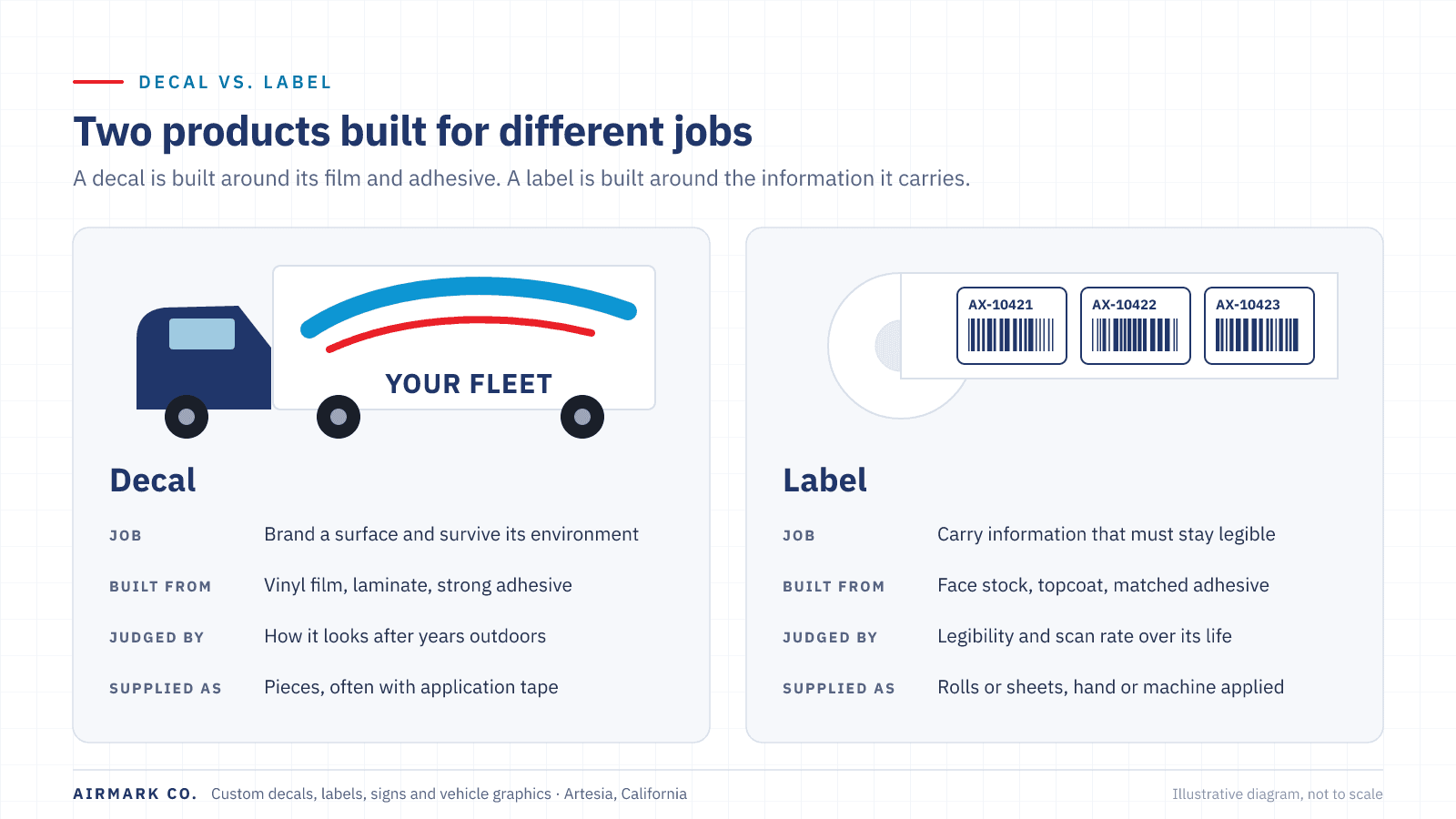
In everyday use the two words get swapped, and on a quote request that is fine: we ask the same questions either way. But knowing the distinction helps you ask for the right thing, and it explains why two items that look similar can be priced very differently.
| Decal | Label | |
|---|---|---|
| Primary job | Brand, identify or mark a surface, and survive its environment | Carry information: data, warnings, barcodes, compliance marks |
| Typical materials | Cast or calendered vinyl, reflective film, overlaminates | Polyester, vinyl, polypropylene, paper, polyimide, aluminum |
| Adhesive | Permanent or removable, matched to paint, metal, plastic or rough surfaces | Matched to the part: metal, powder coat, low-energy plastics, curves |
| Printing | Screen or digital with UV-resistant inks, often die-cut | Digital, thermal transfer or screen, often with variable data |
| Supplied as | Individual pieces, often with application tape | Rolls or sheets, for hand or machine application |
| Typical lifespan | Years outdoors, depending on film and exposure | Rated for the life of the product or asset |
Decal vs. label at a glance
What makes a decal a decal?
Its construction. A decal is typically a vinyl film printed with UV-resistant inks, protected by a clear overlaminate and backed with an adhesive chosen for the surface, built to look the same after years of sun, weather and washing.
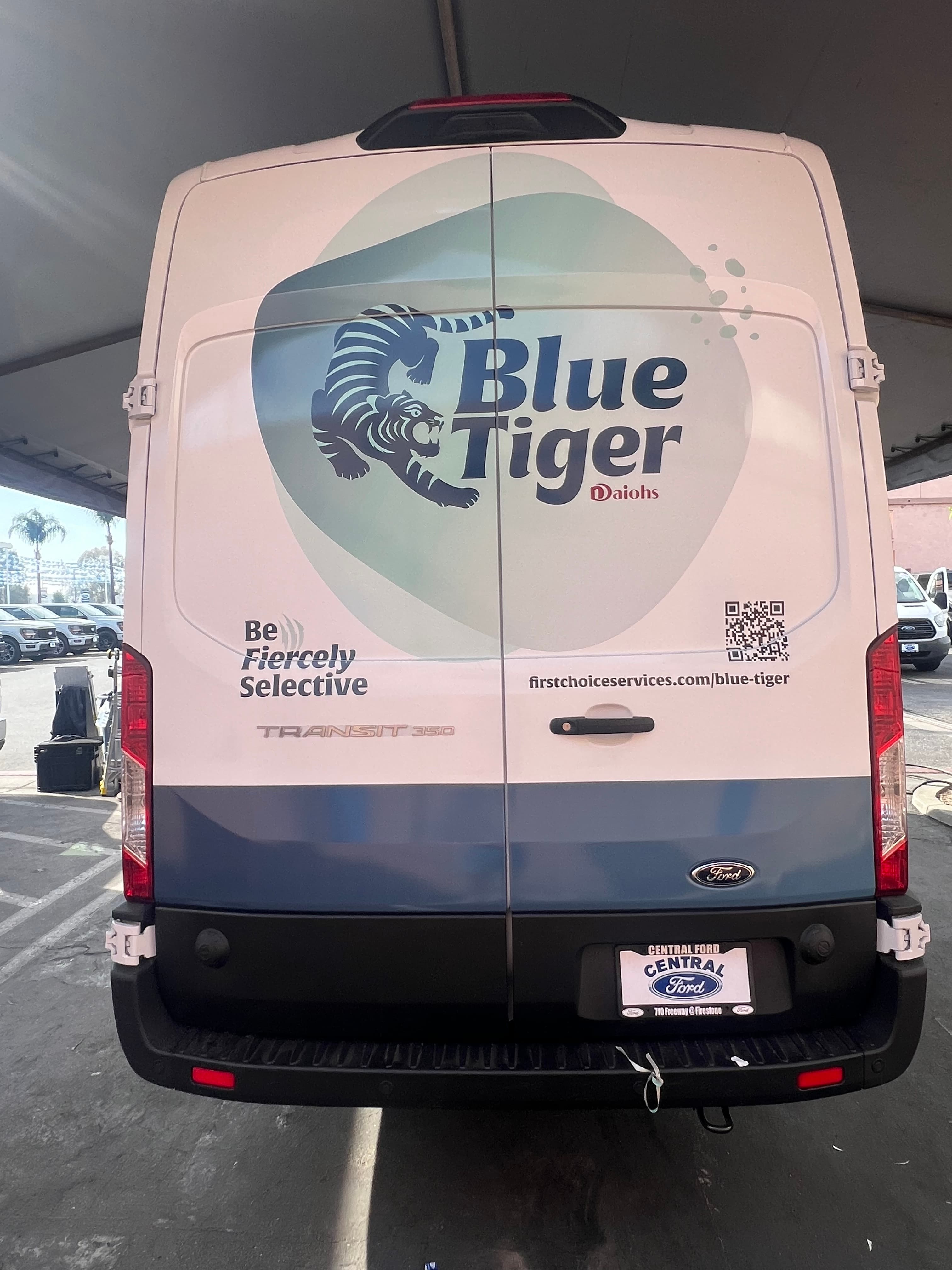
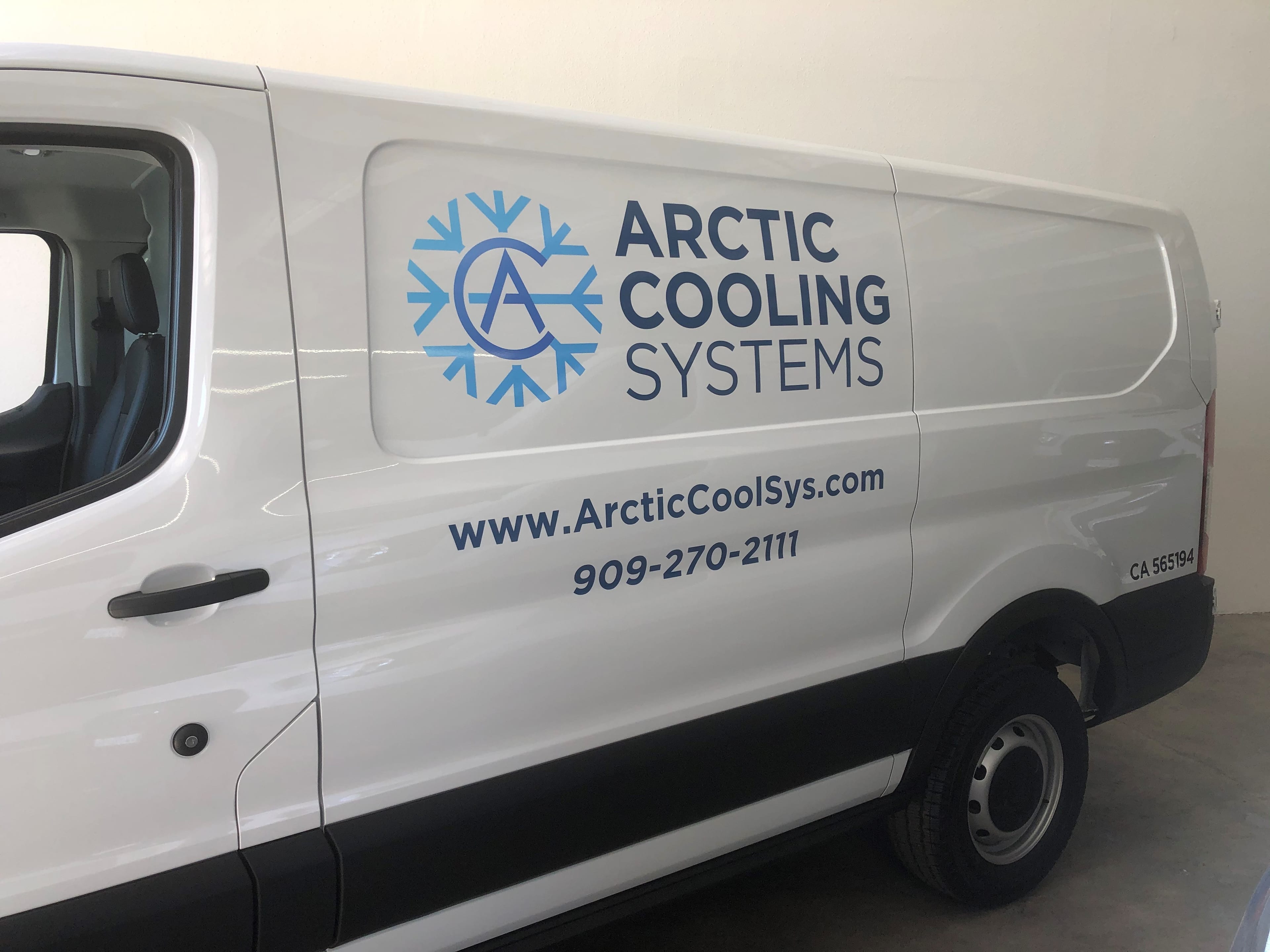
Most exterior decals start with a vinyl film. Cast vinyl is thin and dimensionally stable, so it conforms to curves and rivets and lasts longest; calendered vinyl is thicker and more economical for flat, shorter-term work. A clear overlaminate protects the print from UV, abrasion and chemicals, and the adhesive is chosen for what it is going onto: vehicle paint, bare aluminum, powder-coated steel or a rough plastic bin.
Die-cut decals (individual letters, logos and shapes with no background) arrive on a release liner with application tape on top, so each piece goes on in exactly the right place. Printed decals are usually contour-cut around the artwork. Both are covered in detail on our custom decals page.
- Fleet and vehicle graphics, from cab door lettering to full wraps
- Equipment and machinery branding
- Refuse bin and container decals for waste and recycling fleets
- Window and storefront graphics
- Reflective safety striping and chevrons
What makes a label a label?
A label exists to carry information that has to stay legible and attached for the life of the item: a serial number, a barcode, a rating plate, a warning. It is specified around the data it carries and the surface it identifies, and it is usually supplied on rolls for fast application.
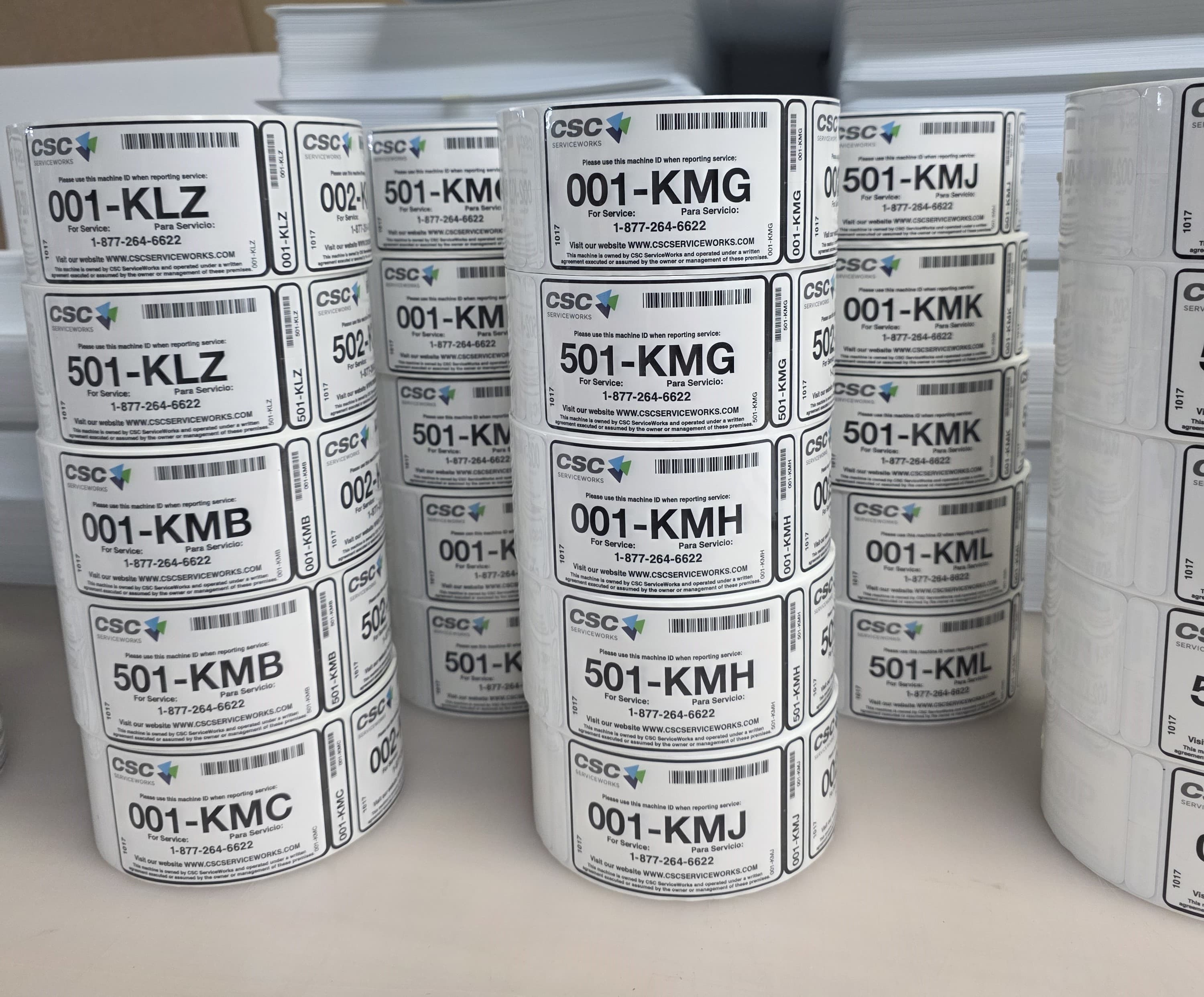
A decal is judged by how it looks after several summers; a label is judged by whether it can still be read and scanned. That shifts the priorities. The face stock has to hold fine print and barcodes, the ink has to resist the chemicals it will meet, and the adhesive has to stay put on whatever the part is made of, including tricky low-energy plastics and powder coat.
Labels also carry most of the compliance work. Rating plates, UL and CSA marks, warning labels and serialized asset tags all have requirements beyond appearance. For harsh environments, our guide to industrial label materials and adhesives goes deeper.
Where does the line between a decal and a label blur?
On products that do both jobs: equipment ID decals that carry serial numbers, domed nameplates, floor graphics that brand a space and direct traffic, and warning decals on rental machinery. For these, the environment decides the construction and the information decides the print.
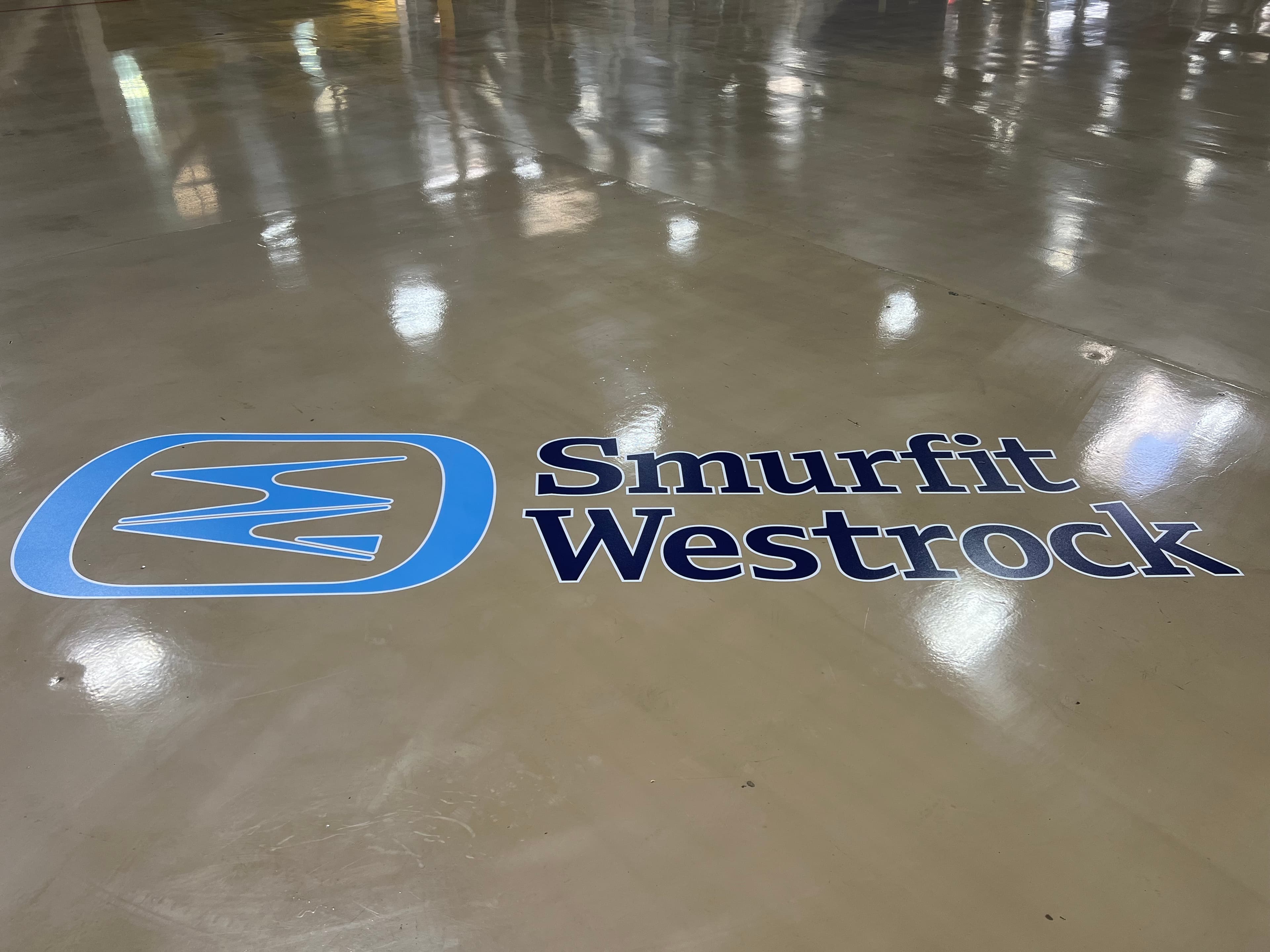
Take a rental excavator. Its hazard warnings are labels in function, because they carry required safety information, but they live outdoors on a machine that gets pressure-washed, so they are built like decals. Or a polyurethane-domed nameplate on an appliance: it identifies the brand like a label but is built to be handled every day.
That is why we do not start from the product name. We start from the application. Our rental and equipment services and OEM manufacturing pages show how that plays out in two very different industries, and floor graphics are a good example of a decal doing a label’s job.
How do you choose between a decal and a label?
Answer four questions: what surface it goes onto, what environment it has to survive, how long it needs to last, and whether it must meet a standard. Those answers point to the right film, adhesive and print method, whether the finished piece gets called a decal or a label.
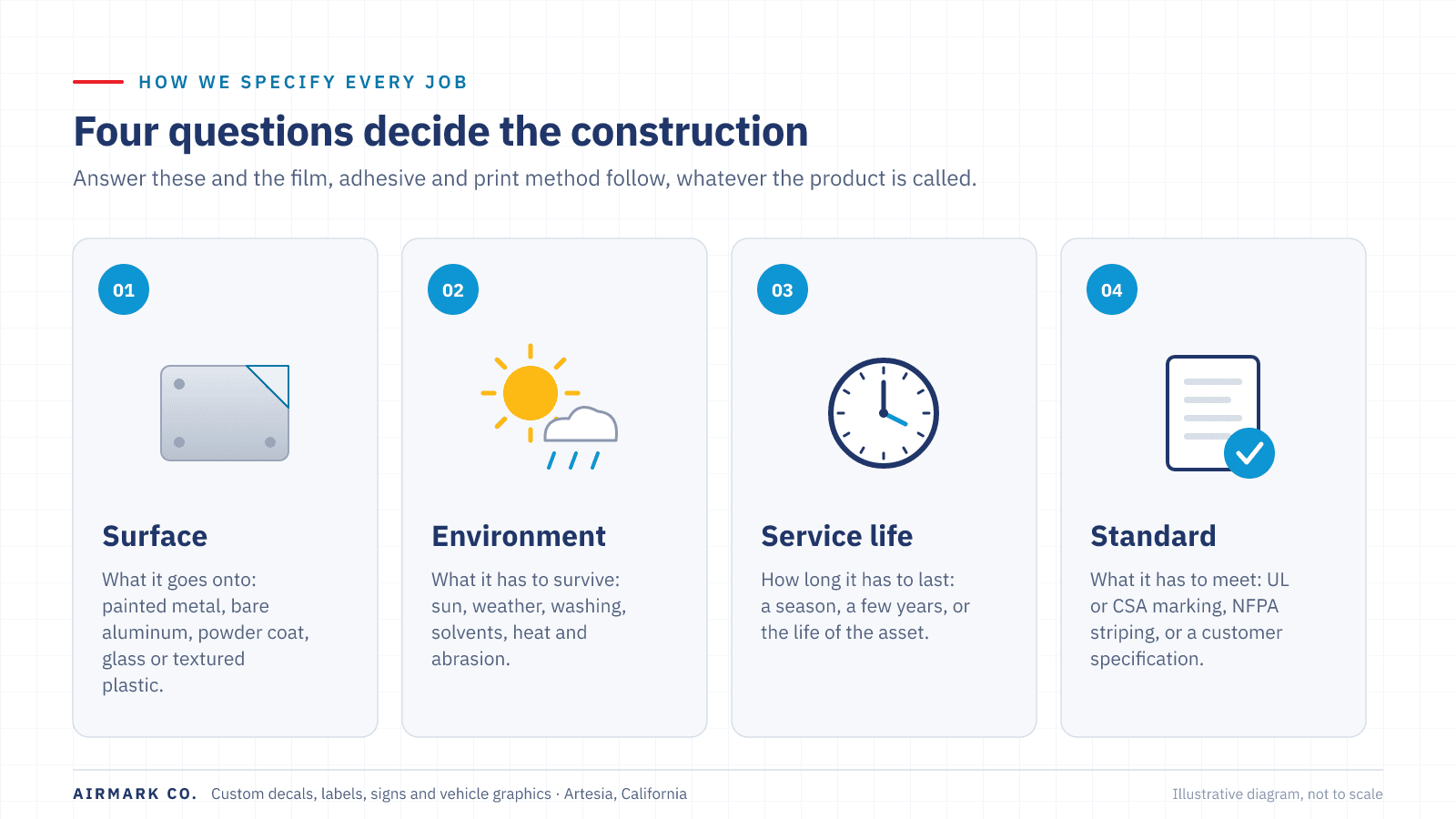
- Surface. Painted metal, bare aluminum, powder coat, glass or textured plastic? Surface energy and texture decide the adhesive.
- Environment. Direct sun, weather, solvents, heat, abrasion and pressure washing each rule materials in or out.
- Service life. A one-season promotion and a ten-year asset tag need very different constructions.
- Standard. UL or CSA marking, NFPA reflective requirements, or a customer specification.
Frequently asked questions
Written by the production team at Airmark Co.
Airmark has manufactured decals, labels, signs and vehicle graphics in Artesia, California since 1948 — from a single prototype to long production runs. About Airmark