Vehicle Graphics
Reflective Vehicle Graphics: What Fleets in LA County Should Know
Reflective graphics make a vehicle visible in headlights long before a driver would otherwise see it. Here is how they work, which grade to specify, and where the rules come in.
Quick answer
Reflective vehicle graphics use retroreflective sheeting that sends headlight beams back toward the driver, so lettering, logos and striping light up at night. Glass-bead films suit general lettering; brighter microprismatic films are used for emergency vehicles and conspicuity markings. Some vehicles, such as large trailers and fire apparatus, are required to carry reflective markings.
Key takeaways
- Retroreflective film returns light to its source, which is why it lights up in headlights yet looks ordinary by day.
- Glass-bead sheeting is economical; microprismatic sheeting returns more light and reads brighter at a distance.
- Most trailers 80 inches or wider and over 10,000 lb GVWR must carry DOT-C2 conspicuity sheeting.
- Fire apparatus follow NFPA 1901 striping and chevron rules; many service fleets add reflective graphics by choice.
On this page +
How does reflective vinyl work?
Reflective vinyl is retroreflective: instead of scattering light, it returns a headlight beam back toward its source. Because a driver’s eyes sit just above the headlights, the returned light reaches them, and the graphic appears to glow at night while looking like ordinary vinyl by day.
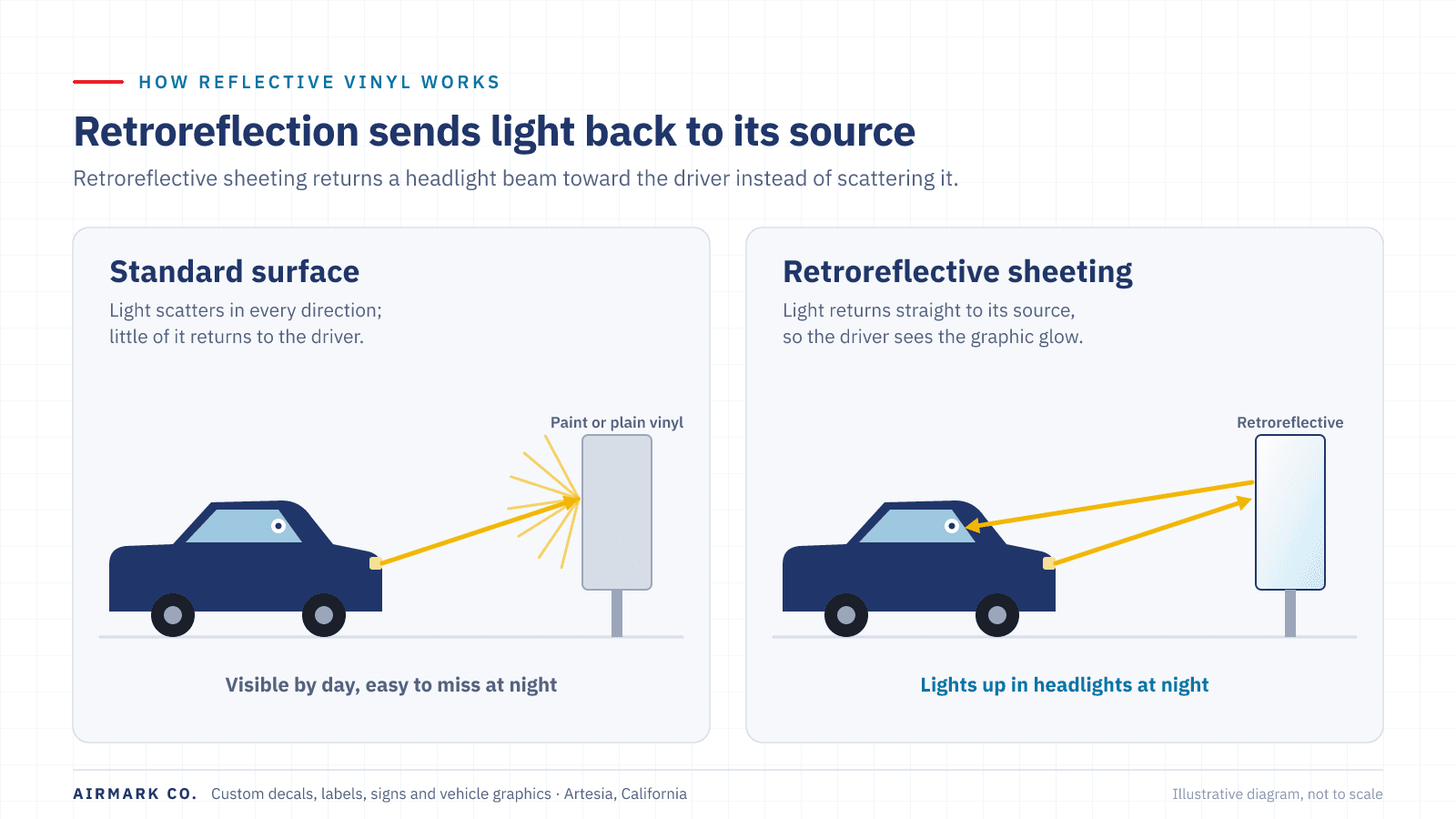
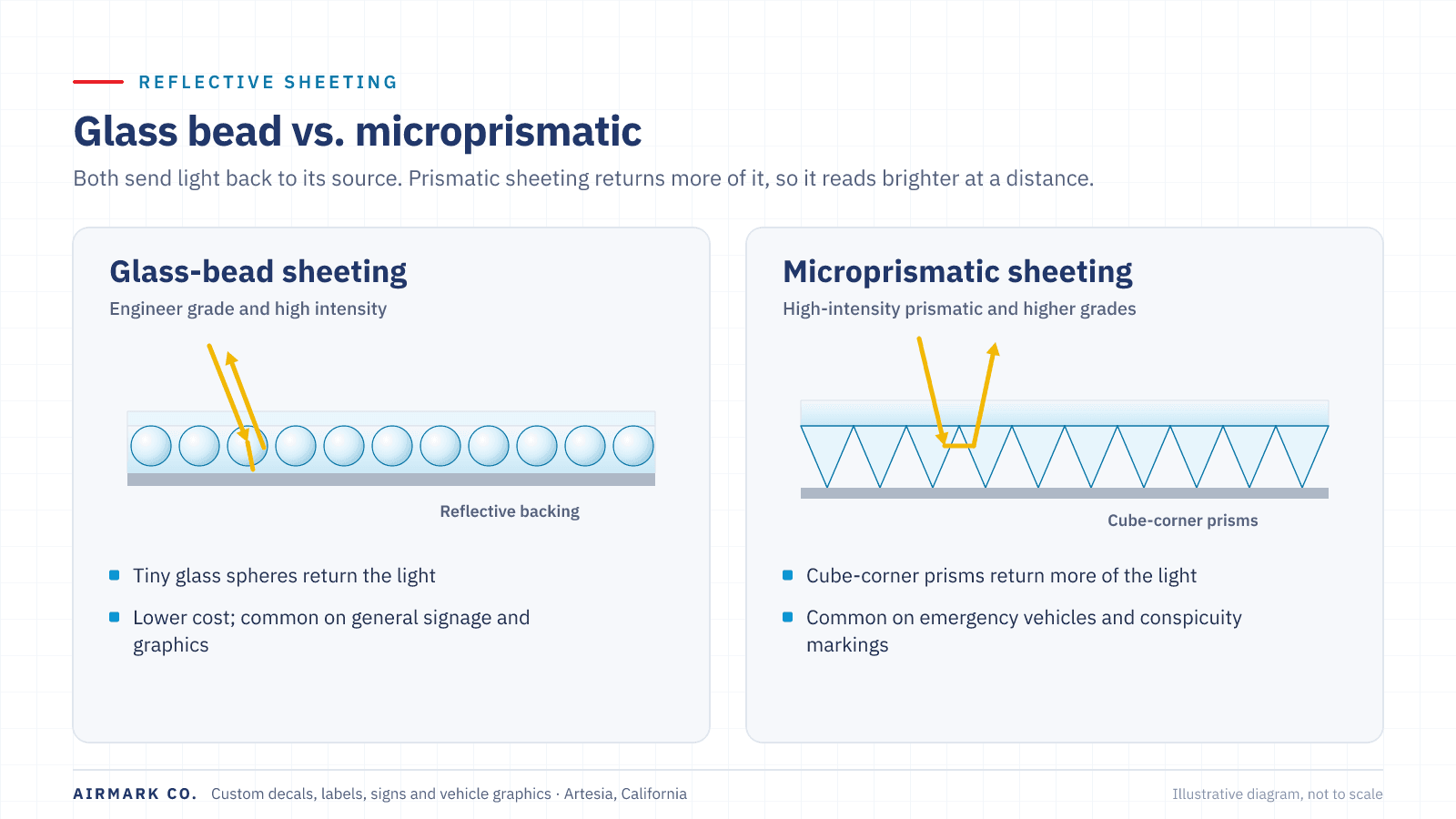
A painted panel or standard vinyl reflects light diffusely, sending it off in every direction, so only a small fraction ever returns to the driver. Retroreflective sheeting is built with tiny optical elements, glass beads or microscopic prisms, that bend and bounce light back along the path it arrived on.
The result is a graphic that can be seen from much farther away at night, which is the whole point: other drivers see the vehicle, its outline and its markings sooner, and have more time to react.
What are the grades of reflective sheeting?
Reflective sheeting falls into two families. Glass-bead films, often sold as engineer grade and high intensity, use tiny spheres to return light. Microprismatic films use cube-corner prisms, return considerably more light, and are the usual choice for emergency vehicles and conspicuity markings.
| Type | How it returns light | Typical uses |
|---|---|---|
| Glass bead, engineer grade | Glass spheres in the film | Fleet lettering, general signage, budget-sensitive jobs |
| Glass bead, high intensity | Encapsulated glass beads, brighter | Brighter lettering, logos and signs |
| Microprismatic | Cube-corner prisms, brightest at distance | Emergency vehicles, chevrons, conspicuity markings |
Choosing a reflective film
Reflective films also come in printable versions, so full-color graphics can reflect, and in colors beyond white, although colored films return less light than white. For most fleets the real choice is between reflective lettering and striping on a standard graphic, or selected reflective panels within the design.
Which fleets benefit most from reflective graphics?
Any fleet that works in the dark, stops on the roadside or needs to be found quickly: emergency services, utility and public works crews, refuse and recycling fleets, tow and roadside assistance, and delivery trucks on early-morning routes.
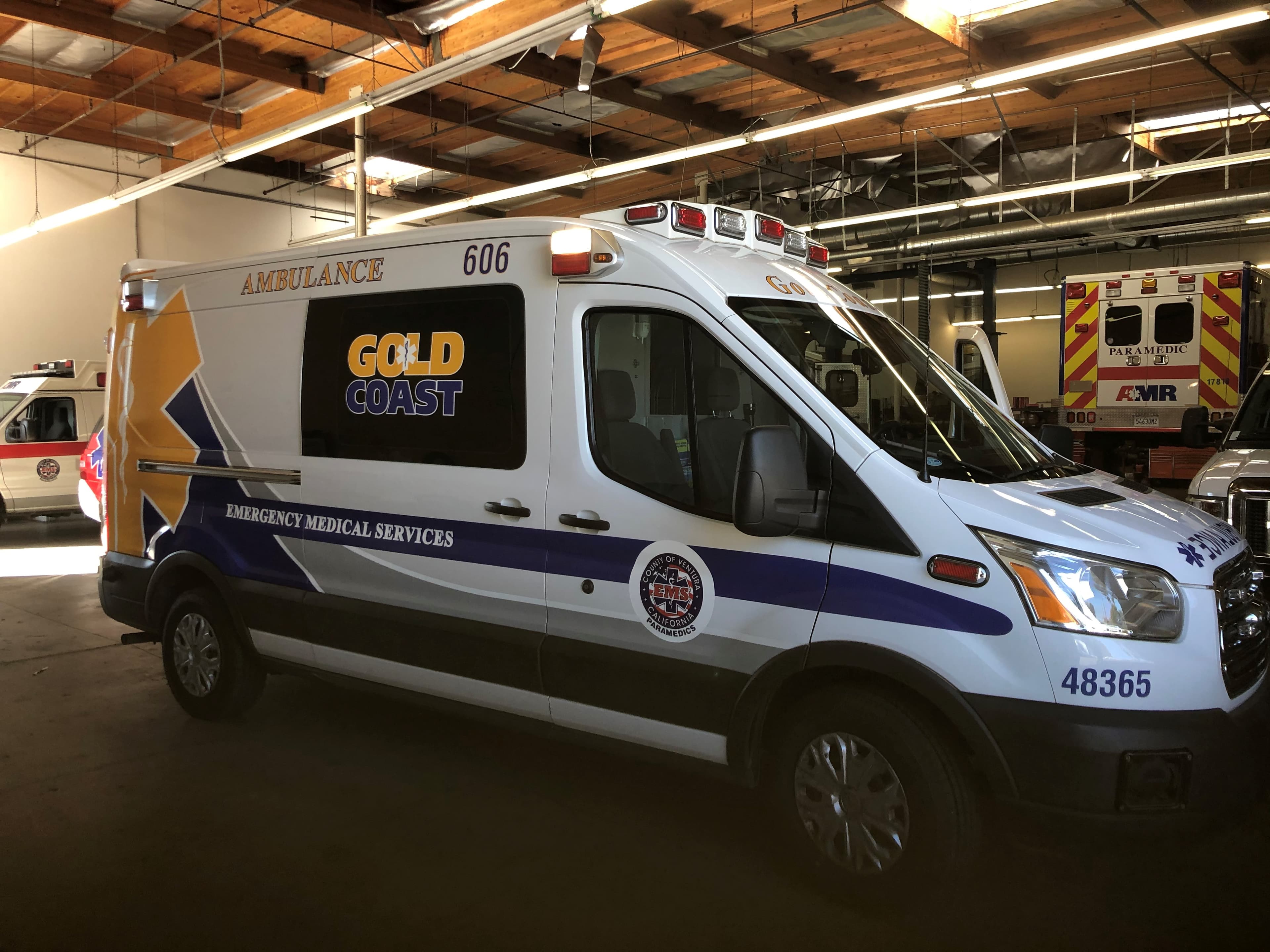
For emergency vehicles the case is obvious: they stop in traffic, at night, in bad weather. The same logic applies to a refuse truck on a residential street at 5 a.m., a utility crew parked on the shoulder of the 605, or a service van making a late call in Downey. Reflective lettering and outline striping make the vehicle, and its name, visible when it matters most.
There is a brand benefit too. Reflective lettering keeps working after dark, when a standard graphic effectively disappears. For fleets that run around the clock, that is advertising time a standard graphic never gets. See how we approach emergency and fleet vehicle graphics and government and municipal fleets.
Are reflective markings required by law?
For some vehicles, yes. Federal rules require most semi-trailers 80 inches or wider with a gross vehicle weight rating over 10,000 pounds to carry red-and-white DOT-C2 conspicuity sheeting, and NFPA 1901 sets reflective striping and rear chevron requirements for fire apparatus.
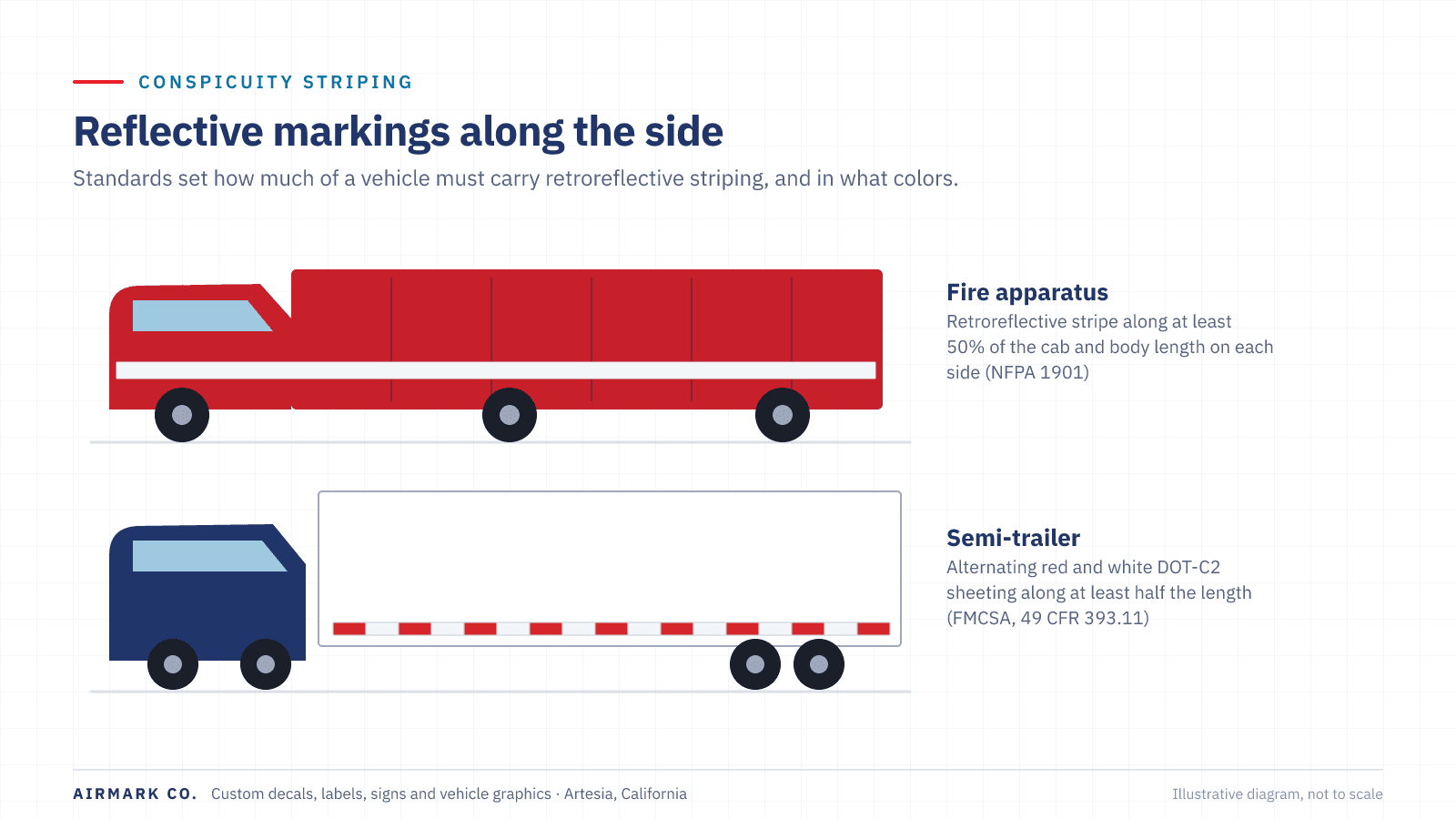
- Trailers: FMCSA rules (49 CFR 393.11) call for alternating red and white retroreflective sheeting along the sides and rear of qualifying trailers, with white at the upper rear corners.
- Fire apparatus: NFPA 1901 requires reflective striping along at least half of each side and chevron striping on at least half of the rear-facing surfaces. Our NFPA 1901 chevron guide covers the details.
- Ambulances and other emergency vehicles: follow their own standards and agency specifications, which typically include reflective striping and rear chevrons.
- Contract and municipal fleets: many city, county and utility contracts specify reflective markings even where no federal rule applies.
Requirements vary by vehicle type, weight and jurisdiction, and they change. Confirm what applies to your vehicles with your fleet safety officer, your agency specification or the regulator before you order.
Does reflective vinyl cost more or wear differently?
Reflective films cost more than standard vinyl, and prismatic films cost more than glass-bead films. They are generally durable, but they have to be kept clean to keep reflecting, and their brightness declines slowly over their service life.
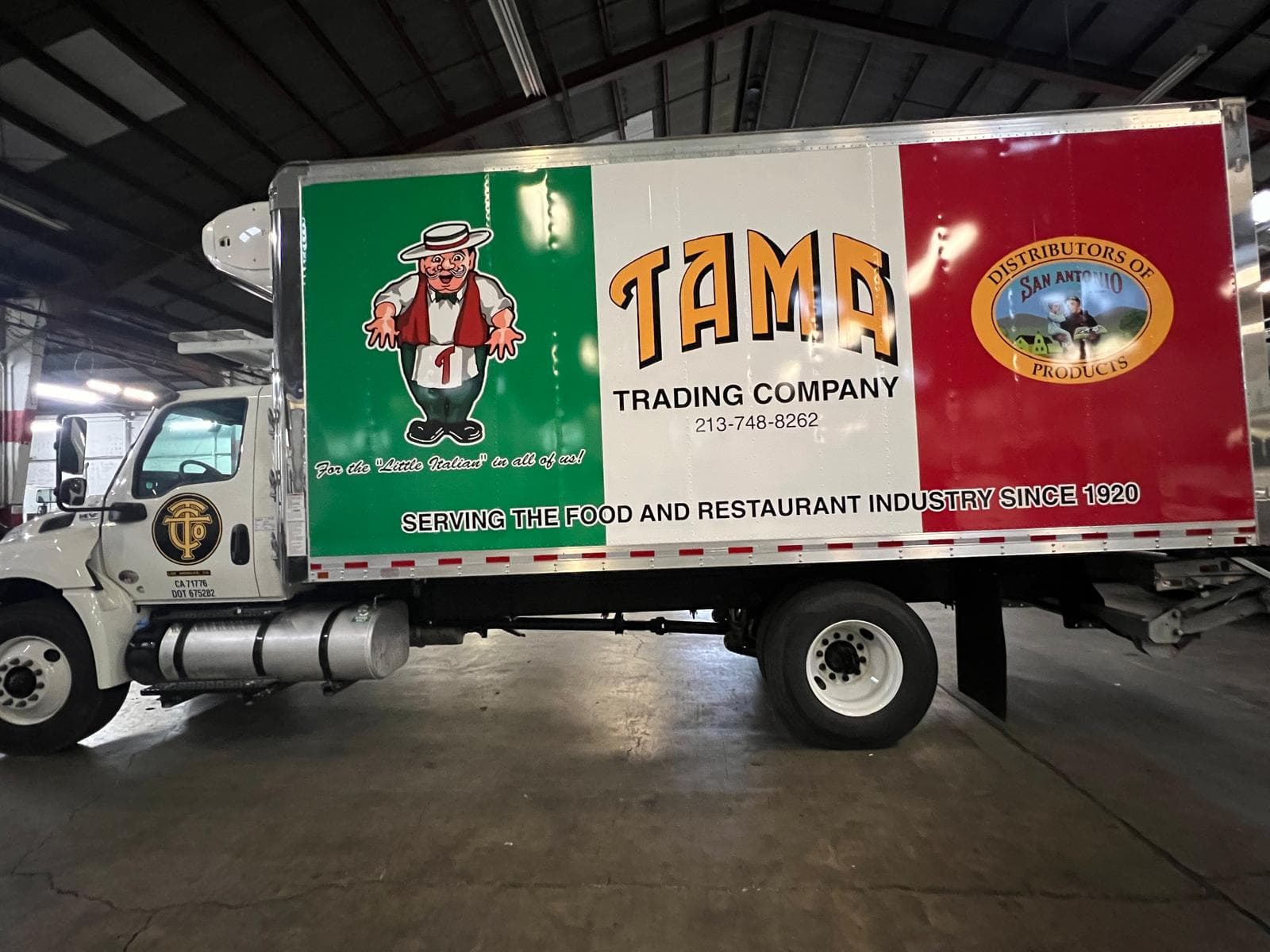
The most economical way to add night visibility is usually selective: reflective lettering, unit numbers, outline striping or a reflective band within a standard printed or colored-vinyl design. Full reflective wraps are possible, but they cost considerably more and are generally reserved for vehicles where visibility is the whole point.
Dirt, road film and oxidation cut reflectivity, so regular washing matters even more on reflective graphics than on standard ones. Tell us what the vehicles do, when they operate and any specification they must meet, and we will recommend the right film. For how films age in Southern California sun, see how long fleet graphics last.
Frequently asked questions
Sources and standards
Written by the production team at Airmark Co.
Airmark has manufactured decals, labels, signs and vehicle graphics in Artesia, California since 1948 — from a single prototype to long production runs. About Airmark