Materials
Cast vs. Calendered Vinyl: How to Choose the Right Film
The biggest single decision in any vinyl graphic is the film. Here is how cast and calendered vinyl are made, how each behaves on a vehicle or a wall, and when each one is the right call.
Quick answer
Cast vinyl is a thin, dimensionally stable film that conforms to curves, rivets and corrugations and typically lasts five years or more outdoors. Calendered vinyl is thicker, less expensive and keeps some memory, so it suits flat surfaces and shorter-term graphics. If a graphic has to follow contours or last for years, choose cast.
Key takeaways
- Cast vinyl is poured as a liquid and cured flat; calendered vinyl is rolled and stretched into shape.
- Cast is typically about 2 mil thick; calendered is typically 3 to 4 mil and stiffer.
- Calendered film carries memory, so it can shrink back, tent over recesses and lift at the edges.
- Over a vehicle’s life, cast often costs less per year of service.
On this page +
What is the difference between cast and calendered vinyl?
The way they are made. Cast vinyl is poured as a liquid onto a casting sheet and cured into a thin, relaxed film. Calendered vinyl is kneaded and pressed through heated rollers into a sheet, which leaves it thicker and holding tension it will try to release.
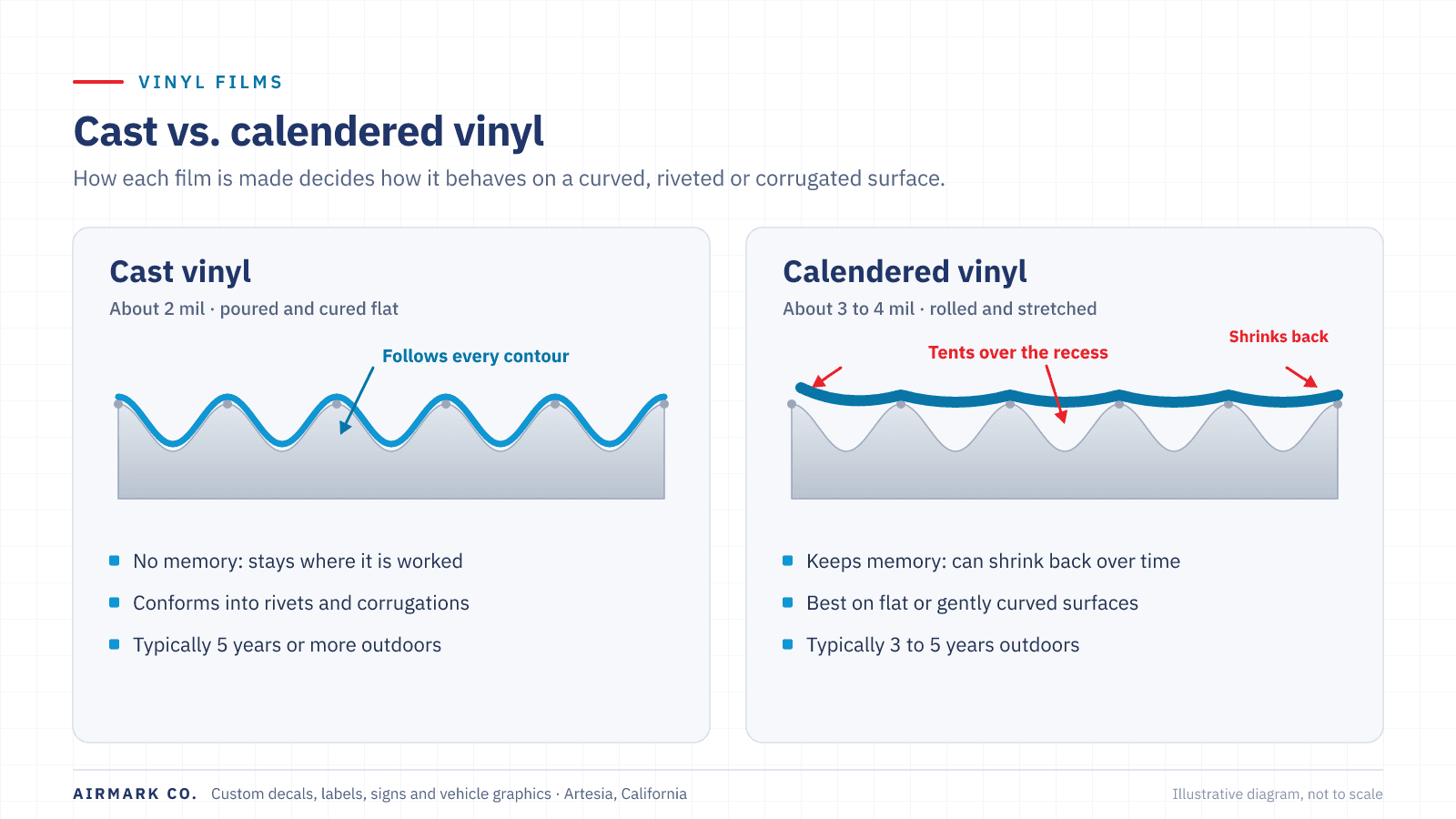
Because cast film is formed without stretching, it has almost no memory: heat it, work it into a recess, and it stays there. Calendered film was stretched during manufacture, so over time, and especially in heat, it tries to return to its original dimensions. On a flat panel that shows up as slight shrinkage at the edges. Stretched into a corrugation, it can pull back out and “tent”.
| Cast vinyl | Calendered vinyl | |
|---|---|---|
| Manufacture | Liquid PVC cast onto a sheet and cured | PVC pressed and stretched through rollers |
| Typical thickness | About 2 mil | About 3 to 4 mil |
| Conformability | Excellent over curves, rivets and corrugations | Good on flat or gently curved surfaces |
| Dimensional stability | High, with minimal shrinkage | Lower; can shrink over time |
| Typical outdoor life | 5 years or more | 3 to 5 years for polymeric grades |
| Relative cost | Higher | Lower |
Cast vs. calendered vinyl compared
Calendered films come in two broad grades. Polymeric calendered film uses more stable plasticizers and holds up for several years outdoors. Monomeric calendered film is the economy grade, best kept to short-term or indoor use.
When is cast vinyl worth the extra cost?
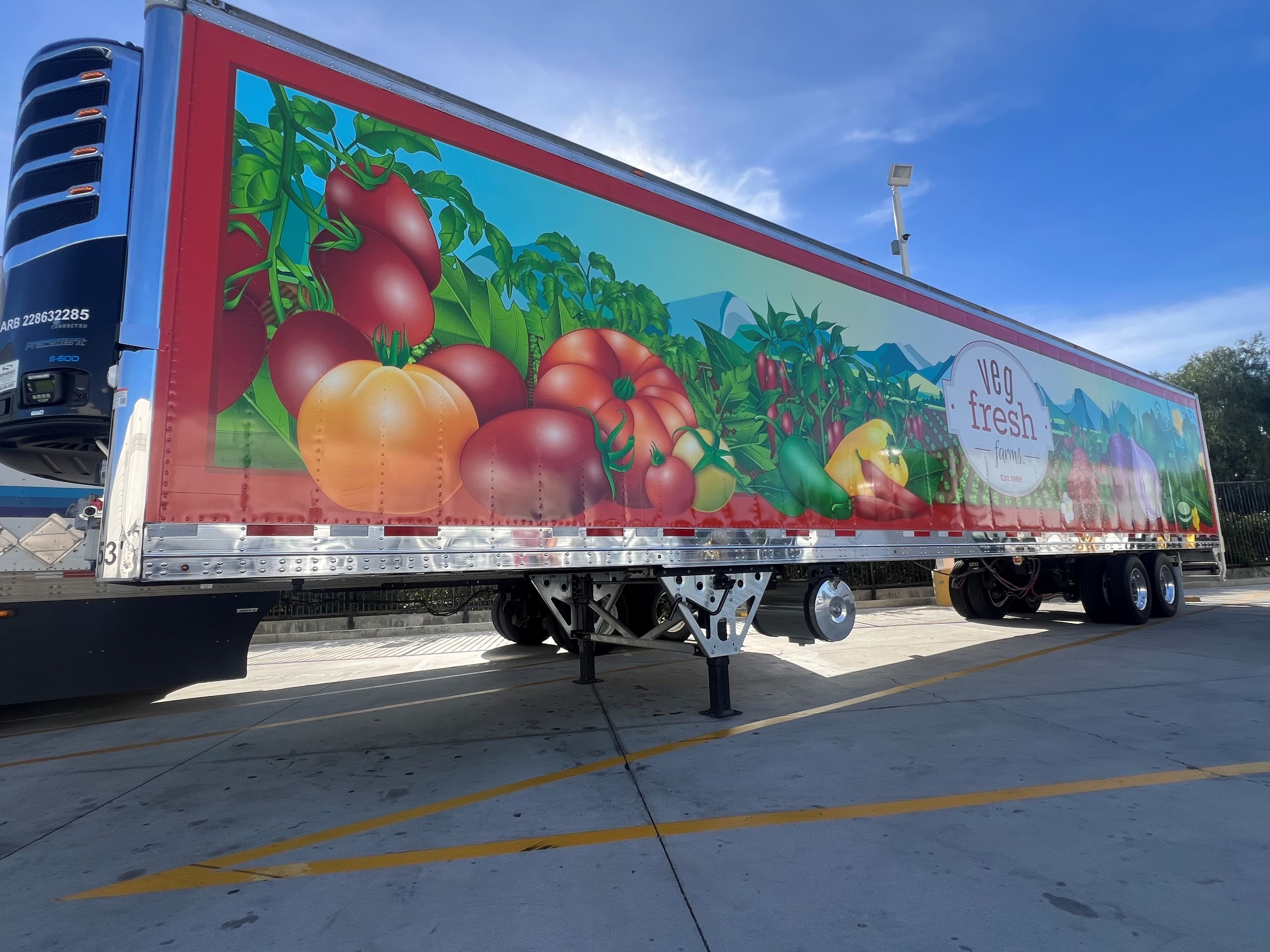
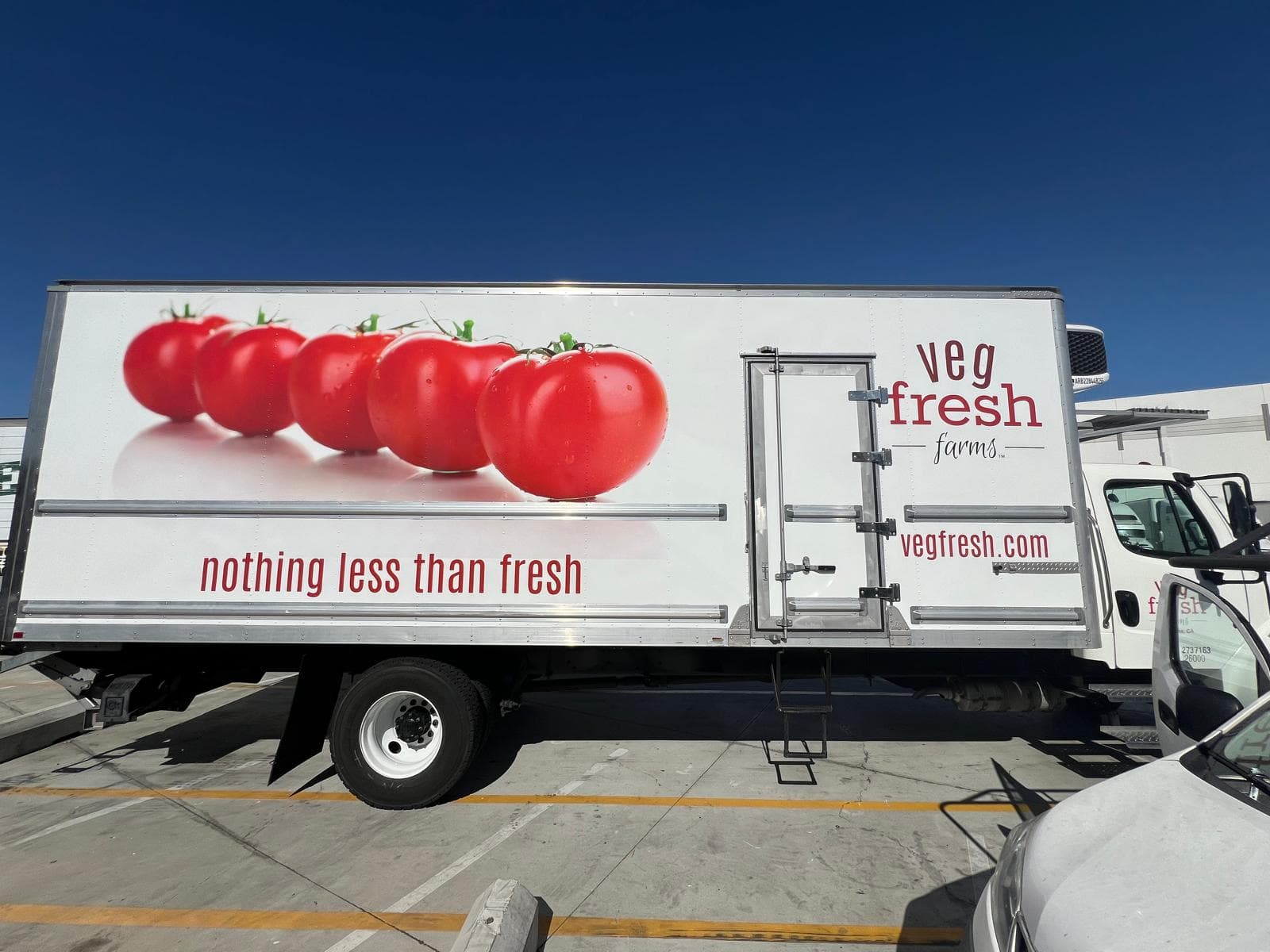
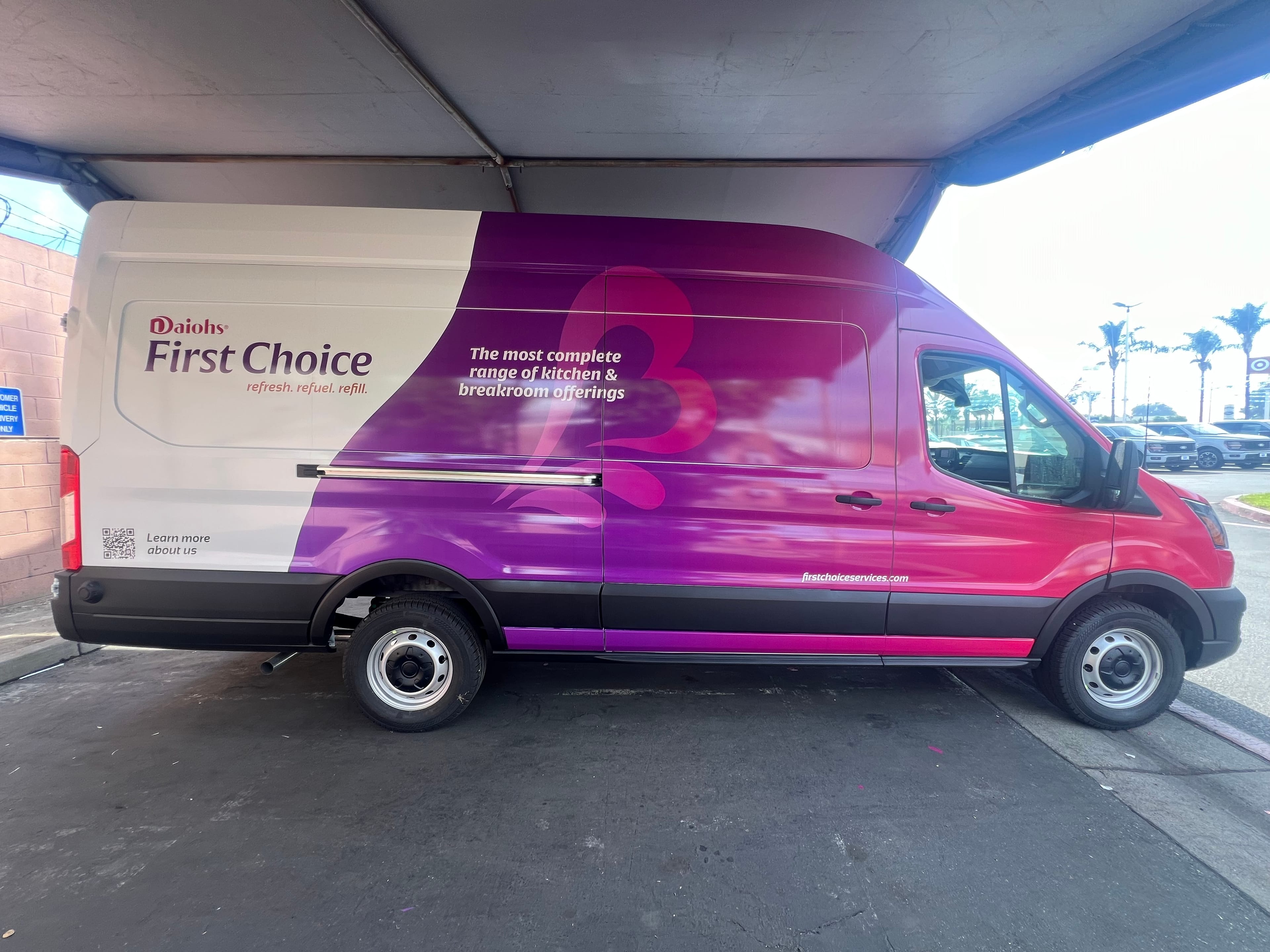
Whenever the graphic has to follow a contour or last for years. Vehicle wraps, box trucks and trailers with rivets and corrugations, and anything on a curved or recessed surface should be cast. So should graphics you expect to keep for five years or more.
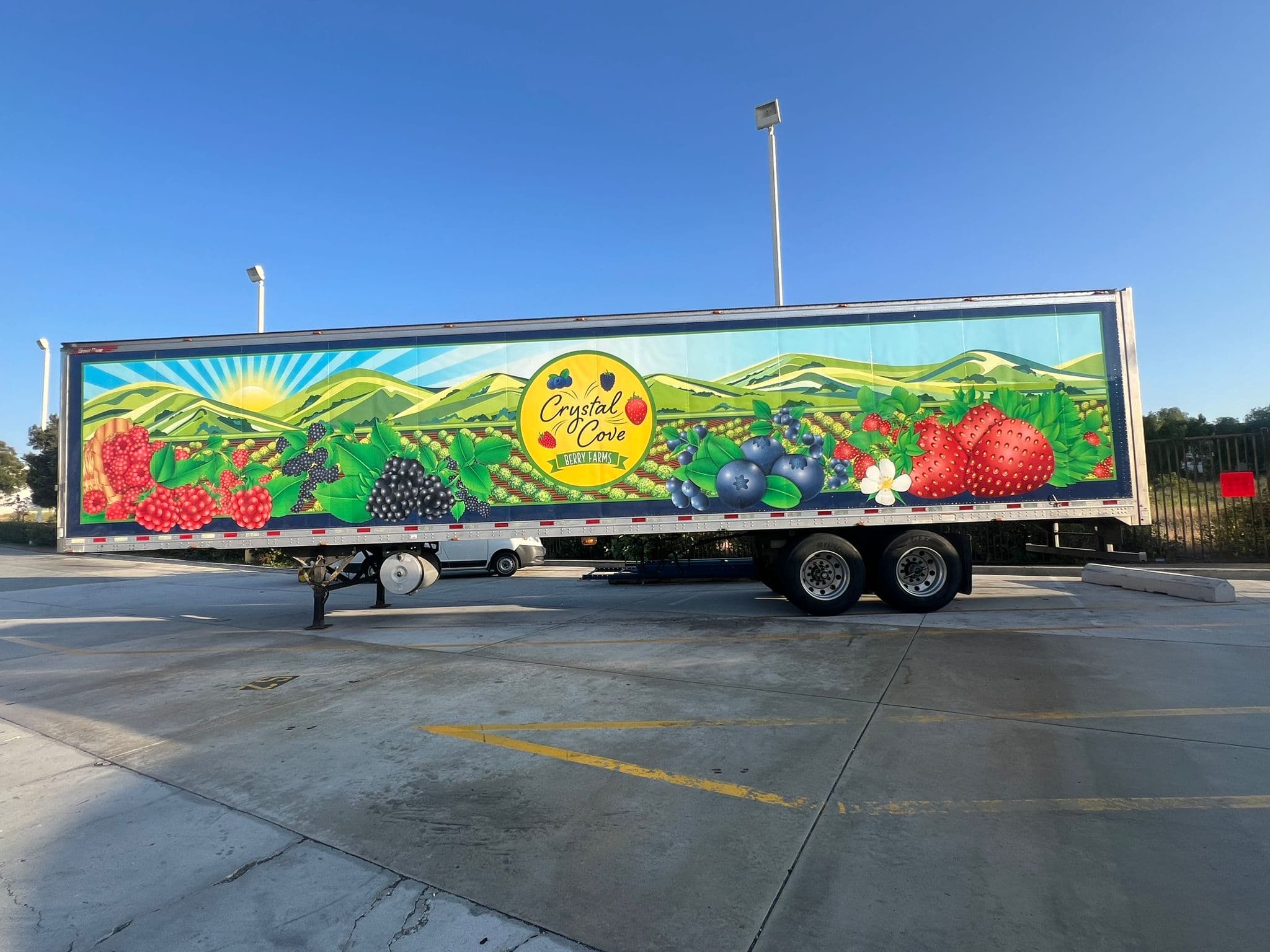
Cast vinyl earns its price on the parts of a vehicle that are hardest to cover: mirror housings, bumpers, deep door recesses, and the rivets and corrugations on refrigerated trailers and box trucks. On those surfaces a calendered film is fighting its own memory from the day it goes on.
- Full and partial vehicle wraps
- Box truck and trailer graphics over rivets and corrugations
- Fleet lettering expected to last the life of the vehicle
- Graphics on curved equipment housings and tanks
When does calendered vinyl make sense?
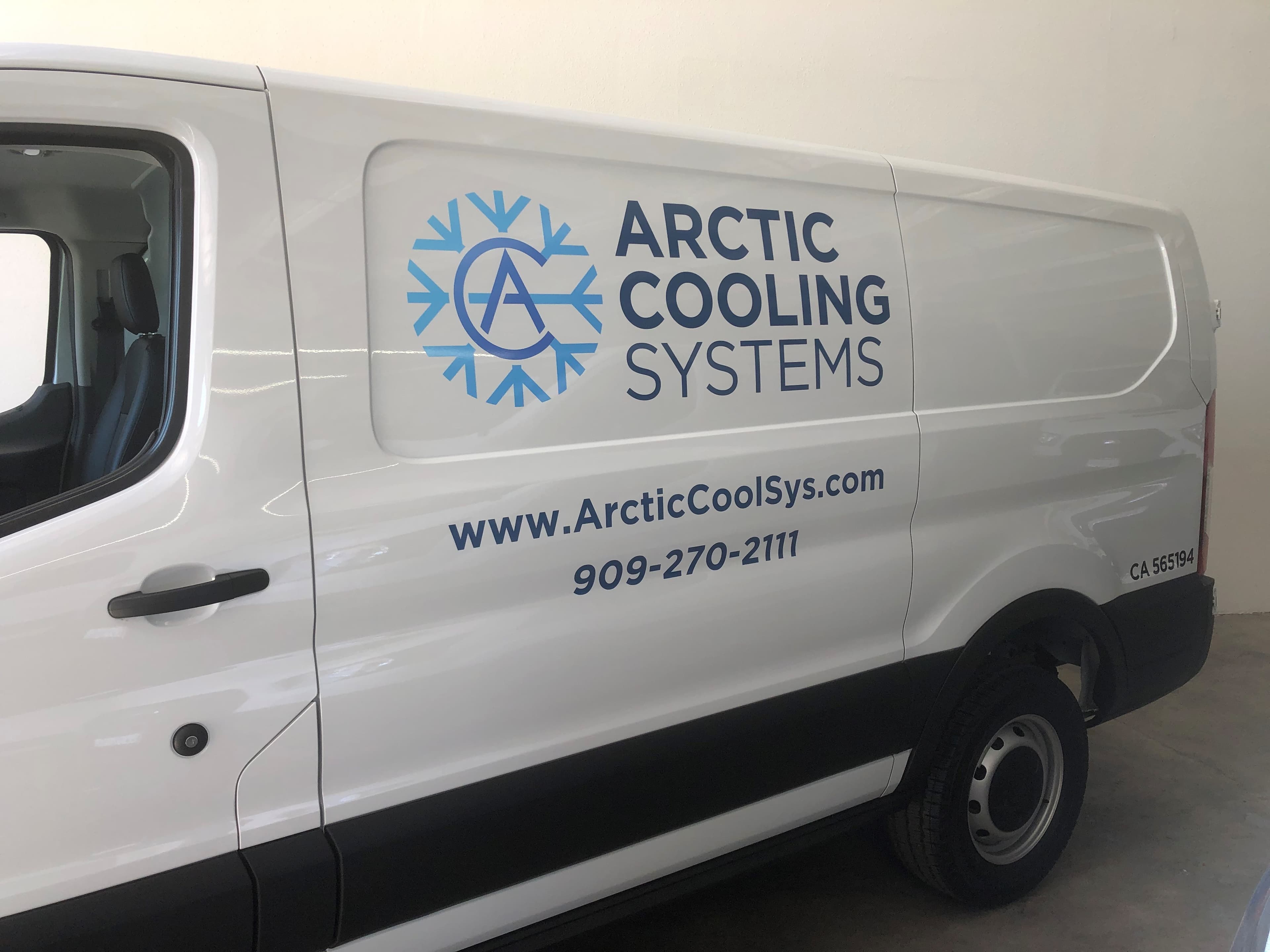
On flat or gently curved surfaces, for short- to medium-term graphics, and where budget matters more than maximum life. Window and wall graphics, promotional decals, sign panels and short-run fleet promotions are all good candidates for a quality calendered film.
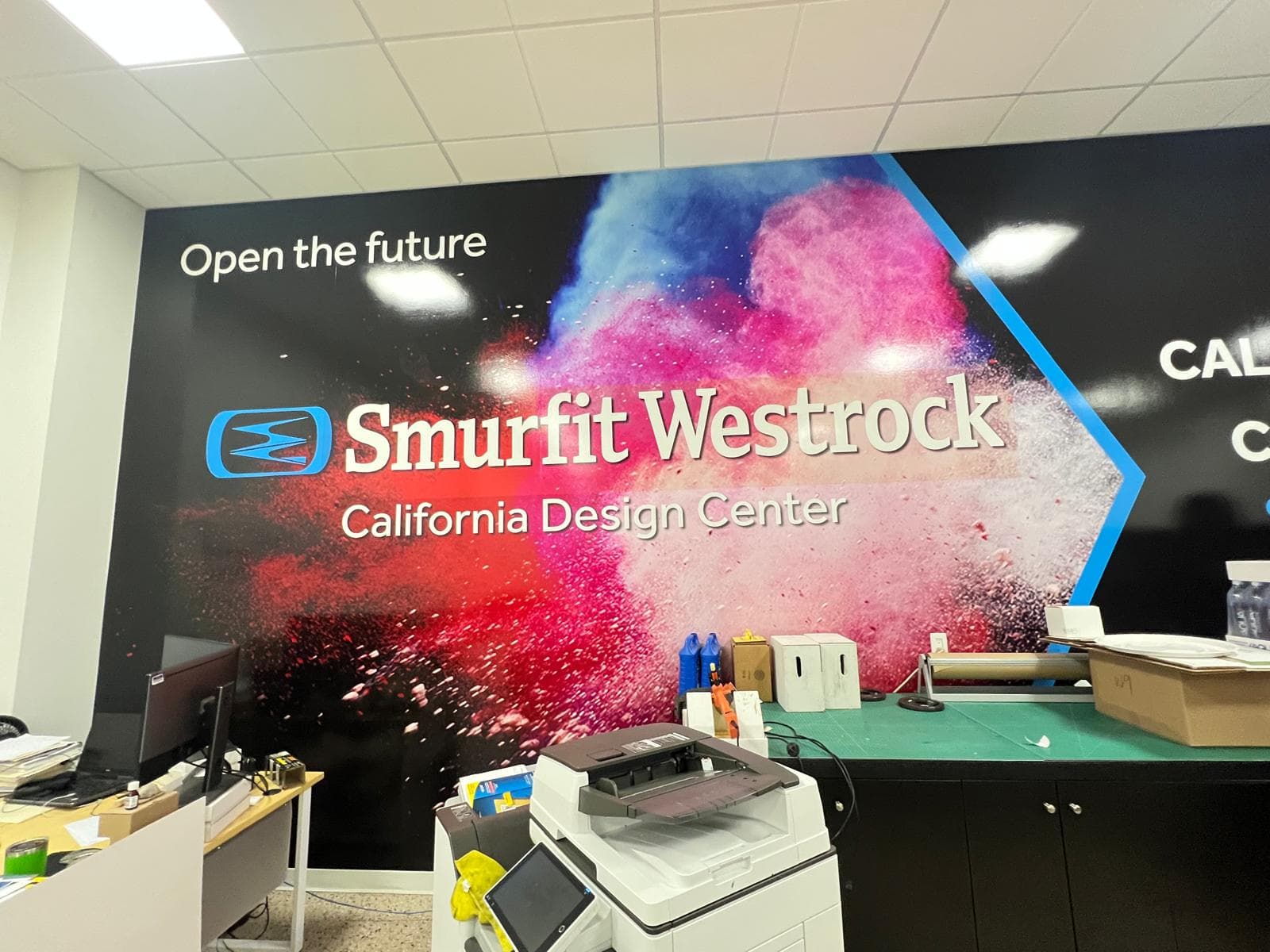
Indoors, most of what shortens a film’s life outdoors (UV, heat cycling, weather) simply is not there, so a calendered film can perform well for years on a flat wall. For retail and promotional graphics and lobby branding, the deciding factors are usually finish, removability and how the film behaves on the wall texture.
Outdoors, calendered film is a sound choice for flat panels with a short planned life: a seasonal promotion, a temporary fleet message, or a sign face that will be replaced. It is less forgiving over rivets, curves and recesses.
How do cast and calendered vinyl compare on cost over time?
Calendered film costs less up front, but cast film often costs less per year of service on anything meant to last. Because labor and downtime are a large part of every graphic, a film that lasts twice as long can be the cheaper option overall.
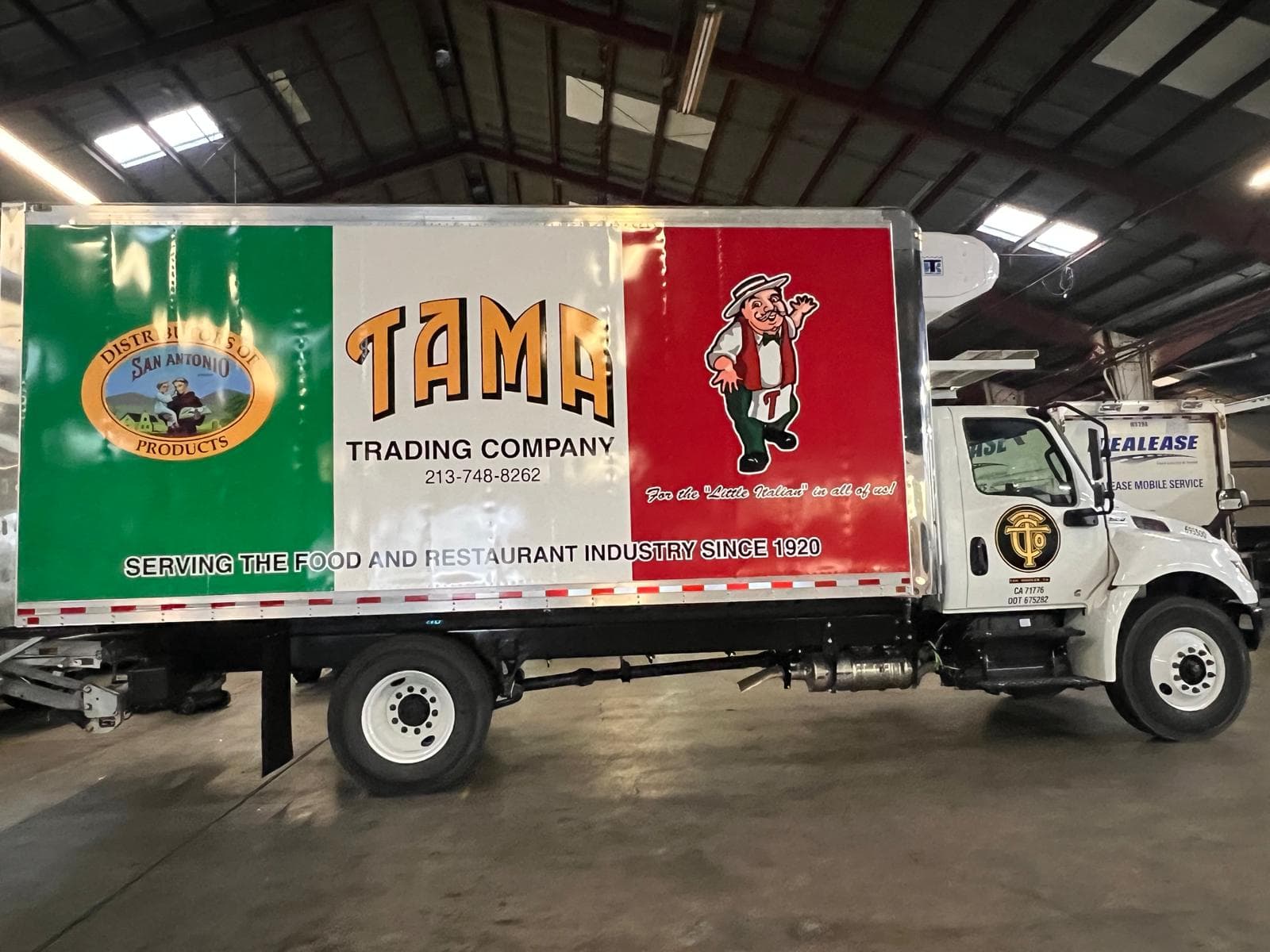
A simple way to compare: divide the total installed cost of each option by the years you expect it to last. Include production, installation and the vehicle downtime for replacement. On a truck you plan to run for five years or more, the calendered option often needs replacing partway through, and the second installation erases its head start.
How should you specify vinyl for your job?
Start from the application, not the film name. Tell your manufacturer the surface, the environment, the service life you need and any standard it must meet, and let them recommend the film, laminate and adhesive as a matched system.
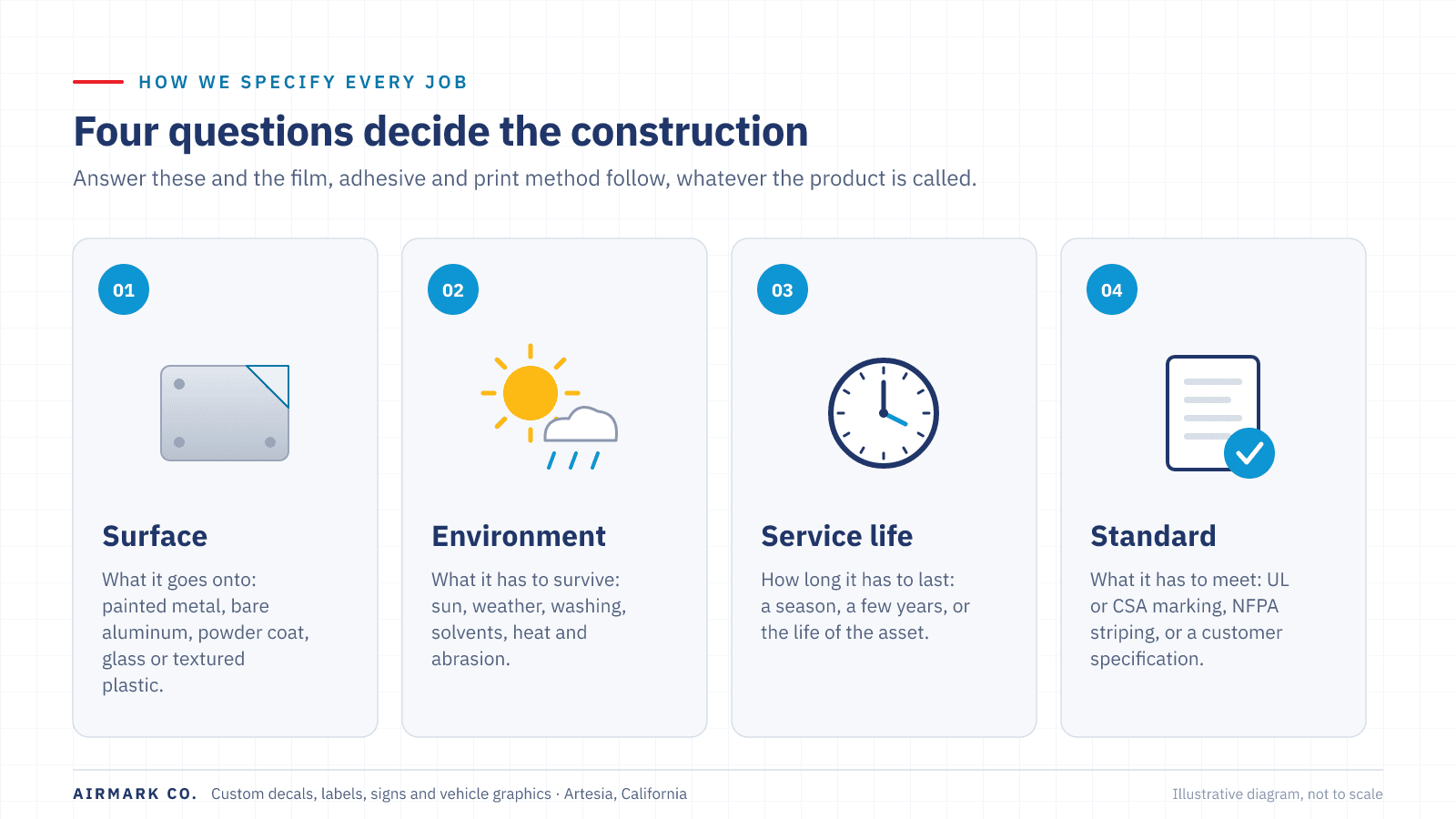
- Surface: flat, curved, riveted or corrugated; painted, bare metal or plastic.
- Environment: indoors or out, direct sun, washing, chemicals.
- Service life: months, a few years, or the life of the vehicle.
- Standard: any customer, fleet or regulatory requirement, such as reflective conspicuity or a warranty program.
Airmark specifies and manufactures vinyl graphics in Artesia for fleets and facilities across Los Angeles County, Orange County and the Inland Empire. See our materials and capabilities for the films and adhesives we work with, or request a quote and we will recommend the construction.
Frequently asked questions
Written by the production team at Airmark Co.
Airmark has manufactured decals, labels, signs and vehicle graphics in Artesia, California since 1948 — from a single prototype to long production runs. About Airmark