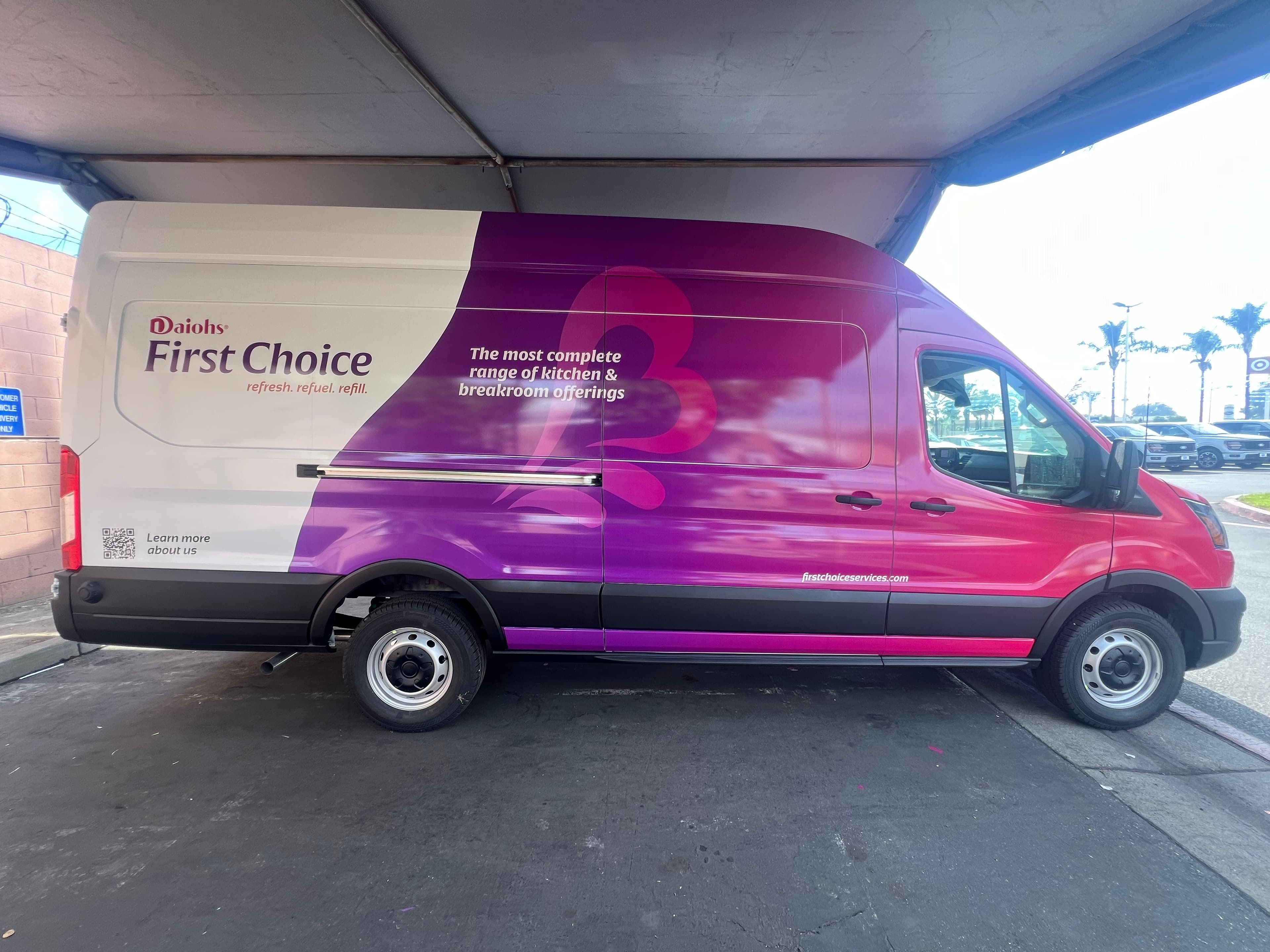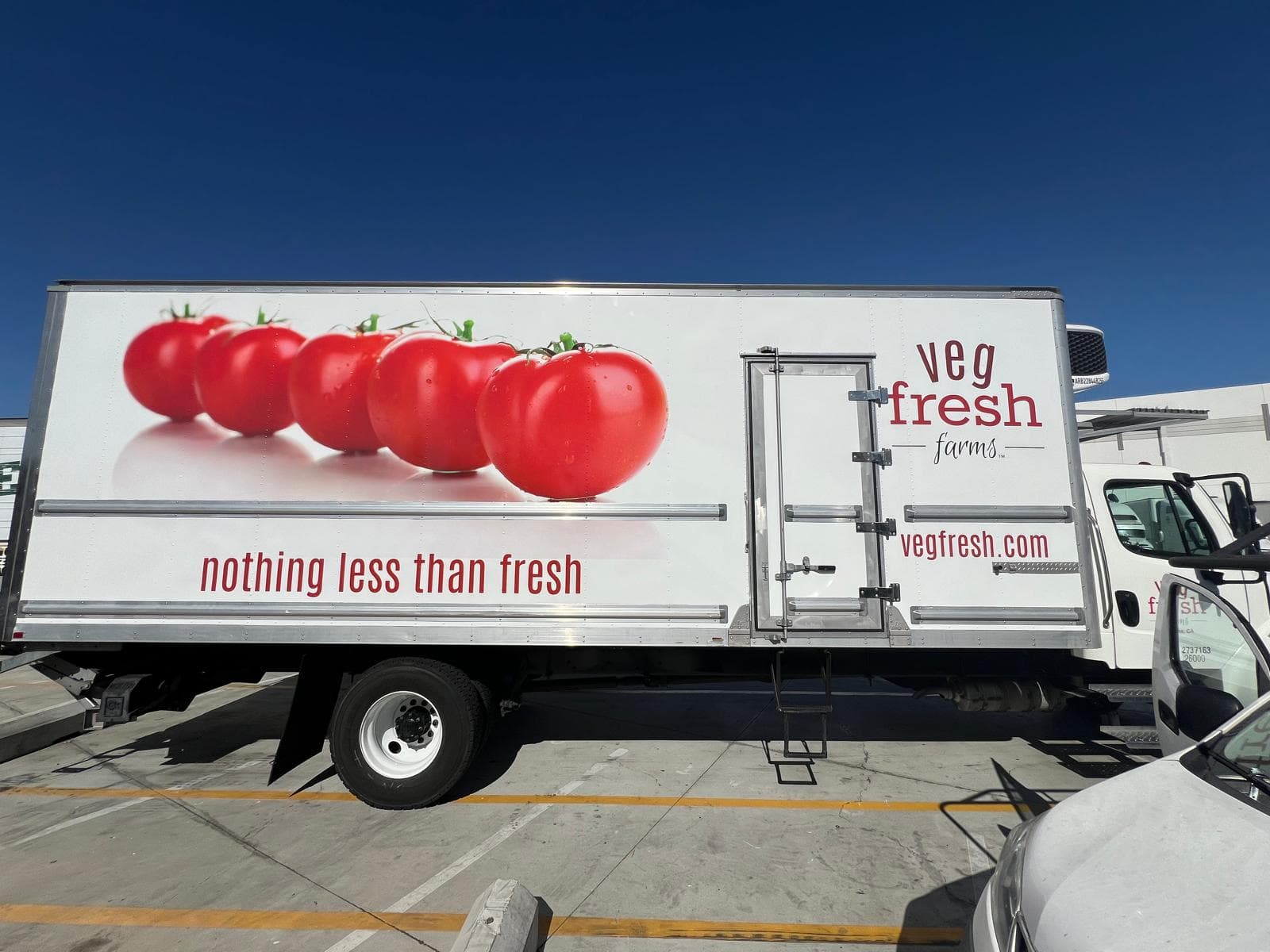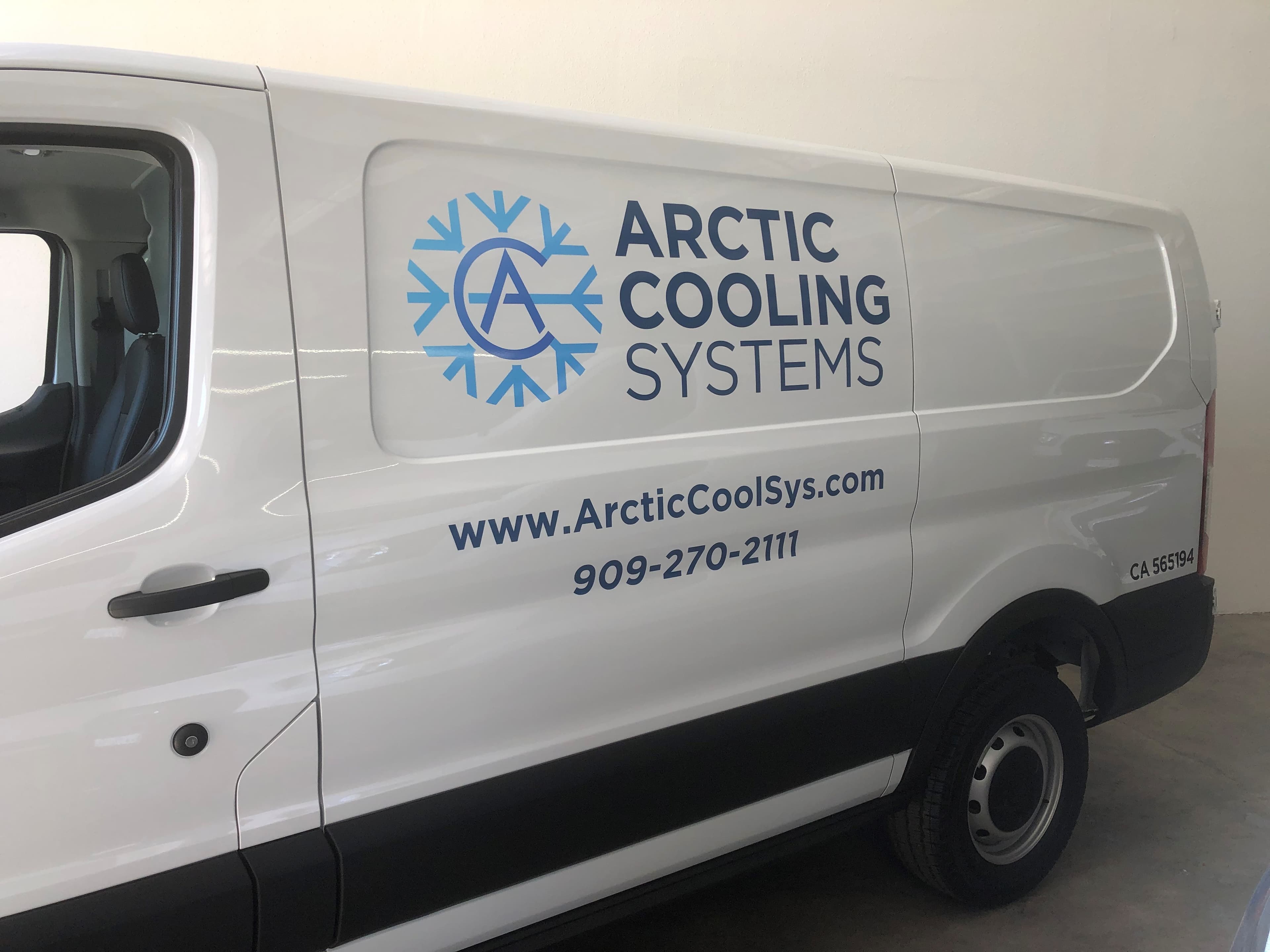
Vehicle Graphics
How Long Do Fleet Graphics Last in Southern California?
Year-round sun is hard on vinyl. Here is how long fleet graphics really last in Los Angeles, Orange County and the Inland Empire, what wears them out, and the habits that add years.
Quick answer
Typically three to seven years. Printed cast-vinyl graphics with an overlaminate sit at the top of that range on vertical surfaces; calendered films and horizontal surfaces such as roofs and hoods sit lower. In Southern California, year-round UV and heat are the biggest factors, followed by washing habits and where the vehicle is parked.
Key takeaways
- Film choice matters most: cast vinyl outlasts calendered, especially over curves and rivets.
- Horizontal surfaces such as roofs, hoods and trunk lids take far more sun and wear out first.
- A UV-protective overlaminate protects printed graphics from fading and abrasion.
- Gentle washing, shade and staying within pressure-washing limits can add years.
On this page +
How long do fleet graphics last in Southern California?
Most professionally made fleet graphics last between three and seven years in Southern California. Where a given vehicle lands in that range depends on the film, the laminate, the ink, the orientation of the surface, and how the vehicle is used, washed and parked.
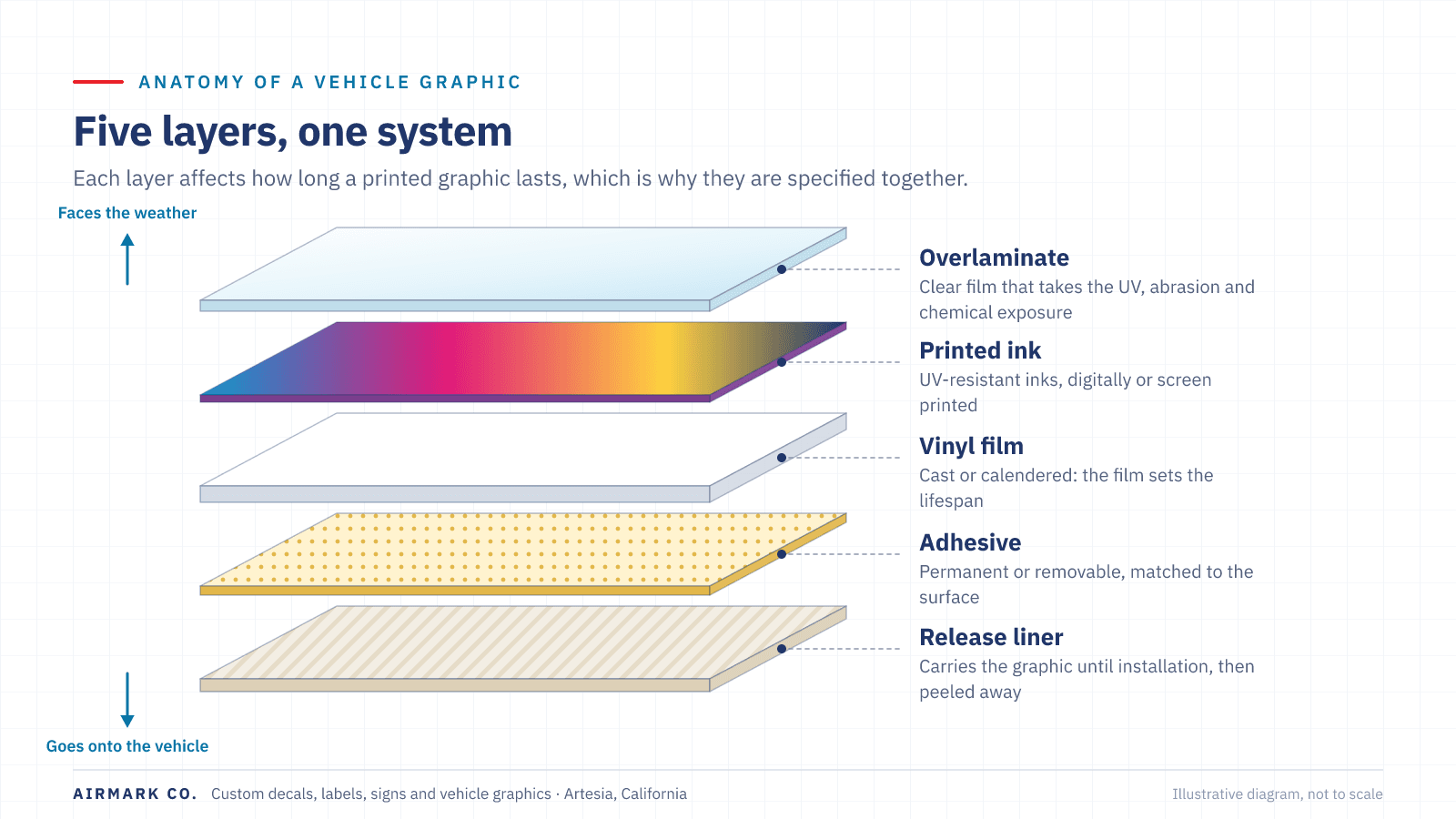
Film manufacturers publish durability ratings for their products, and those ratings are usually given for vertical surfaces in moderate climates. Southern California is not a moderate climate for vinyl. Long, sunny summers, strong UV for most of the year and heat that builds up on dark paint all push real-world life toward the lower end of the rating.
| Construction | Typical outdoor life | Best for |
|---|---|---|
| Calendered vinyl, printed | 3 to 5 years | Flat panels, short-term promotions, budget-sensitive fleets |
| Cast vinyl, printed and laminated | 5 to 7 years | Full and partial wraps, curves, rivets and corrugations |
| Cast vinyl, single-color die-cut | 7 years or more | Lettering, logos, DOT numbers and unit numbering |
Typical outdoor life by construction (vertical surfaces)
These are general industry figures, not a warranty. The rating for a specific film, and any warranty that goes with it, depends on the manufacturer and the exact construction, so ask for both in writing when you order.
Why does Southern California sun shorten graphic life?
Ultraviolet light breaks down the pigments in printed ink and the plasticizers in vinyl, so colors fade and the film slowly becomes brittle. Heat speeds that up and softens adhesives. Surfaces that face the sky take the most exposure, which is why roofs and hoods fail years before doors do.
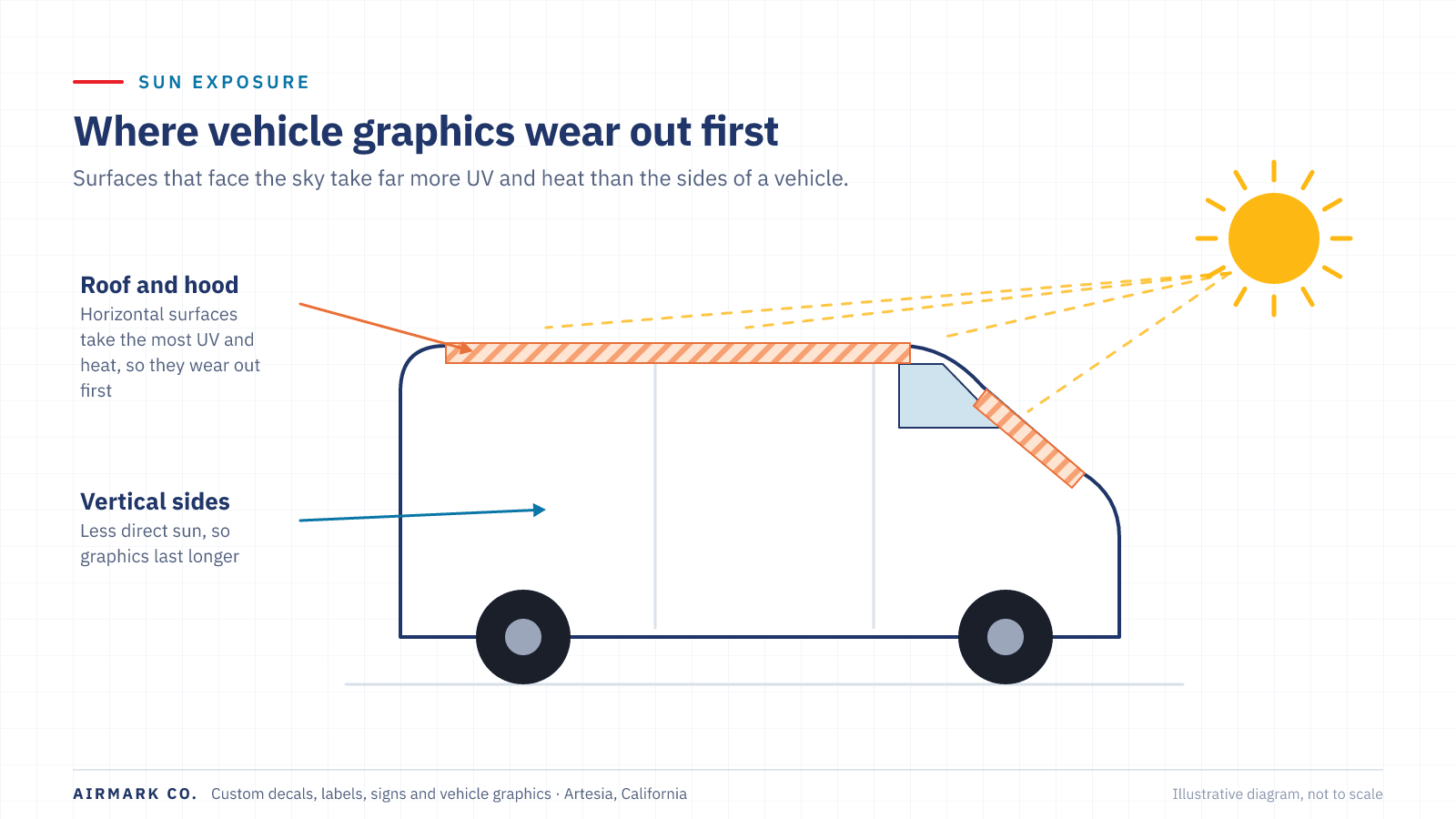
Across the Los Angeles basin and the Inland Empire, UV levels run high for much of the year, and a white box truck parked on hot asphalt in Santa Fe Springs or Riverside spends a lot of its life in full sun. Darker vehicle colors absorb more heat, which raises surface temperatures and speeds up the aging of both film and adhesive.
That is also why film makers rate horizontal applications for shorter life than vertical ones. If a graphic covers the roof or hood, plan to replace it sooner, or keep the design to the sides and doors.
- Faded reds and yellows, usually the first colors to go
- Chalky or dull patches on the laminate
- Cracking or crazing, especially on horizontal areas
- Edges lifting where the film has shrunk
Does cast or calendered vinyl last longer?
Cast vinyl lasts longer. It is made as a thin, relaxed film that holds its shape, so it conforms to curves, rivets and corrugated panels without trying to shrink back. Calendered vinyl is rolled into shape, keeps some memory, and can shrink and lift over time, which is fine for flat, shorter-term work.
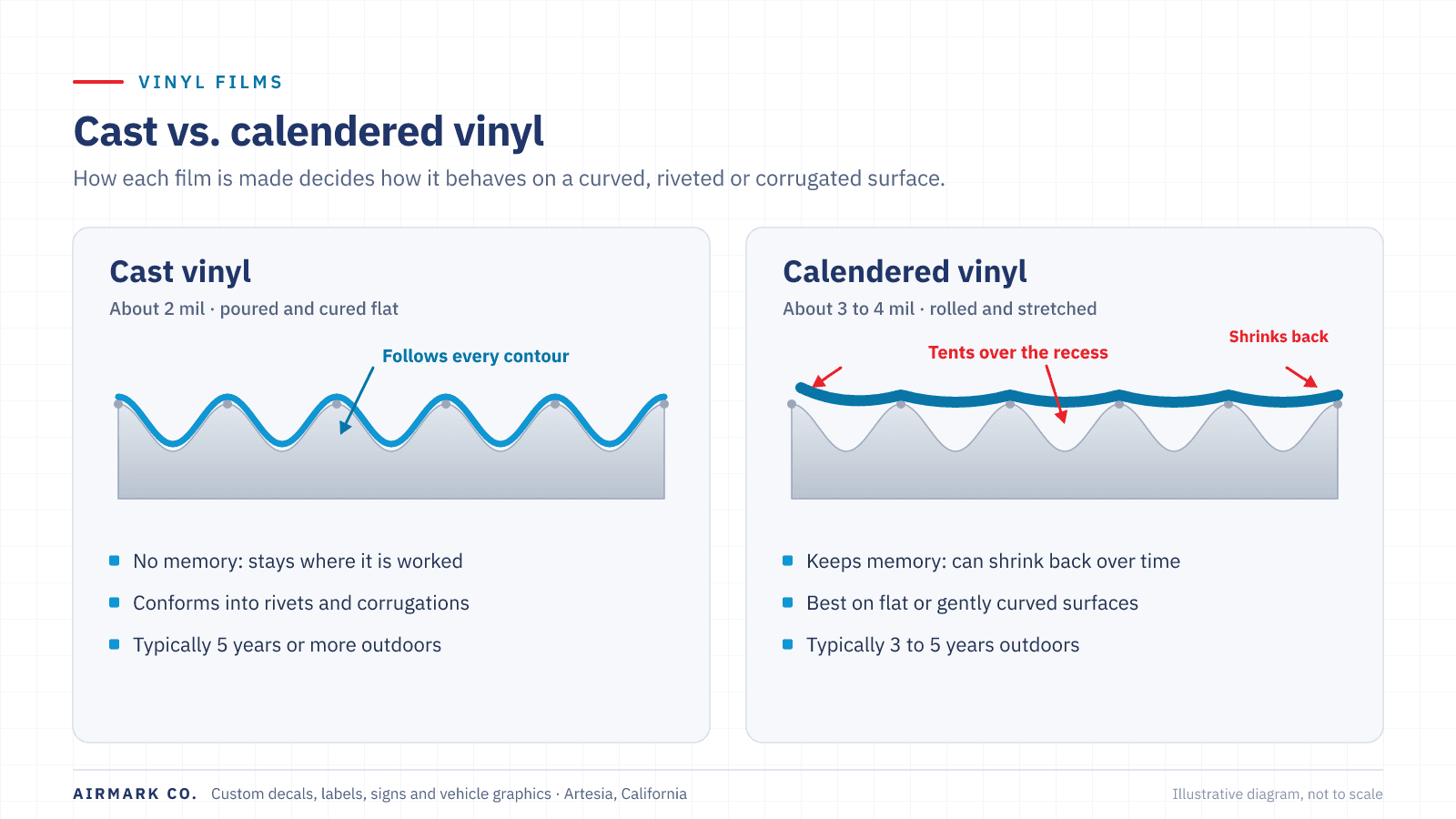
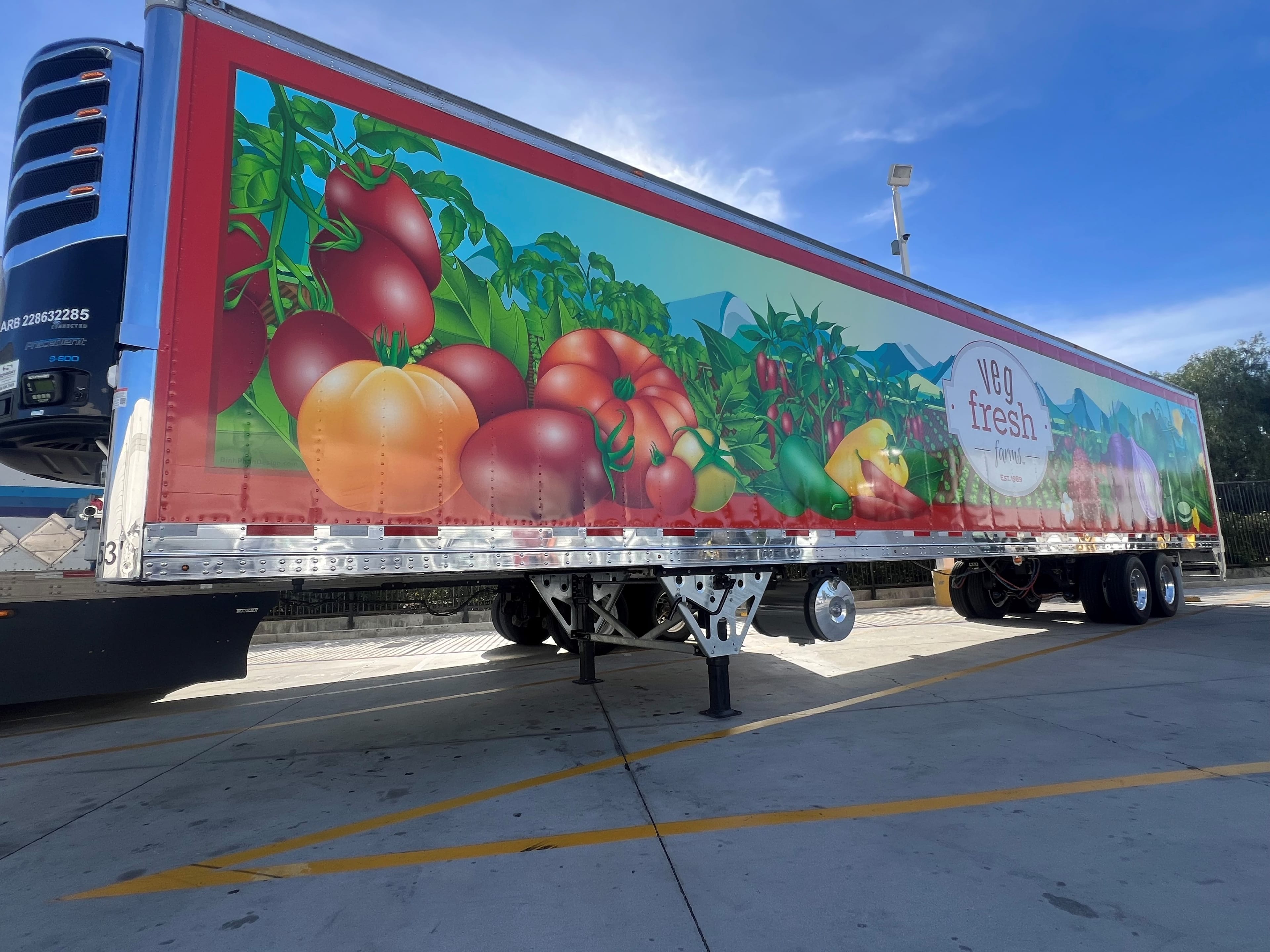
For box trucks and trailers with rivets and corrugations, and for vans with deep contours, cast film is usually the right answer. A calendered film stretched into a recess tends to pull back out of it over a hot summer. On flat, smooth panels with a short planned life, a premium calendered film can be a sensible way to control cost.
We cover the trade-offs, including cost per year of service, in cast vs. calendered vinyl.
Do overlaminates really make graphics last longer?
Yes, for printed graphics. A clear overlaminate shields the ink from UV, abrasion, fuel, road salts and cleaning chemicals, and gives the surface a finish that is easier to wash. Without one, printed colors fade and scuff noticeably faster.
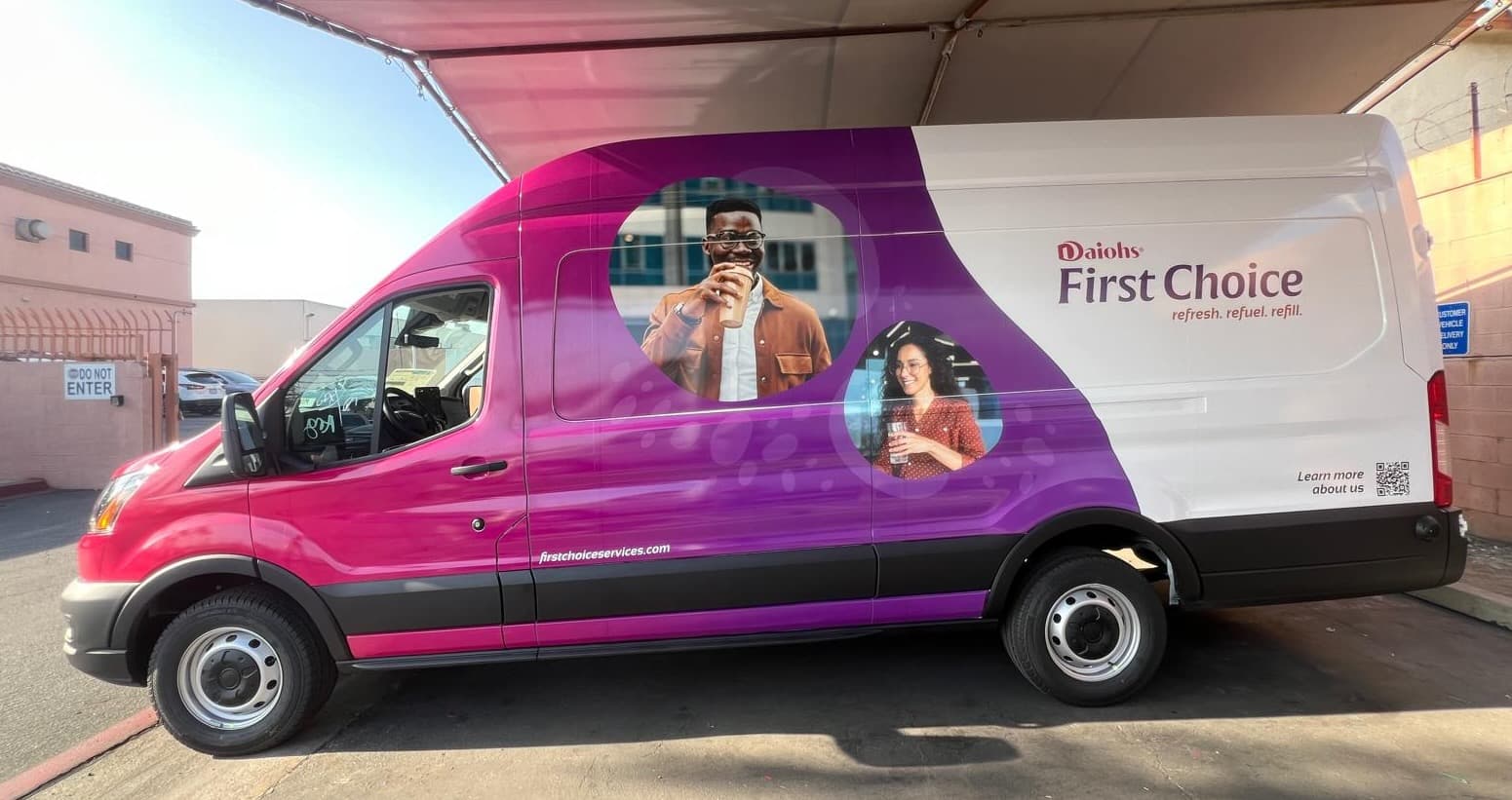
The laminate should come from the same system as the printed film, so the two expand, contract and age together. Mismatched films can tunnel, shrink or delaminate. Fleet buyers often ask about the 3M Matched Component System for exactly this reason: it warrants the films, inks and laminate as one system rather than piece by piece.
Single-color die-cut lettering usually does not need a laminate, because the color runs through the film itself. That is one reason cut vinyl lettering can outlast a printed wrap on the same truck.
How do you make fleet graphics last longer?
Wash regularly by hand or in a touchless wash, keep pressure washers at a safe distance and pressure, park in shade or indoors where you can, and repair lifting edges early. Good care can add years to a graphic’s life.
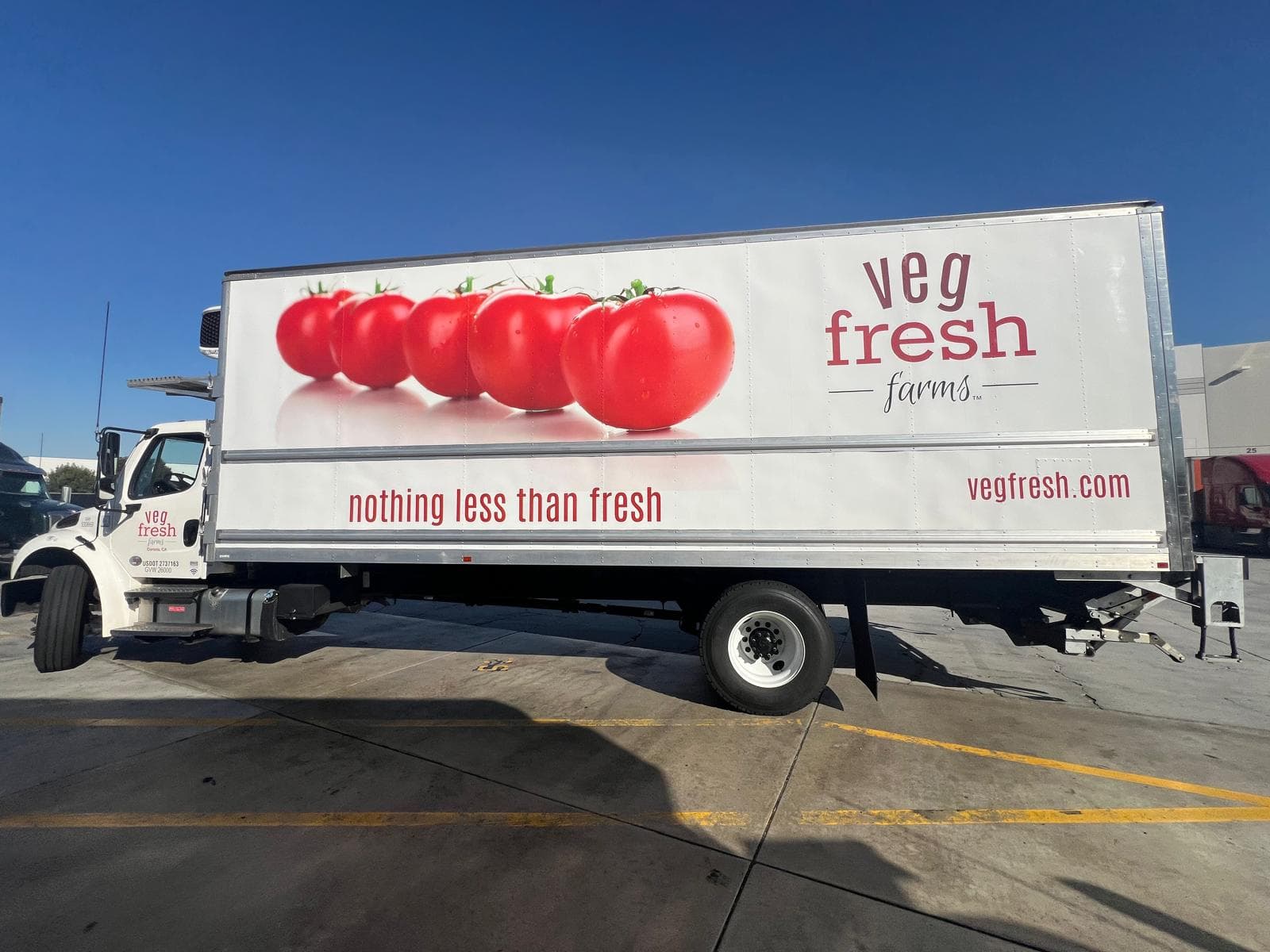
- Wash often, gently. Dirt and road film hold heat and abrade the laminate. Use a mild detergent and a soft brush or sponge.
- Respect the pressure washer. Film makers generally recommend staying under about 2,000 psi, keeping water below about 180 °F, using a wide-angle nozzle held at least a foot away, and never aiming at an edge.
- Avoid harsh chemicals. Solvents, tar removers and some wheel cleaners attack vinyl and laminate, so test in an inconspicuous spot first.
- Park smart. Shade, carports and indoor parking dramatically reduce UV exposure.
- Fix edges early. A lifting edge lets in water and dirt, and a quick repair stops it spreading.
When a graphic does reach the end of its life, remove it before it turns brittle. Old, sun-baked vinyl comes off in small chips instead of large sheets, which adds labor. Our vehicle wrap guide covers removal and replacement in more detail, and our waste and recycling page covers the particular demands of refuse fleets.
Frequently asked questions
Written by the production team at Airmark Co.
Airmark has manufactured decals, labels, signs and vehicle graphics in Artesia, California since 1948 — from a single prototype to long production runs. About Airmark