Emergency Vehicles
NFPA 1901 Chevrons Explained: Rear Reflective Striping for Fire Apparatus
Rear chevrons are the most recognizable safety marking on a fire apparatus. Here is what NFPA 1901 asks for, how side striping works, and how to specify chevron panels that fit your doors and compartments.
Quick answer
NFPA 1901 requires retroreflective chevron striping on at least 50 percent of the rear-facing vertical surfaces of a fire apparatus. The stripes slope down and away from the centerline at 45 degrees, are 6 inches wide, and alternate red with fluorescent yellow, fluorescent orange or fluorescent yellow-green. The standard also sets reflective striping along the sides and front.
Key takeaways
- Rear chevrons: 45°, 6-inch stripes, sloping down and away from the centerline.
- Colors: red alternating with fluorescent yellow, orange or yellow-green.
- Coverage: at least 50% of the rear-facing vertical surfaces, plus striping along at least half of each side.
- Specify panels to your actual doors, hinges and lights, and confirm the edition of the standard your specification cites.
On this page +
What does NFPA 1901 require on the rear of an apparatus?
At least half of the rear-facing vertical surfaces must carry retroreflective striping in a chevron pattern. Each stripe is 6 inches (150 mm) wide and slopes downward and away from the vehicle’s centerline at 45 degrees, so the pattern points upward like an inverted V.
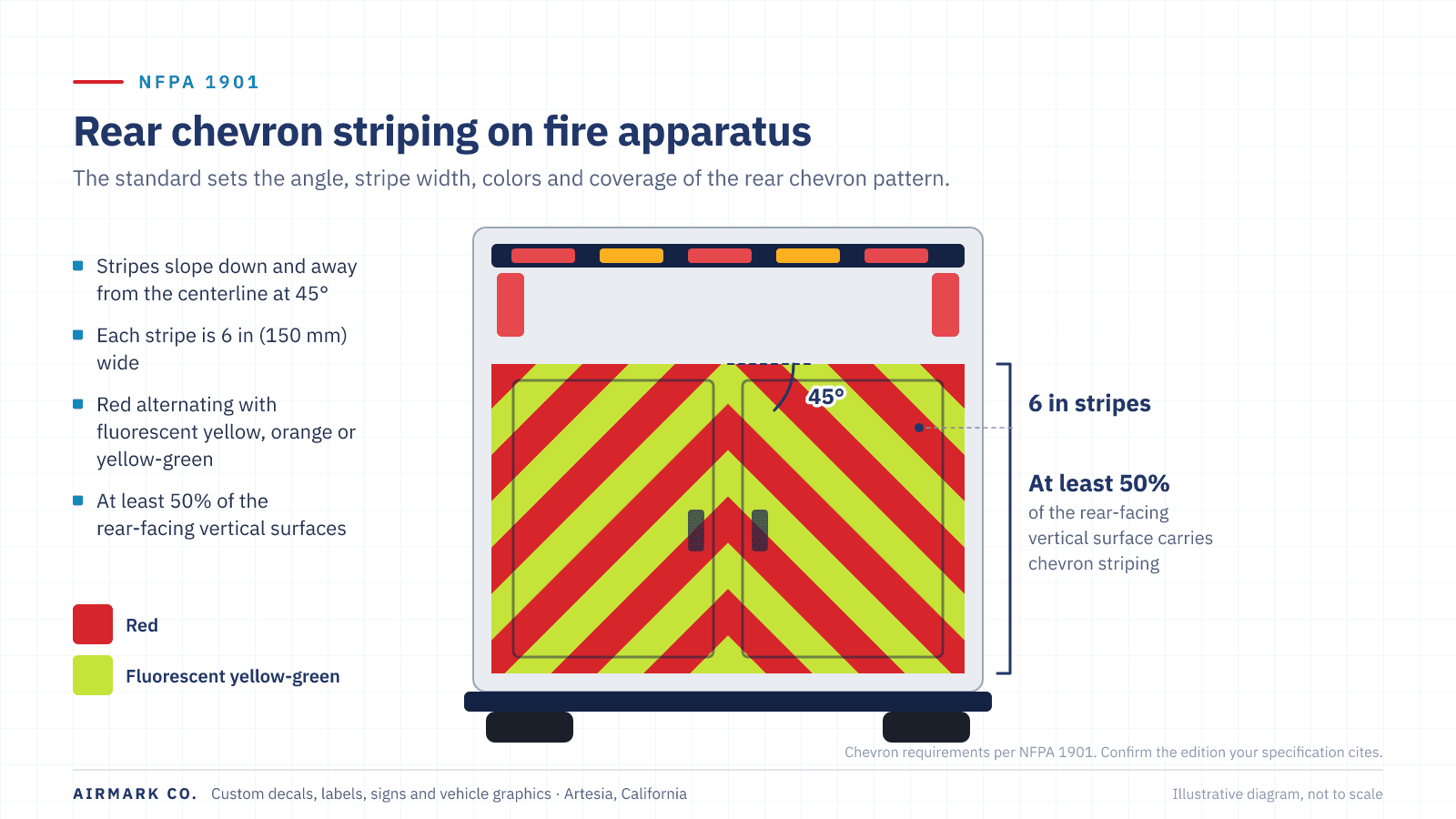
The chevron works because it reads as a warning instantly, even at a glance and at night. Sloping the stripes down and away from the centerline creates a pattern that points upward and outward, drawing the eye to the full width of the vehicle.
The requirement applies to rear-facing vertical surfaces visible from behind the apparatus, which typically includes rear compartment doors, body panels and the tailboard area. Some areas, such as pump panel areas not covered by a door, can be excluded; the exact wording depends on the edition your specification references.
What colors and materials does NFPA 1901 allow?
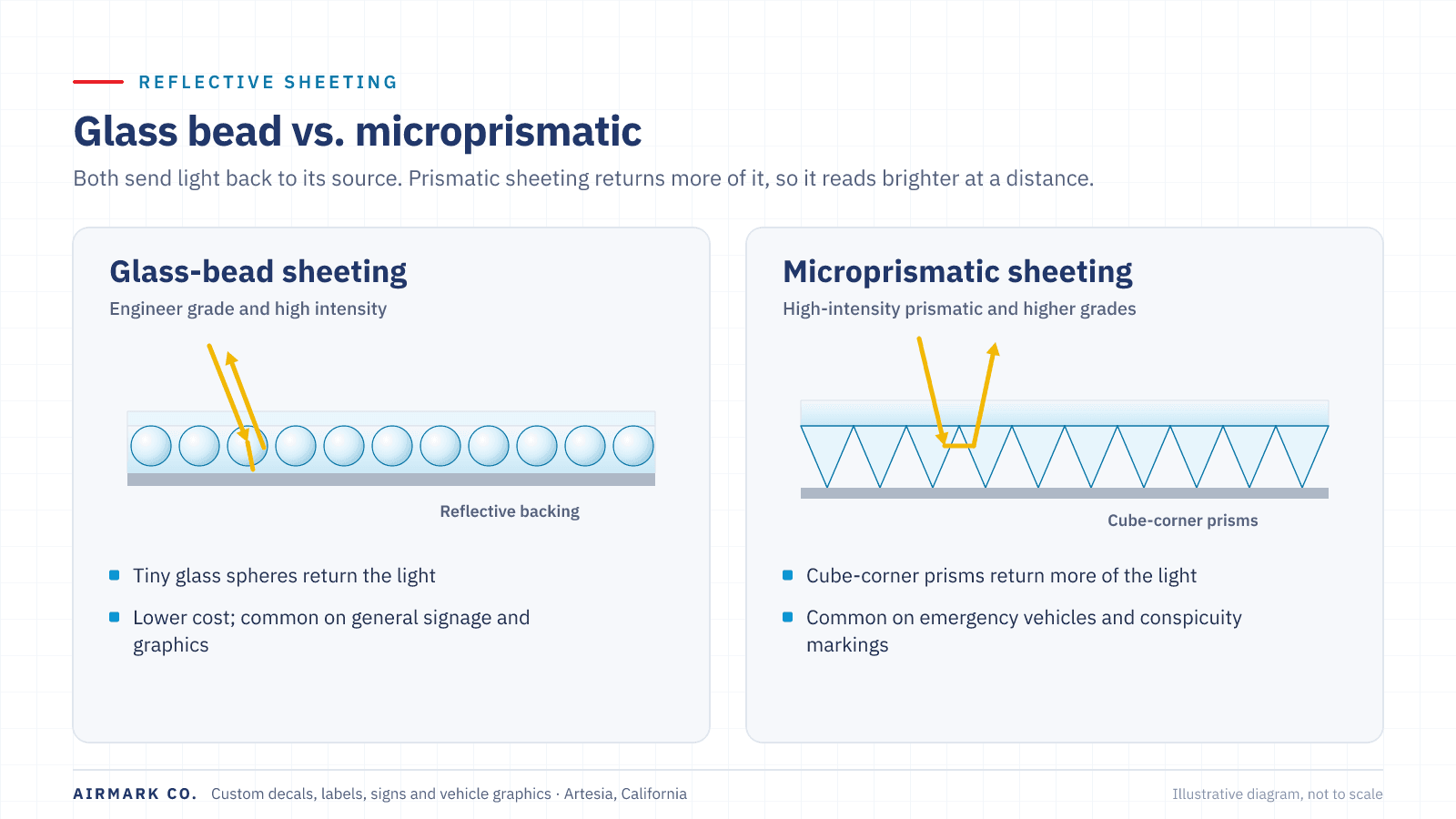
Each chevron stripe is a single color, alternating between red and one of fluorescent yellow, fluorescent orange or fluorescent yellow-green. The striping must be retroreflective, and most agencies specify microprismatic sheeting for its brightness.
Red with fluorescent yellow-green is a common pairing, but agencies choose based on their existing fleet and local practice. Consistency across a department’s vehicles matters: mixing combinations weakens the instant recognition that makes chevrons work.
The standard sets minimum retroreflective performance for the sheeting. Your apparatus specification may call out a particular grade or product, and if it does, that is what the panels should be made from.
What about striping on the sides and front?
NFPA 1901 also calls for a retroreflective stripe, or combination of stripes, along at least 50 percent of the cab and body length on each side and across at least 25 percent of the front, with a minimum total width of 4 inches.
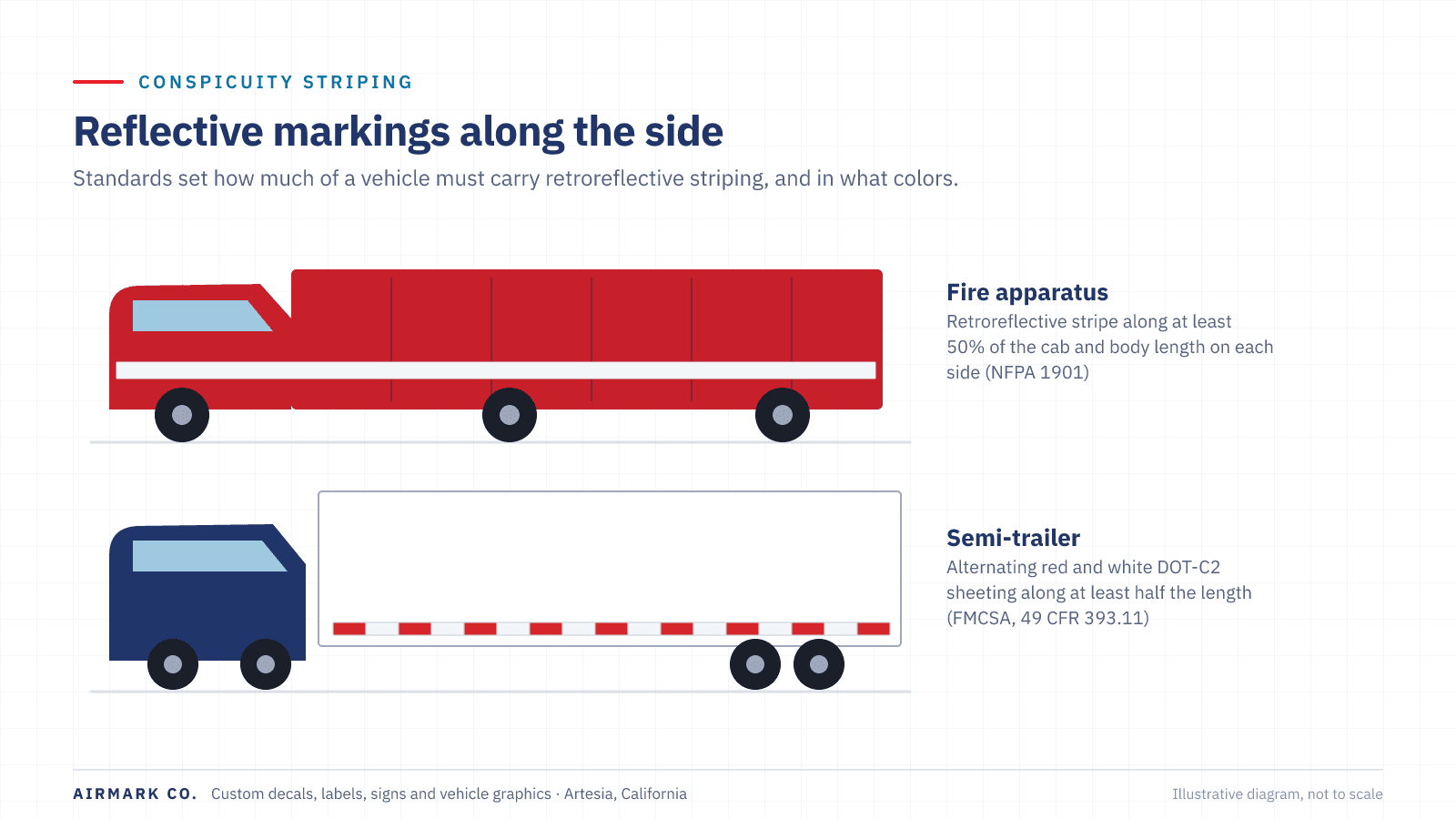
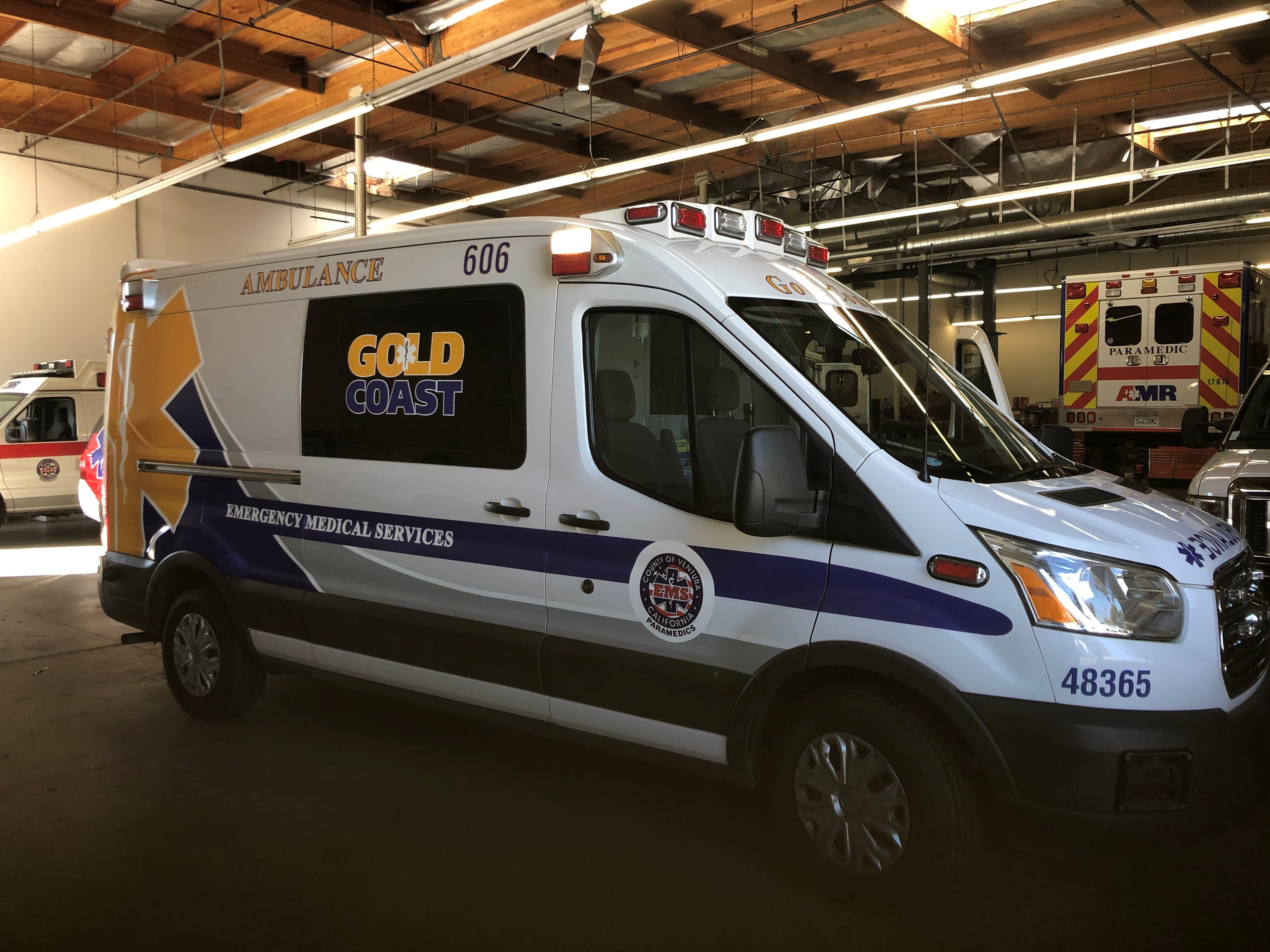
The side stripe can be a single band or a combination of stripes that add up to the required width, and it may be interrupted by doors, compartments and equipment as long as the coverage is met. Many departments combine the required striping with their lettering and graphics package, so the whole apparatus reads as one design.
Ambulances follow their own standards, historically NFPA 1917 alongside federal and industry ambulance specifications, which include their own reflective striping and rear chevron requirements. NFPA has since consolidated its apparatus and ambulance standards, including 1901 and 1917, into NFPA 1900, so newer specifications may cite that instead.
Should you buy pre-cut chevron kits or custom-cut panels?
Custom-cut panels, sized to the actual rear of the apparatus, usually give better coverage and a cleaner result than generic kits. Doors, hinges, handles, lights and compartments all break up the rear surface, and a kit that ignores them leaves gaps or overlaps.
Pre-cut kits are convenient for common rear configurations and quick replacements. Custom panels start from measurements or drawings of the specific apparatus, and they are cut so the pattern lines up across door gaps and around hardware, which is what makes the rear read as a single chevron rather than a patchwork.
- Measure each rear panel and door, including hinge lines and gaps
- Mark lights, handles, reflectors and anything the striping must clear
- Note the color pair your department already uses
- Tell us the sheeting your specification calls for, if any
We manufacture chevron panels to the specification you supply, in the reflective sheeting it calls for. Send the measurements through our quote request form, or see our vehicle graphics page for the full emergency vehicle package.
Who is responsible for NFPA 1901 compliance?
Your agency’s purchasing specification defines what the striping must meet, and the apparatus builder or the agency confirms compliance. A graphics supplier manufactures the striping to that specification.
That division matters when you order replacement chevrons after a repair or a refurbishment. The replacement should match the original specification, including the sheeting grade and color pair, so the apparatus stays consistent with how it was accepted.
Frequently asked questions
Sources and standards
Written by the production team at Airmark Co.
Airmark has manufactured decals, labels, signs and vehicle graphics in Artesia, California since 1948 — from a single prototype to long production runs. About Airmark