Signs & Floor Graphics
Floor Decals for Warehouses and Retail: Slip Resistance, Life and Installation
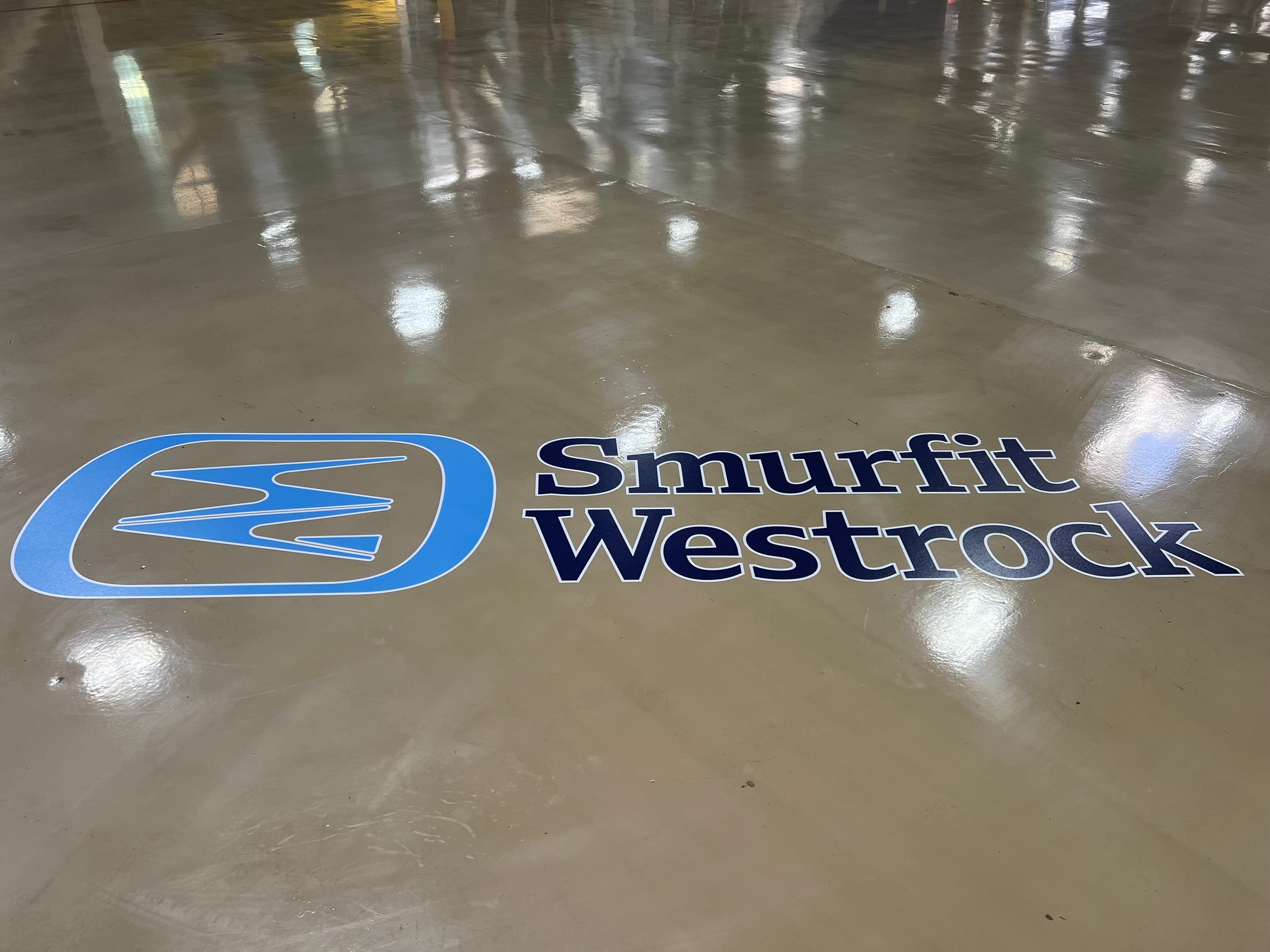
Floor graphics brand a space, direct traffic and mark safe routes. Here is how they are built to be walked on, how long they last, and the preparation that decides whether they stay down.
Quick answer
Floor decals are printed vinyl graphics made for floors, protected by a textured, slip-resistant overlaminate and backed with an adhesive designed to hold under foot traffic. Indoors they last anywhere from a few weeks to a year or more, depending on traffic, cleaning and the floor surface, and preparation decides whether they stay down.
Key takeaways
- A floor decal needs a textured, slip-resistant overlaminate; standard vinyl does not belong on a floor.
- Life depends on traffic, cleaning and the floor: forklifts, scrubbers and fresh sealers all shorten it.
- Most floor graphic failures start with floor preparation, not the film.
- Use floor graphics for wayfinding, safety zones and branding, alongside wall and post signage.
On this page +
What are floor decals made of?
A floor decal is a printed, floor-grade vinyl film with an adhesive made to hold under traffic, topped with a clear textured overlaminate that provides slip resistance and protects the print from scuffing.
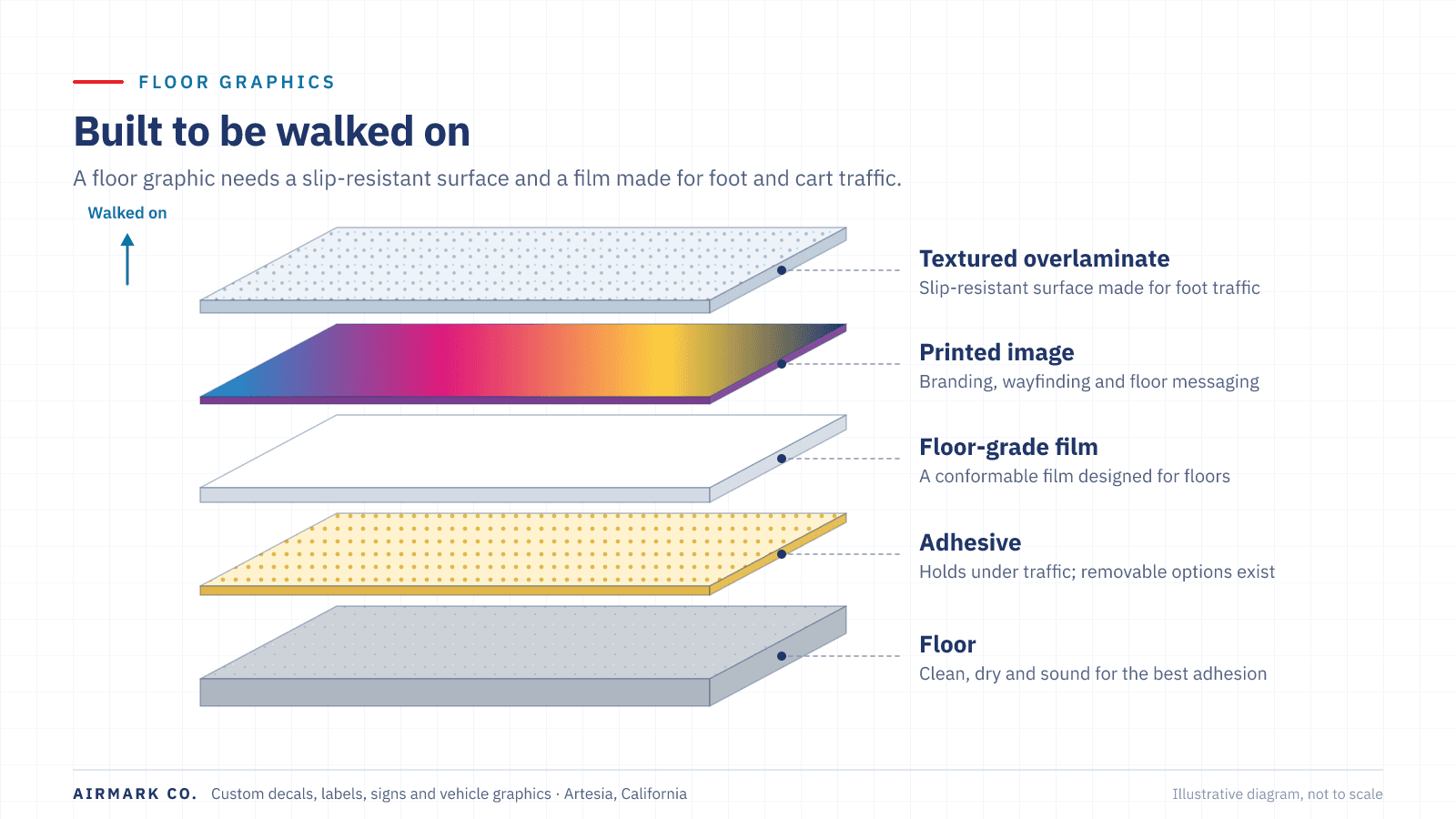
The overlaminate matters most. Standard glossy vinyl is slippery underfoot and scuffs quickly, so floor graphics use laminates with a textured surface that are tested for slip resistance; manufacturers commonly cite a UL 410 rating. The print sits under that laminate, protected from shoes, carts and cleaning.
The film and adhesive are chosen for the floor. Sealed concrete, polished concrete, vinyl tile and sealed wood each behave differently, and rough or porous floors need films and adhesives made specifically for them.
Where do floor graphics work best?
Floor graphics work wherever people need directions or reminders at the moment they are walking: warehouse aisles and loading areas, safety and exclusion zones, queue lines, store entrances and promotions, and lobbies where a brand makes its first impression.
- Warehouses and distribution centers: aisle markers, pedestrian walkways, forklift zones, dock and staging areas.
- Retail: entrance branding, promotions, queue lines and product callouts.
- Offices and lobbies: branded entry graphics and directional wayfinding.
- Facilities and events: temporary routing, spacing and safety messaging.
Floor graphics are most effective as part of a system with wall graphics and post-mounted signs, so the same wayfinding reads consistently at eye level and underfoot. See our signs and retail and promotional graphics pages.
How do you install floor graphics so they stay down?
Prepare the floor: clean and degrease it, let it dry completely, and confirm the floor and air temperatures are within the film maker’s range. Then apply with a squeegee from the center out, roll the edges, and keep traffic off until the adhesive has set.
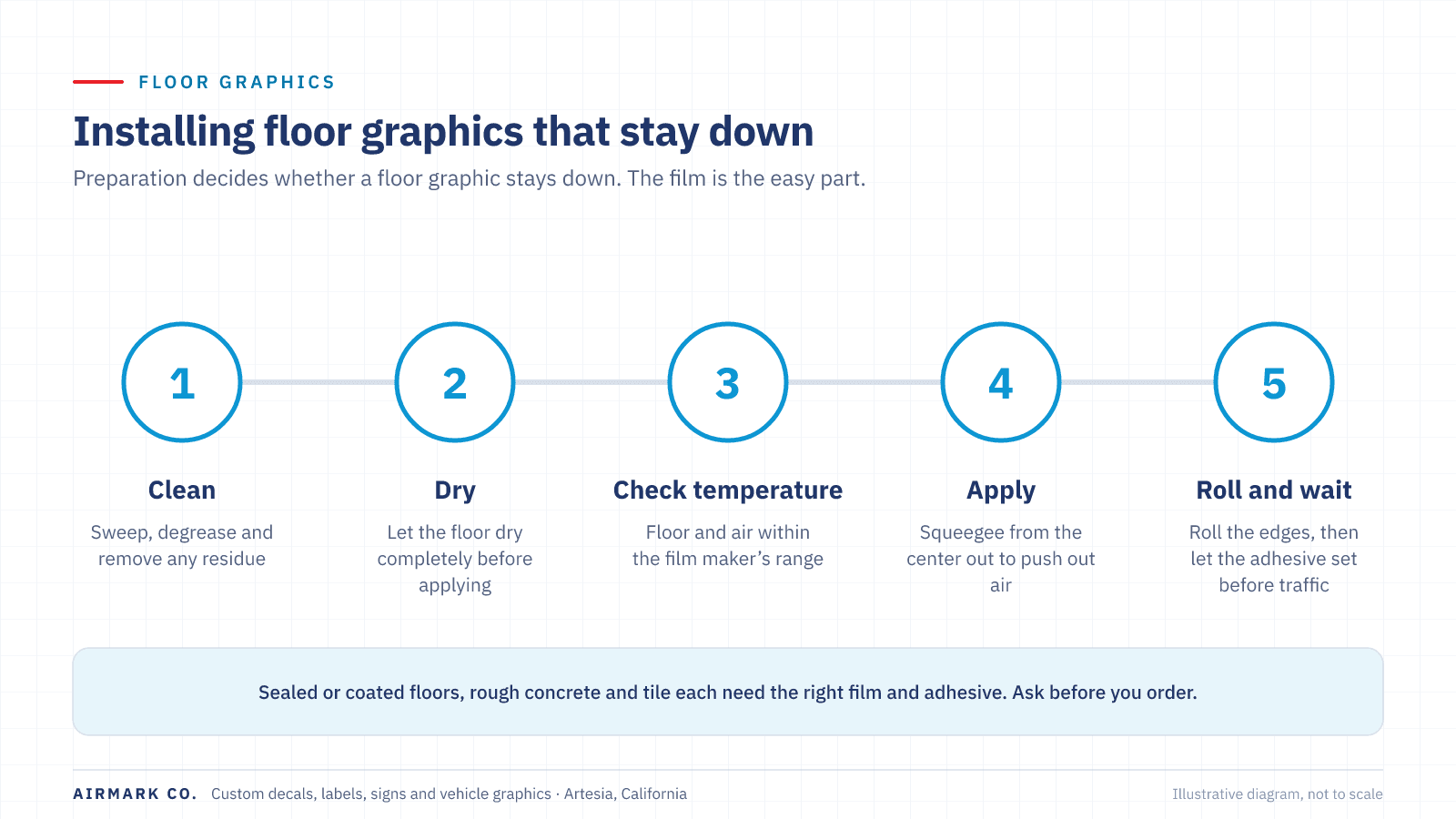
Floor care products are the hidden problem. Residue from cleaners, waxes and some sealers can stop an adhesive from bonding, so the floor has to be genuinely clean, not just swept. Newly sealed or coated floors may also need time to cure before graphics go down.
Once installed, life depends on traffic and cleaning. Light retail and office traffic is gentle; carts, pallet jacks, forklifts and daily machine scrubbing wear graphics much faster. Where forklifts cross a graphic, place it away from turning areas where you can, or plan to replace it more often.
How should you specify floor graphics for your facility?
Tell your manufacturer the floor type and finish, the traffic it sees, how it is cleaned, how long the graphic needs to last and whether it must come up cleanly. Those answers decide the film, the adhesive and the slip-resistant laminate.
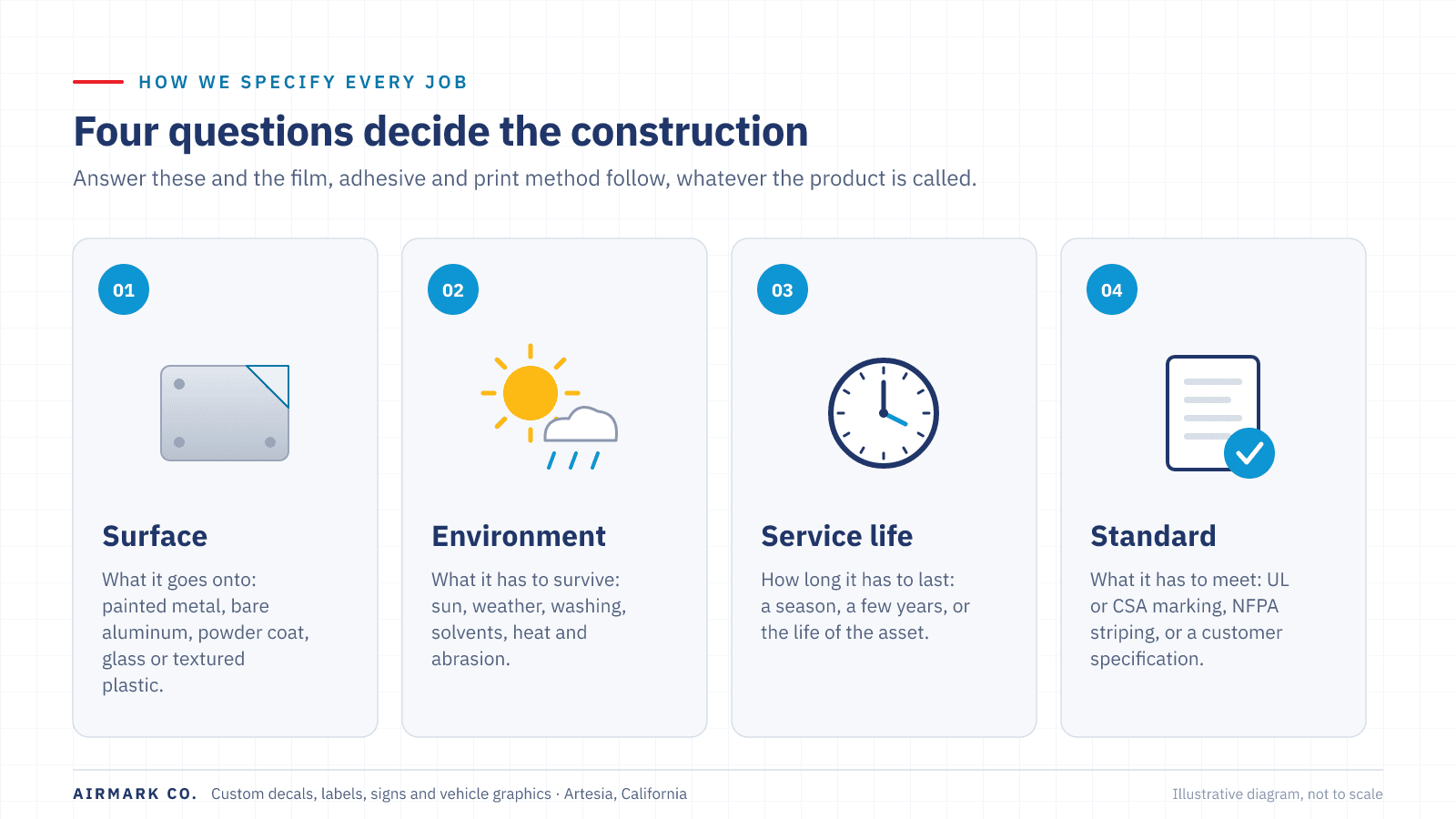
- Floor: sealed or polished concrete, tile, sealed wood, or rough concrete.
- Traffic: foot only, carts and pallet jacks, or forklifts.
- Cleaning: mopping or machine scrubbing, and the products used.
- Service life: a promotion, a season, or a permanent installation.
Airmark manufactures floor graphics in Artesia for warehouses, distribution centers and stores across Los Angeles County and Orange County, alongside the decals and signs that complete a facility program.
Frequently asked questions
Written by the production team at Airmark Co.
Airmark has manufactured decals, labels, signs and vehicle graphics in Artesia, California since 1948 — from a single prototype to long production runs. About Airmark