Signs & Floor Graphics
Commercial Signs in Los Angeles County: Materials, Permits and Planning
From monument and pylon signs to lobby letters and wayfinding, here is how to plan commercial signage that lasts in Southern California sun and gets through your city’s permit process.
Quick answer
Plan commercial signage by type (monument and pylon signs, building and wall signs, wayfinding, and interior signs), choose materials that hold up to Southern California sun, and check your city’s sign code early. Most permanent exterior signs in Los Angeles County need a permit, and the rules differ from city to city.
Key takeaways
- Match the sign to the job: monument and pylon signs identify, wayfinding moves people, lobby signage makes the first impression.
- In Southern California sun, aluminum, UV-resistant inks and protective laminates pay for themselves.
- Each city sets its own sign code, so check size, placement and permit rules before the design is final.
- Plan exterior, wayfinding and interior signs as one system, so they read consistently.
On this page +
What types of commercial signs does a business need?
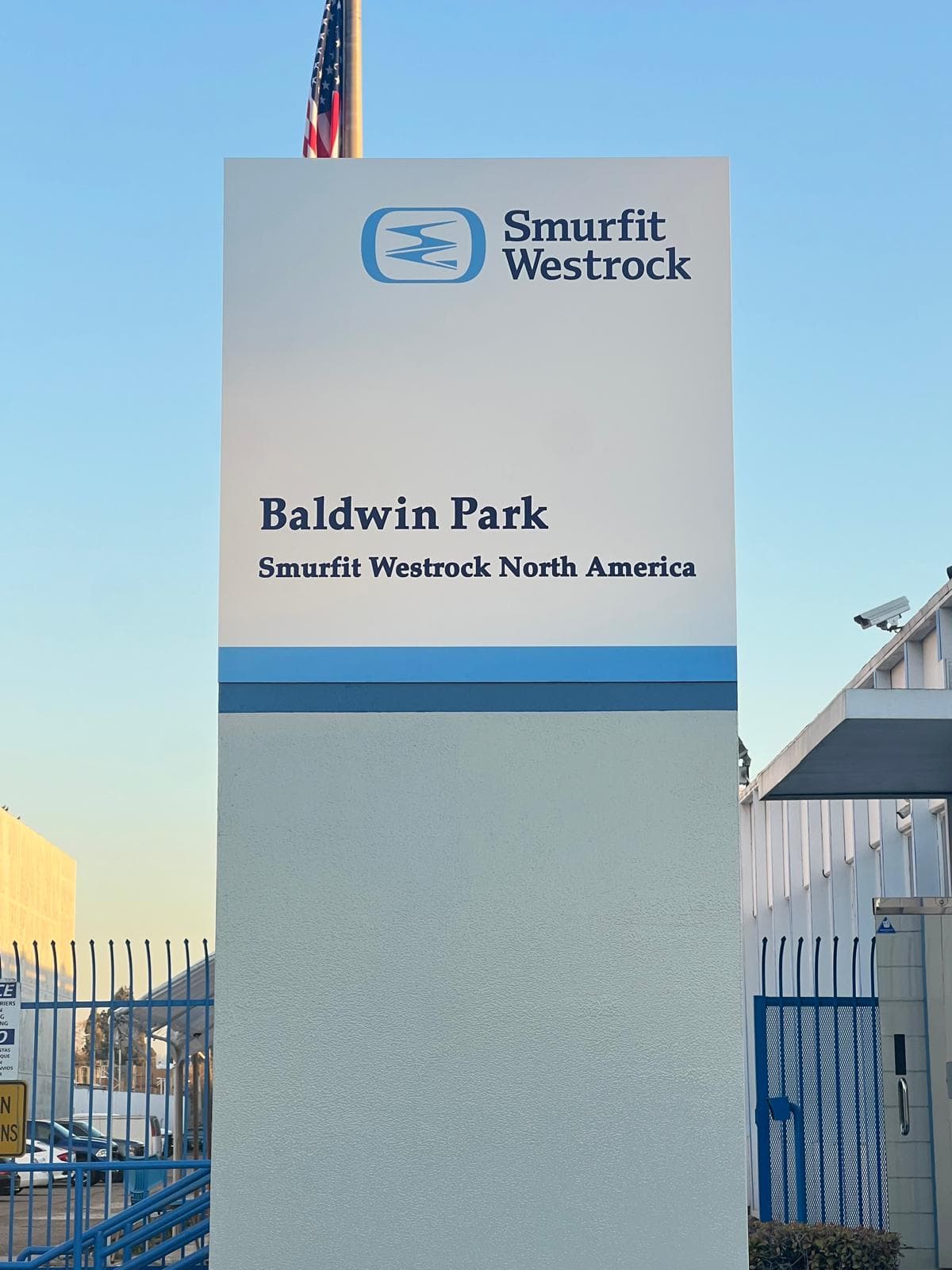
Most commercial sites need a mix: identification signs such as monument and pylon signs at the street, building and wall signs on the facade, wayfinding to move people and vehicles around the site, and interior signs and graphics in the lobby and workspaces.
| Sign type | Job | Typical location |
|---|---|---|
| Monument sign | Identify the business and address at ground level | Street frontage and entrances |
| Pylon sign | Identify the site from a distance | Roadside, large sites, shared centers |
| Building and wall signs | Brand the facade | Above entrances and on building faces |
| Wayfinding signs | Direct visitors, drivers and deliveries | Driveways, parking, docks, entrances |
| Interior signs and graphics | Brand the space and guide people inside | Lobbies, offices, warehouses |
Common commercial sign types
Airmark manufactures custom signs for interior and exterior use, from aluminum and plastic sign faces to point-of-purchase, safety and real estate signs.
Which sign materials hold up in Southern California?
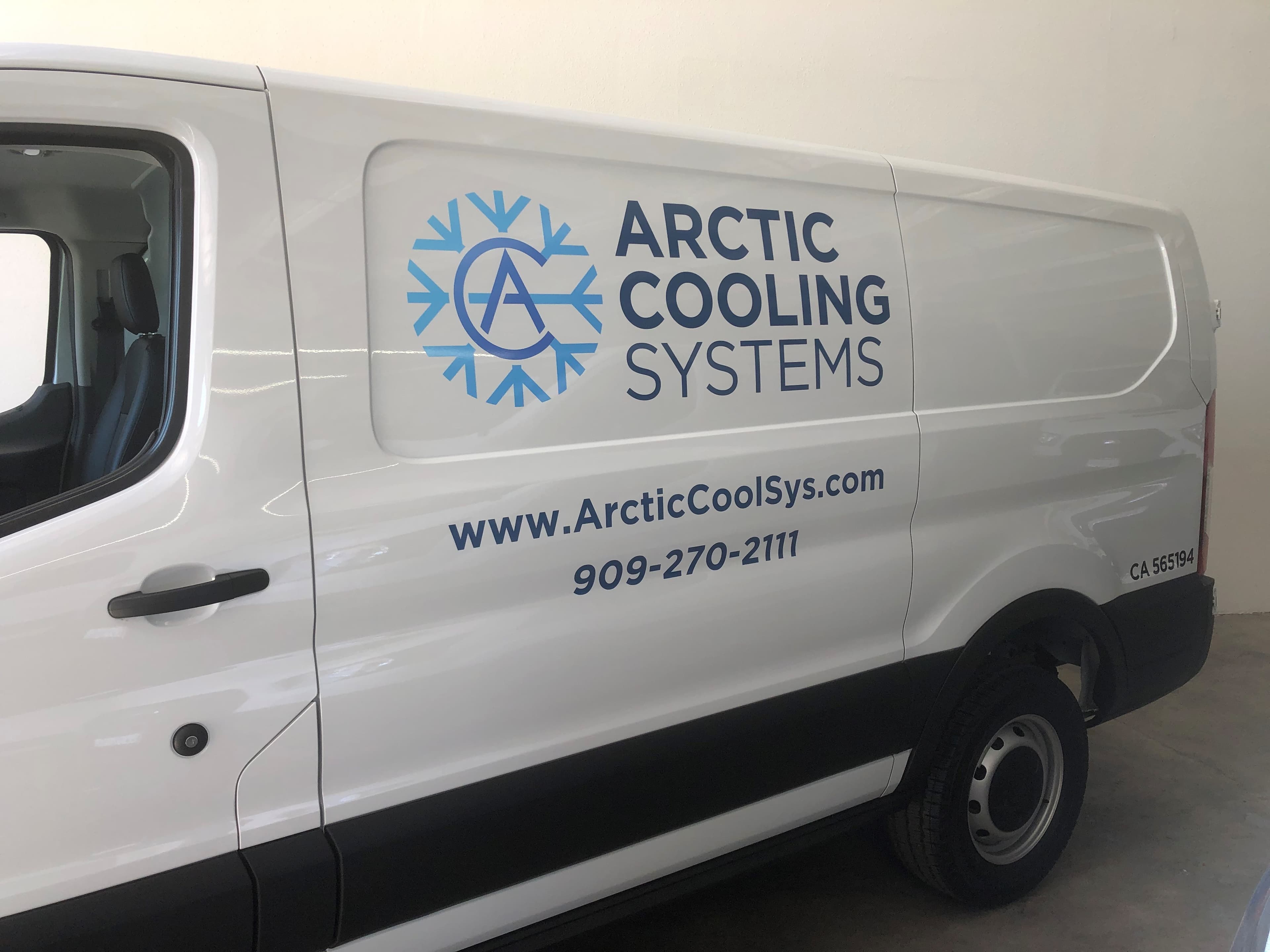
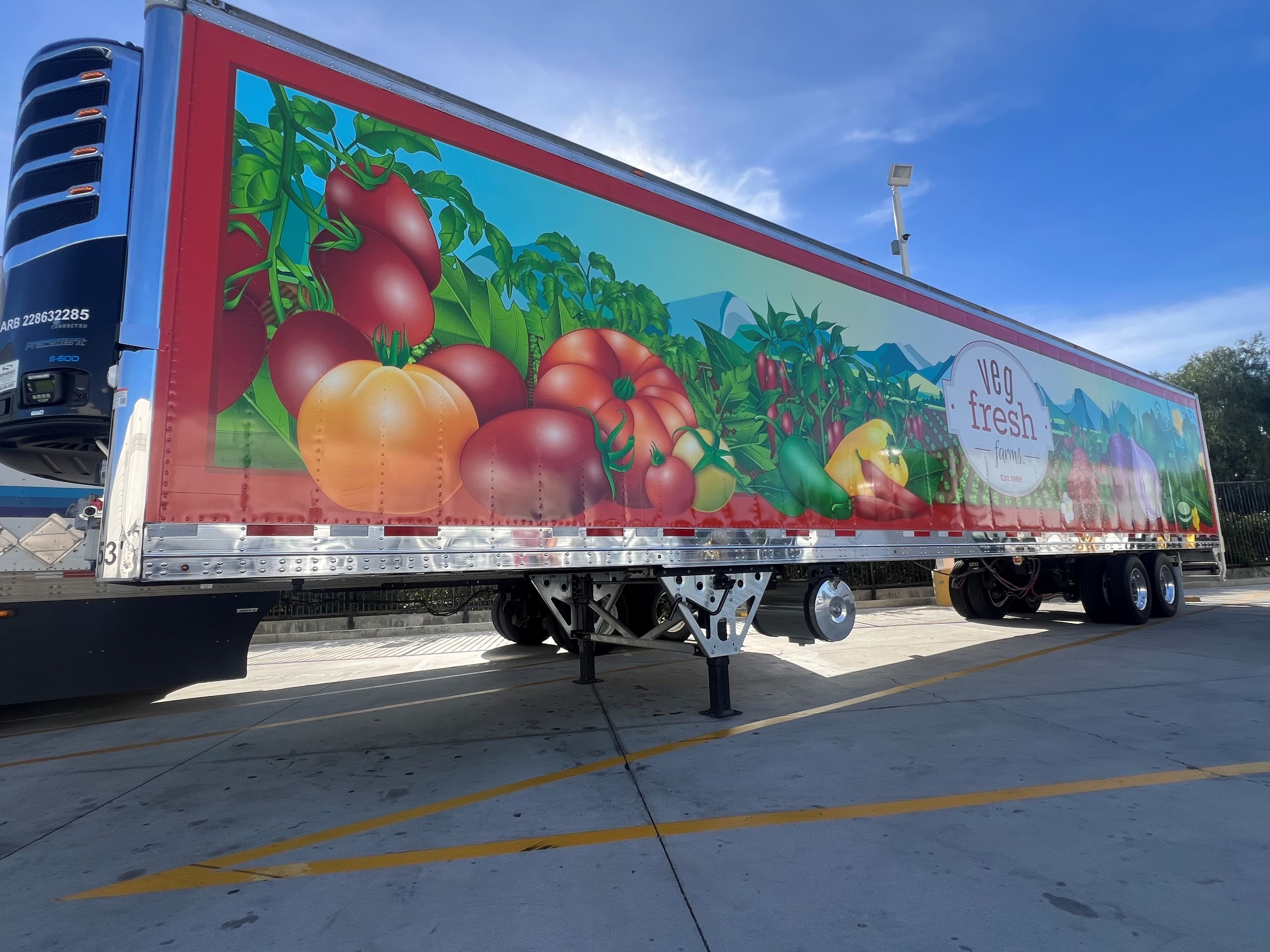
For outdoor signs, choose materials that resist UV and heat: aluminum and aluminum composite panels, UV-stable plastics, and graphics printed with UV-resistant inks under a protective laminate. Colors fade and plastics yellow fastest on sign faces that sit in direct sun all day.
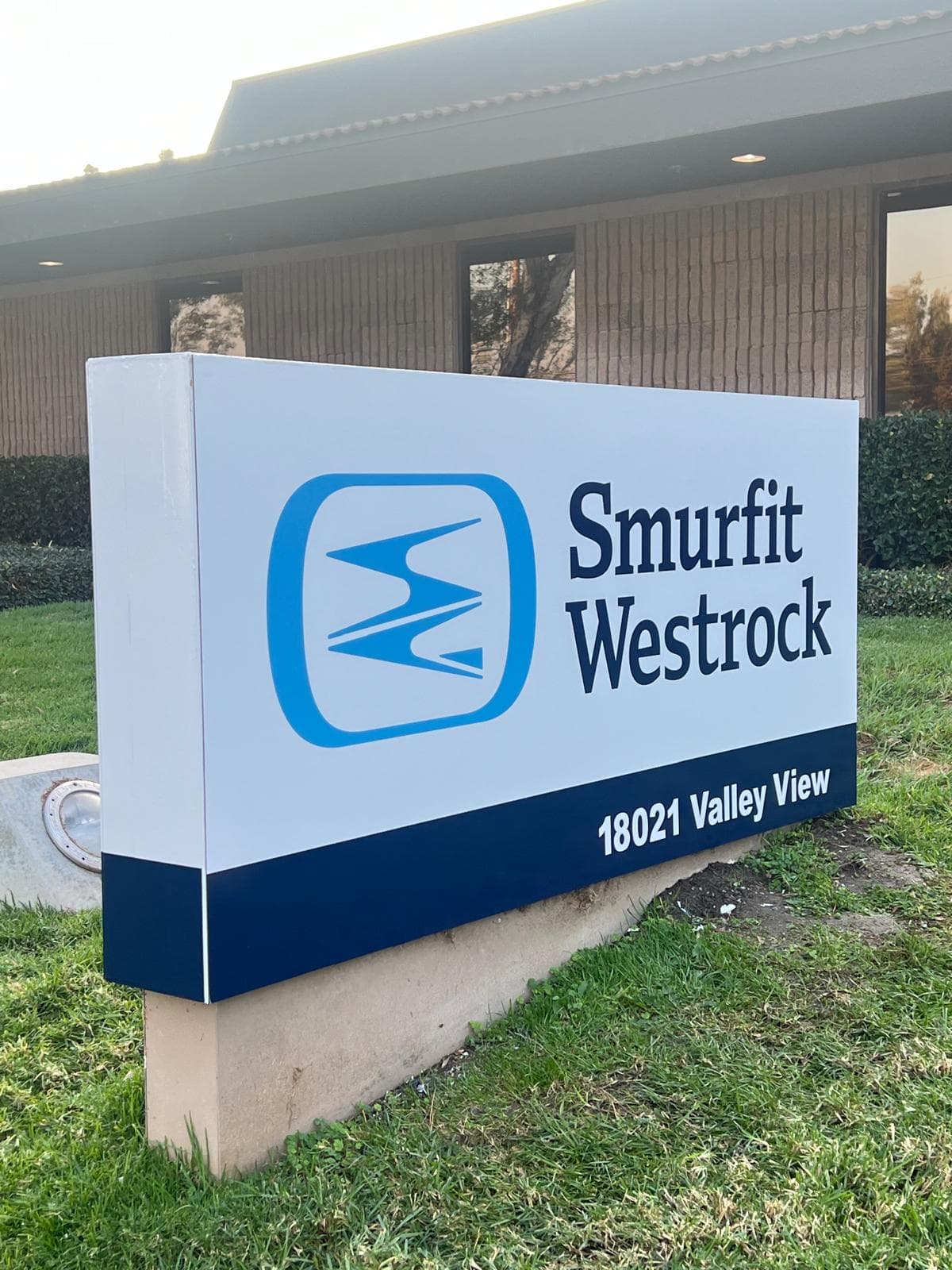
Aluminum is the workhorse for exterior signs: it does not rust, it holds its shape, and it takes vinyl graphics and paint well. Plastic sign faces are lighter and less expensive, but grades vary widely in how they handle UV. Whatever the substrate, the graphics are where fading shows first, so the ink, the vinyl and the laminate matter as much as the panel.
Orientation matters too. A south- or west-facing sign in the Inland Empire takes far more sun than a north-facing sign near the coast, so if a sign faces the afternoon sun, specify for it. Our guide to how long fleet graphics last explains how UV and heat age vinyl.
Do you need a permit for a business sign in Los Angeles County?
Usually, yes, for permanent exterior signs. Each city in Los Angeles County sets its own sign code, and unincorporated areas follow county rules, so size limits, placement, lighting and permit requirements vary from one city to the next. Check with the local building and planning department early.
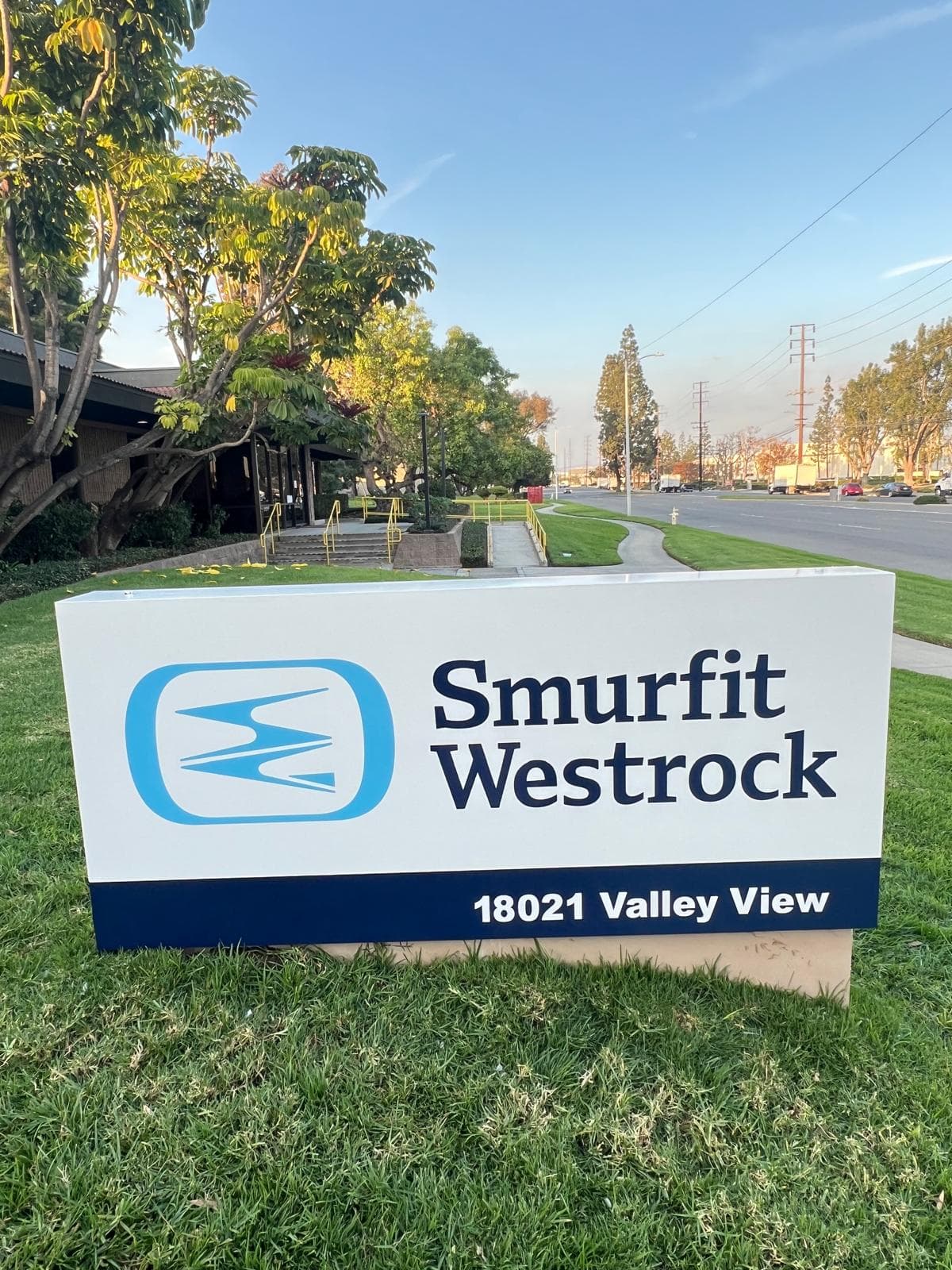
The City of Los Angeles handles sign permits through its Department of Building and Safety, while cities such as Artesia, Cerritos, Long Beach and Downey each administer their own codes. Shopping centers and business parks often add their own sign criteria on top of city rules, so check with the property owner too.
- Maximum sign area, often tied to building frontage
- Height limits and setbacks for monument and pylon signs
- Rules on illumination, animation and hours
- Landlord or center sign criteria on multi-tenant sites
Build the permit timeline into your schedule, since approval can take longer than production, and have dimensioned artwork ready for the application.
How should you plan wayfinding signage?
Walk the route a first-time visitor, driver or delivery takes, and place a sign at every decision point: site entrances, parking, building entrances, shipping and receiving, and reception. Keep messages short, consistent and in the same visual style throughout.
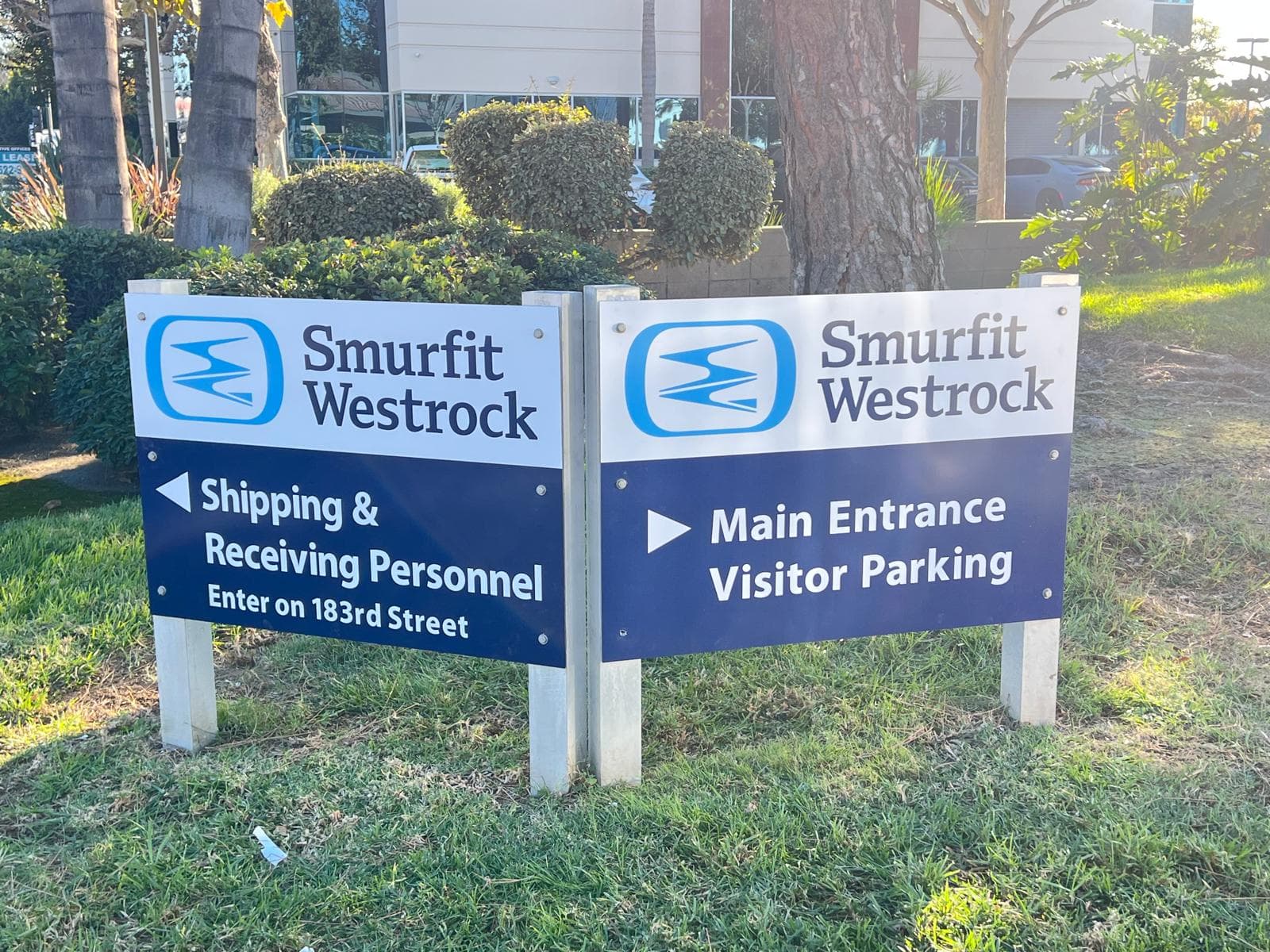
Industrial sites need to separate traffic: visitors to the main entrance, drivers to shipping and receiving, employees to their own parking. Clear, consistent signs at the right decision points keep the wrong vehicles out of the wrong places, which is both a safety and an efficiency issue.
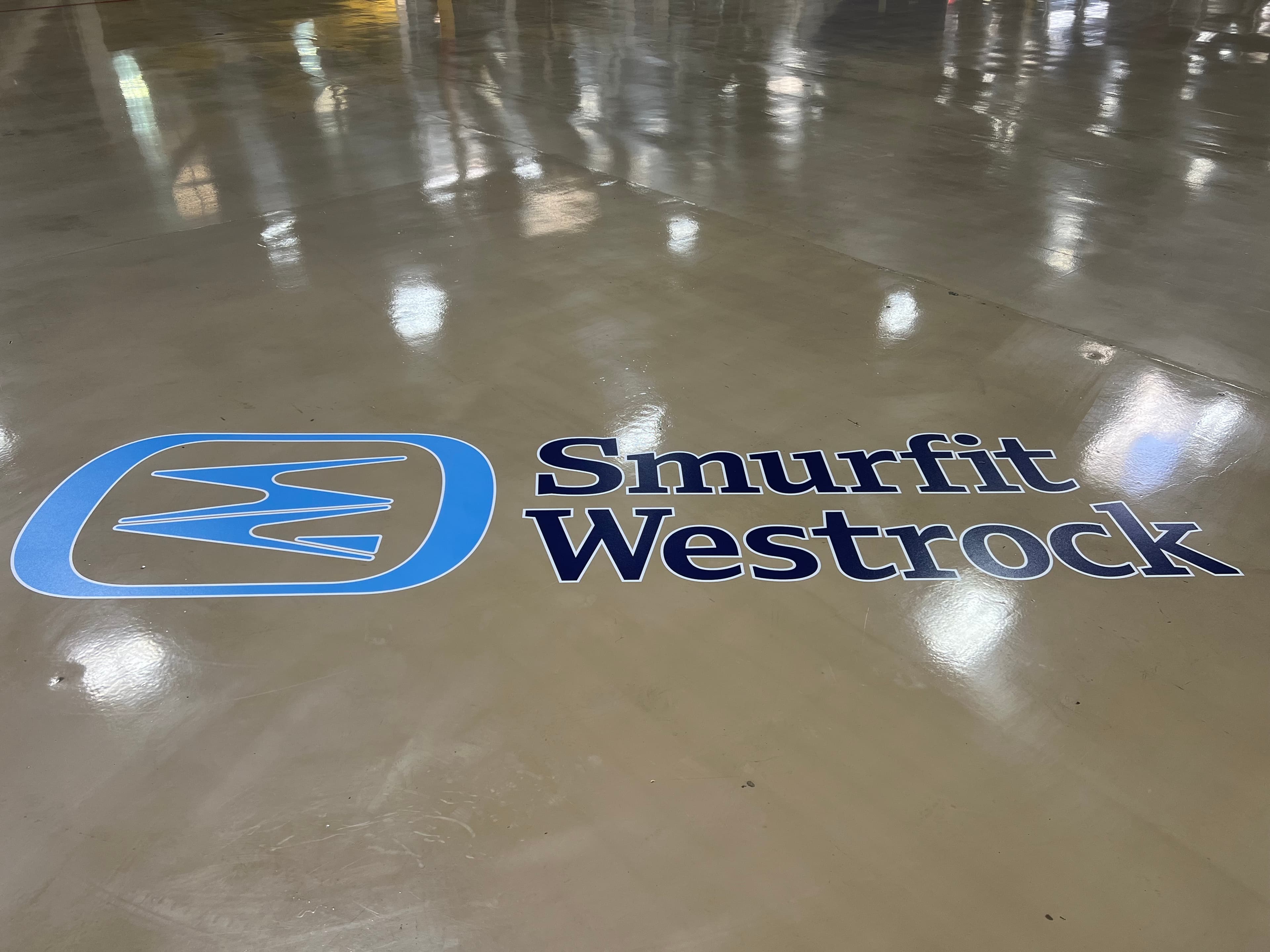
Bilingual signage is common across Southern California sites. Plan the layout for both languages from the start, so neither is squeezed. Floor graphics can reinforce routes inside the building; see our guide to floor decals for warehouses and retail.
What interior signage makes the best first impression?
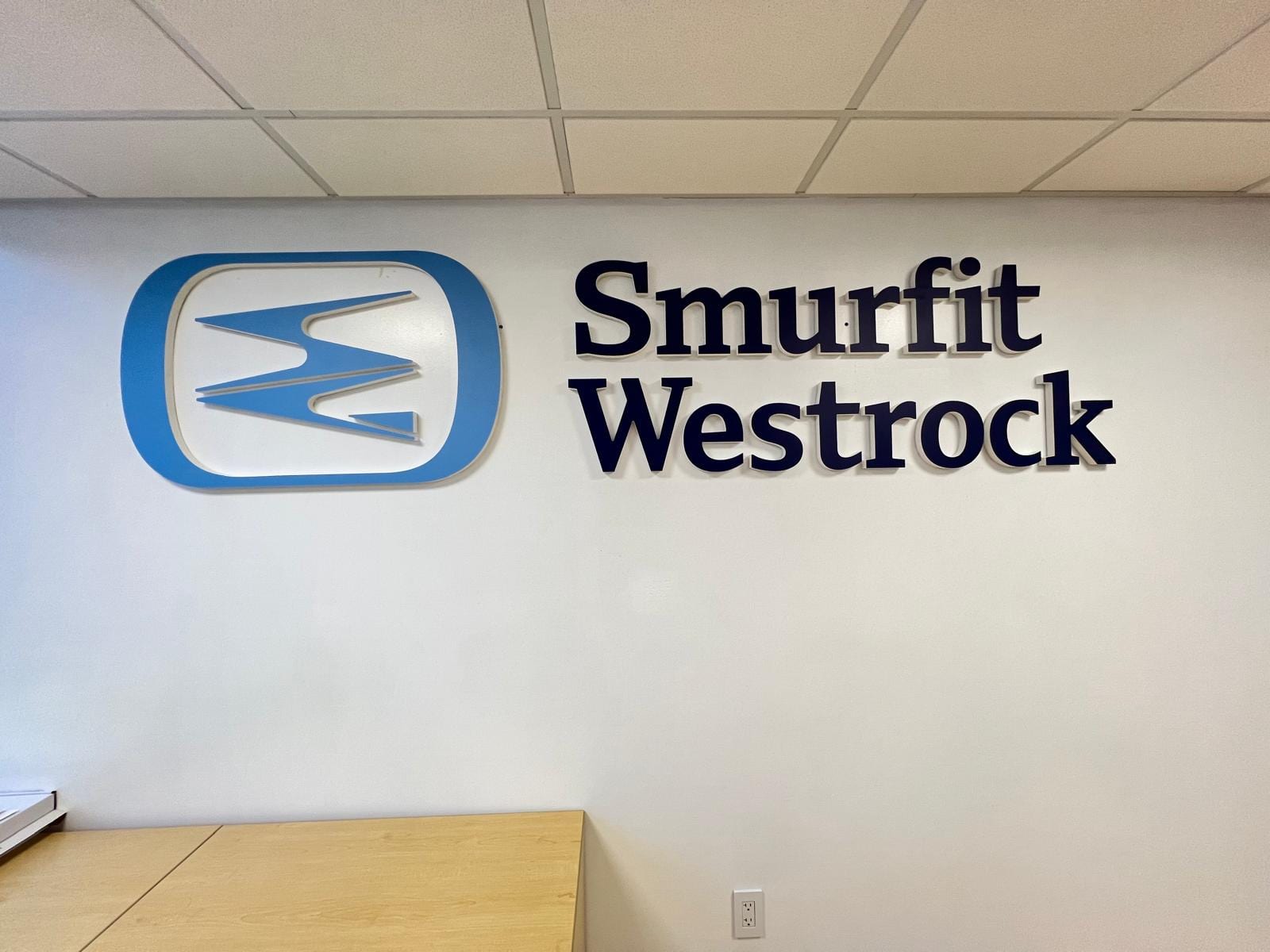
Lobby signage and interior graphics: dimensional logo letters behind reception, wall graphics that tell the company’s story, and consistent directional signs. They are often the first thing a visitor sees inside, and they set the tone for the rest of the visit.
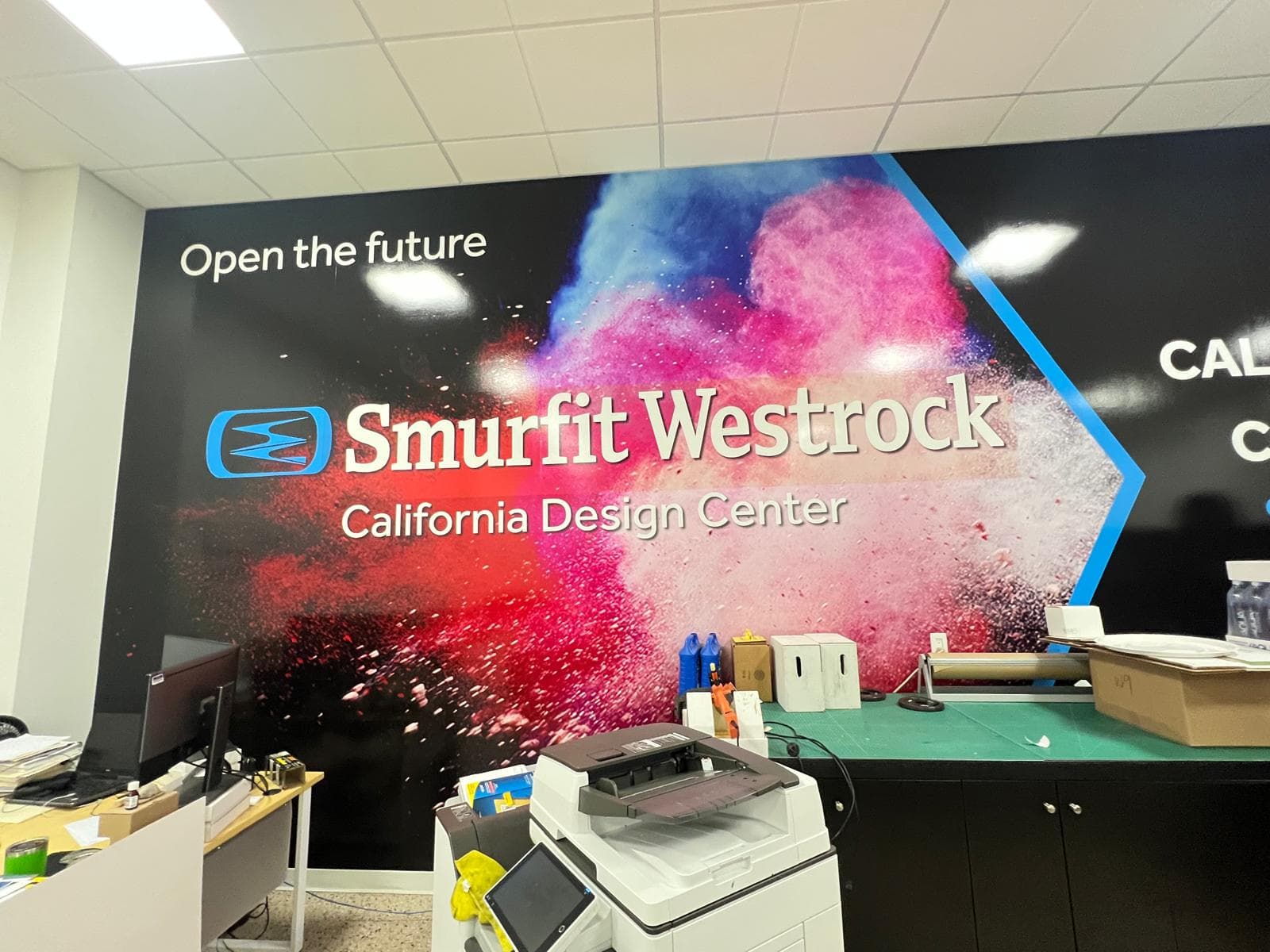
Interior graphics face none of the UV and weather that exterior signs do, which opens up materials and finishes: dimensional acrylic letters, printed wall graphics, frosted window films and branded floor graphics. The job is consistency with the exterior, so the brand reads the same from the street to the reception desk.
Airmark manufactures exterior and interior signage in Artesia for businesses across Los Angeles County and Orange County. See our portfolio for sign programs we have produced, or request a quote for yours.
Frequently asked questions
Written by the production team at Airmark Co.
Airmark has manufactured decals, labels, signs and vehicle graphics in Artesia, California since 1948 — from a single prototype to long production runs. About Airmark